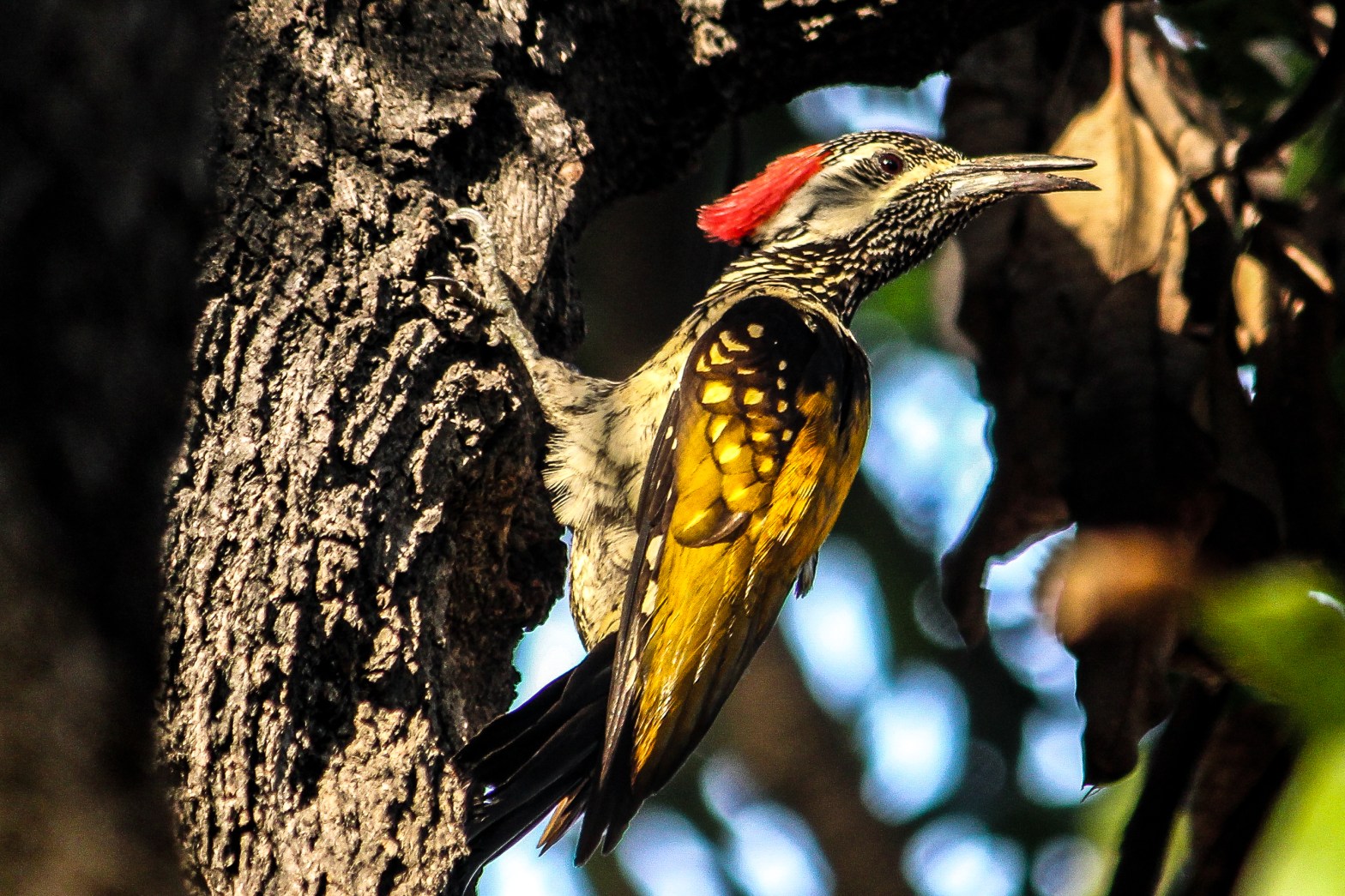
A common, “small-billed” golden-backed woodpecker with four toes. It is one of the few woodpeckers that are seen in urban areas. It has an undulating flight and characteristic rattling-whinnying call “ki-ki-ki-ki-ki,” which steadily increases in pace and ends in a trill.
Propped against the side of a tree trunk, they rapidly hammer against the bark. This pecking behaviour serves three purposes. The birds uncover and eat adult insects, their eggs and larvae, and other invertebrates living in or under the bark and in the wood of the tree. The birds also drill holes in dead or dying trees in which to nest. The third reason for hammering is for communication. Woodpeckers declare their territories and seek mates by what is called “drumming”. This is why you might see a flicker pounding on a metal power pole or your house siding – to make the loudest sound he can, not to look for food or drill a hole, but to make a statement.
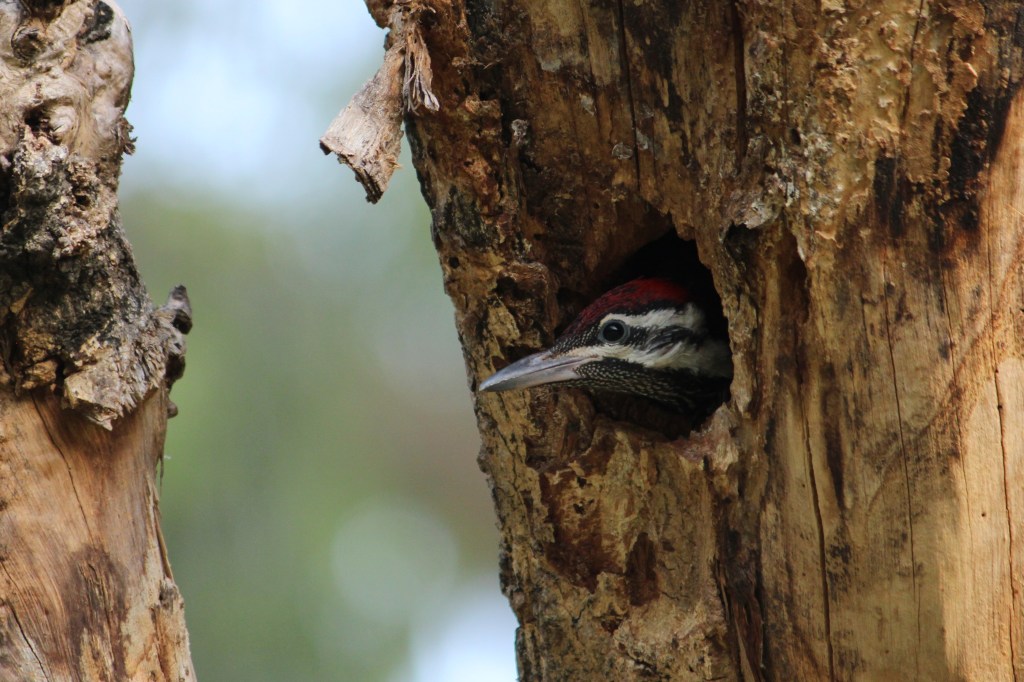
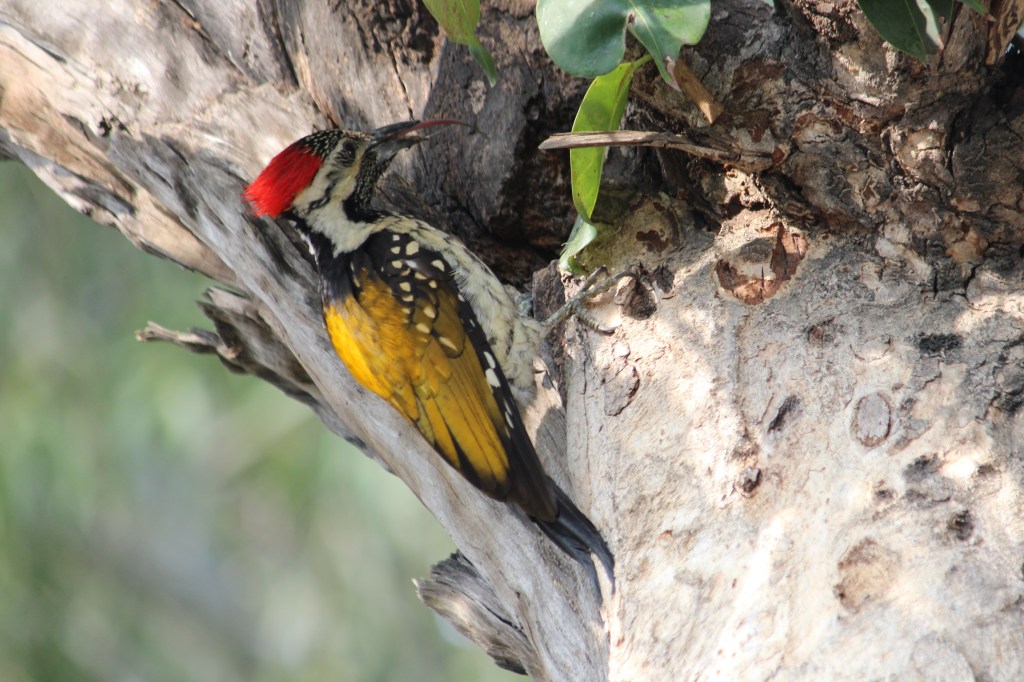
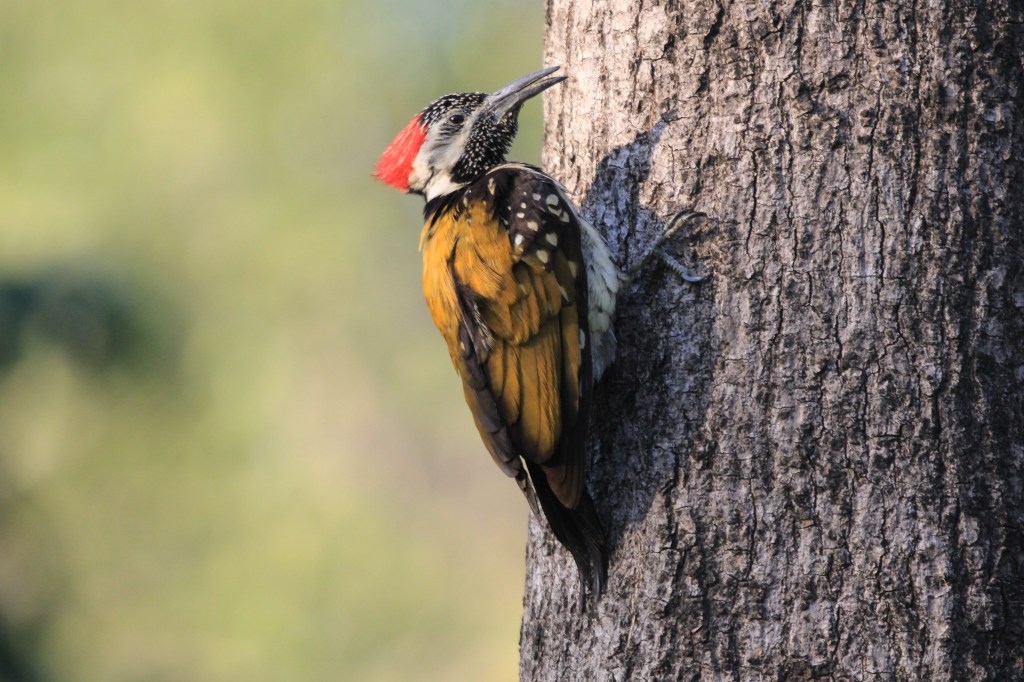
Unlike most birds which have three forward toes and one hind toe, woodpeckers have two toes in front and two in back. This toe arrangement, along with stiffened tail feathers, allows the birds to lean back and pound away. A special muscle and tendon mechanism at the back of the jaw acts as a shock absorber. The skull is a bony matrix – think of a sponge – with lots of criss-crossing pieces of bones and lots of spaces. Like a sponge, the skull can compress and expand so it can actually withstand 1200 g’s of force – that’s 1200 times the force of gravity!.
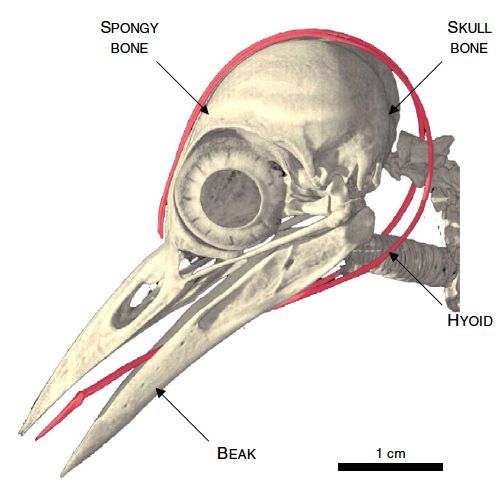
An adaptation unique to woodpeckers is their tongue arrangement. The tongue, consisting of nine long thin bones in the shape of a Y and covered by muscle, extends from the floor of the mouth along the inner jaw to the back of the head and then wraps over the top of the skull to the level of the nostrils. This very long tongue supported by bone allows the birds to extend it deep into tree crevices to search for food.
Well, if all that were not enough, woodpeckers have modified feathers called bristles that extend over the top of their nostrils so that they don’t inhale any wood chips while they are pecking away.
 naturetrail