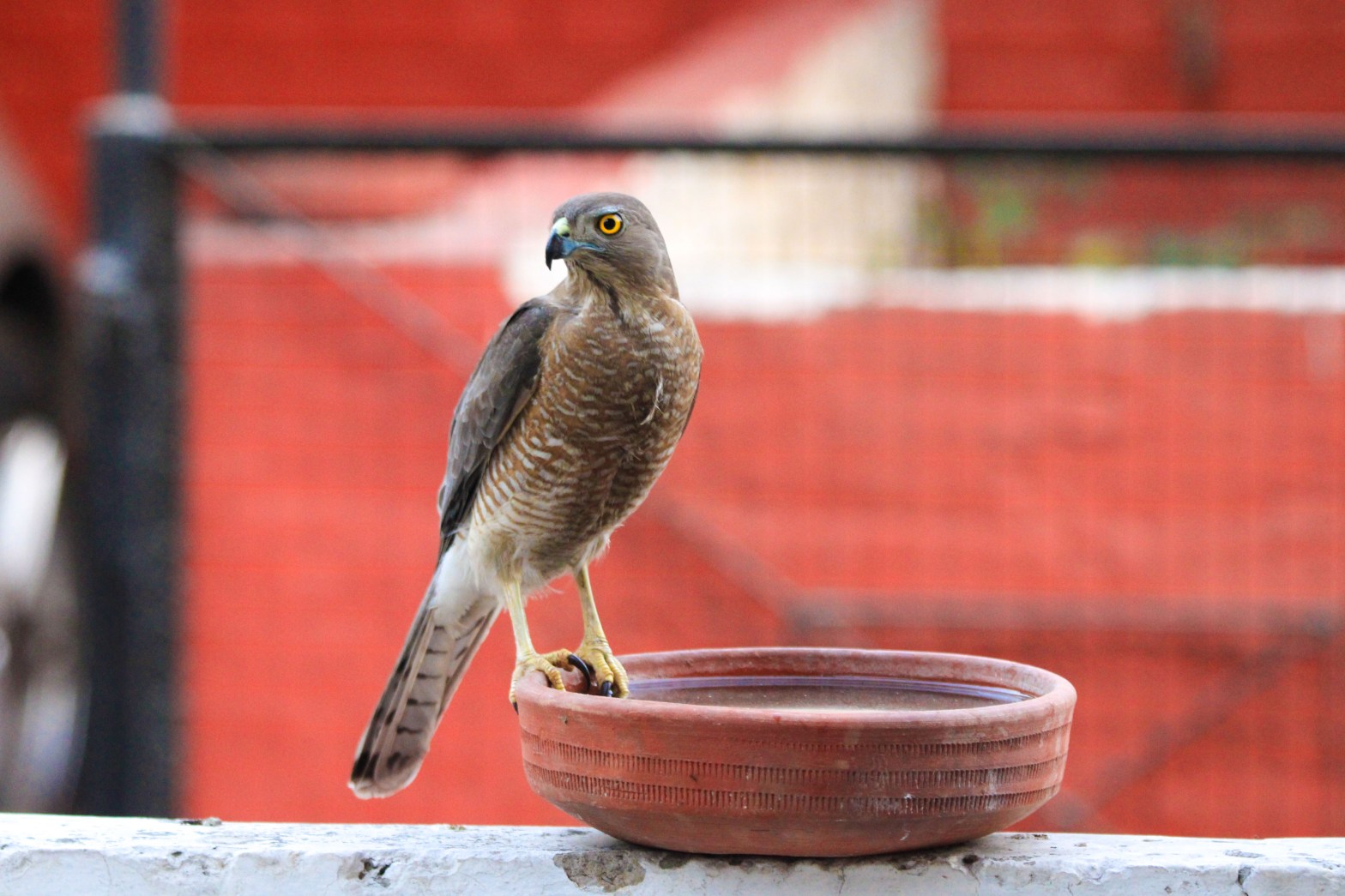
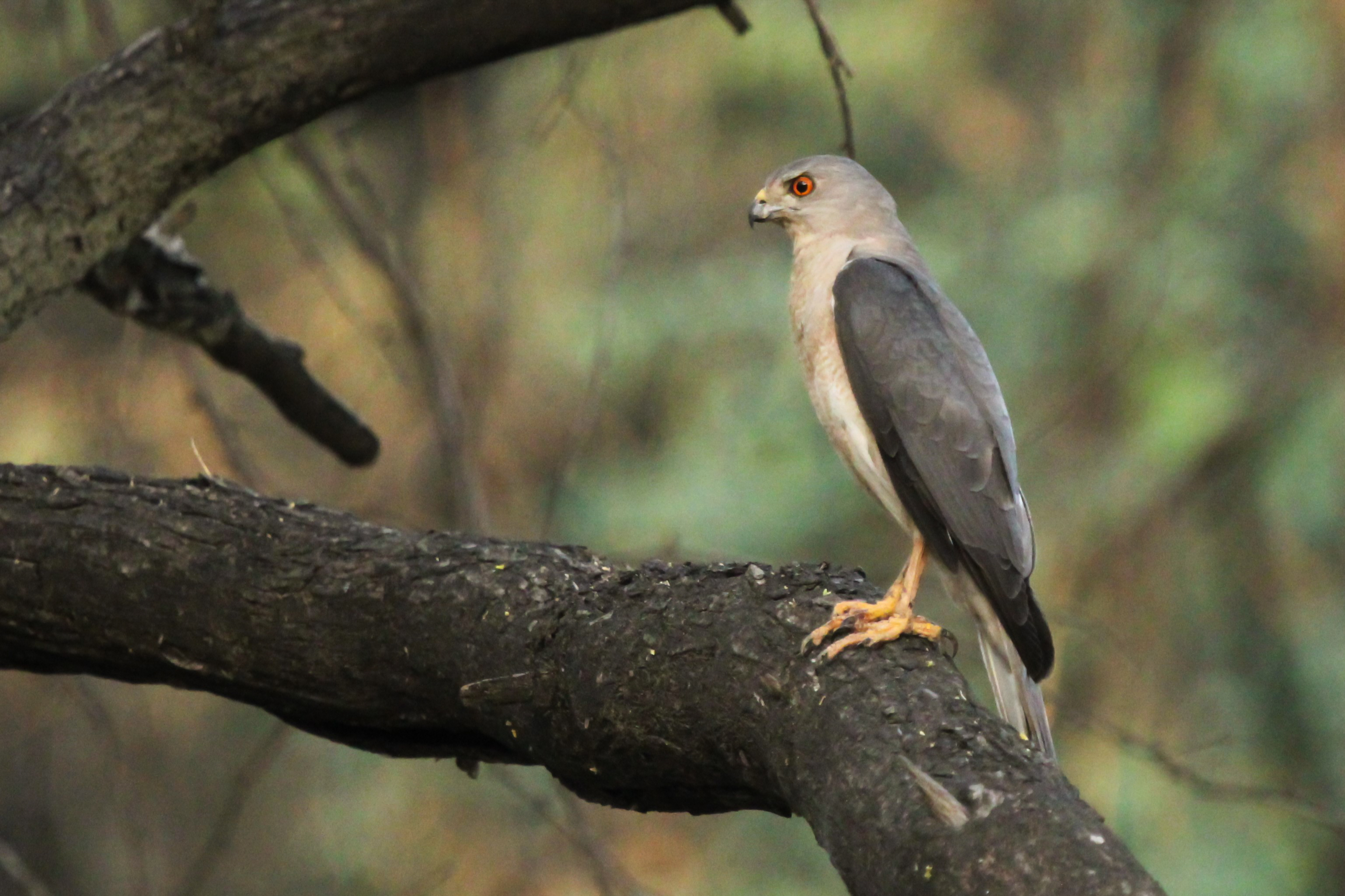
During Corona period, I saw a pair of Shikra building a relatively nest with sticks, on a high fork of a eucalyptus tree in the Green Belt behind my house. I kept on watching this bird with beautiful eyes and the bird also obliged me by giving various poses and also on one fine day, I saw this bird drinking water from a pot placed by me in my front courtyard.
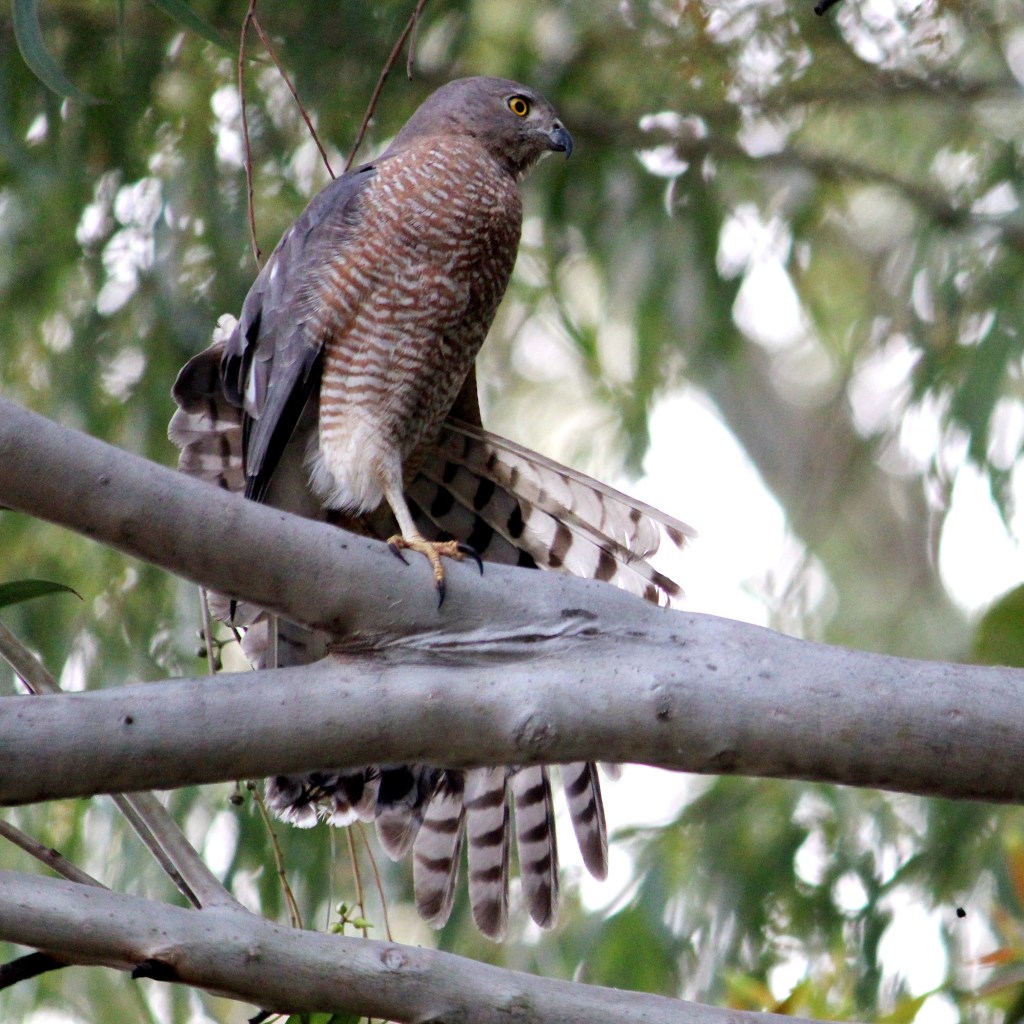
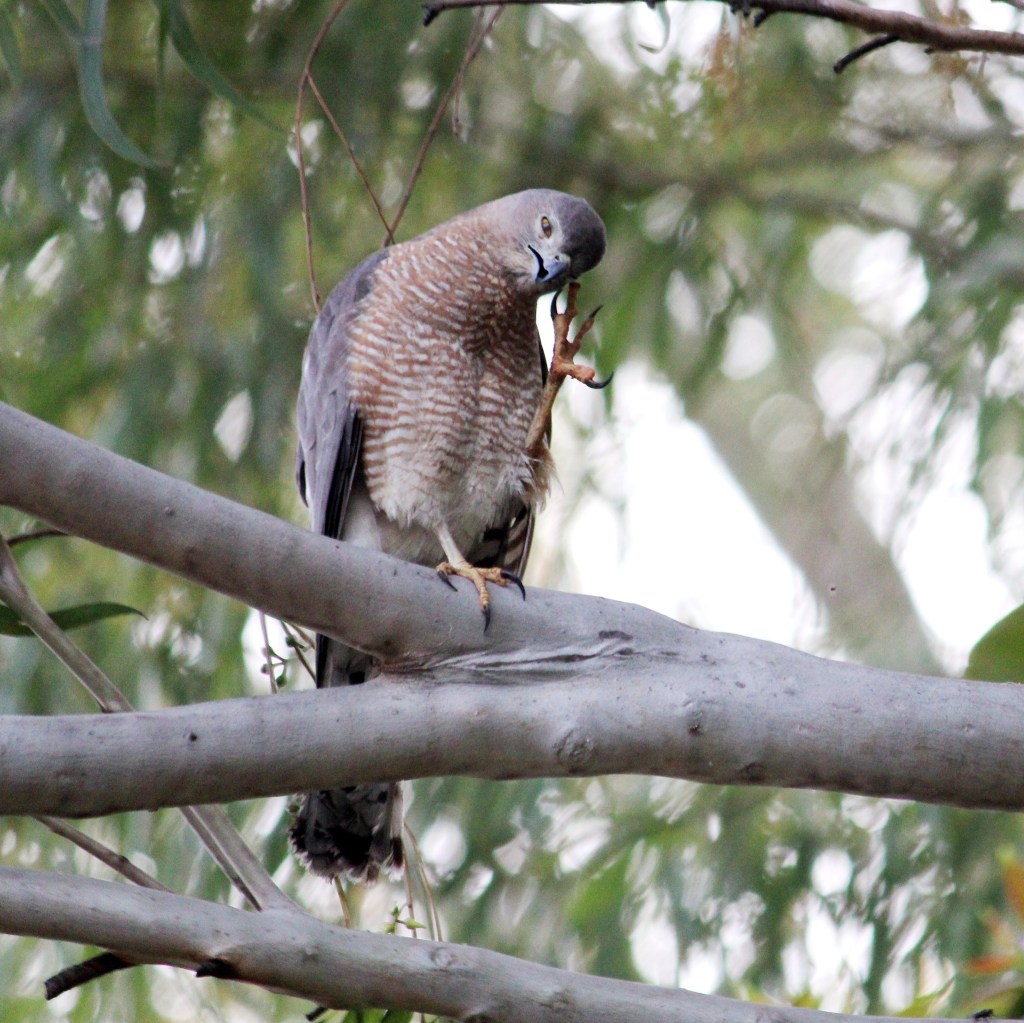
The Shikra is a small bird of prey. It is one of the most common hawks in India. The word shikra originates from the Persian language, meaning a person who is blessed with sharp eyesight, or a skillful hunter. Its name has been derived from Urdu, and the Hindi word, Shikari, meaning hunter. Being one of the easiest birds to train and tame, Shikra was the most common bird used in the art of falconry, which has been banned now.
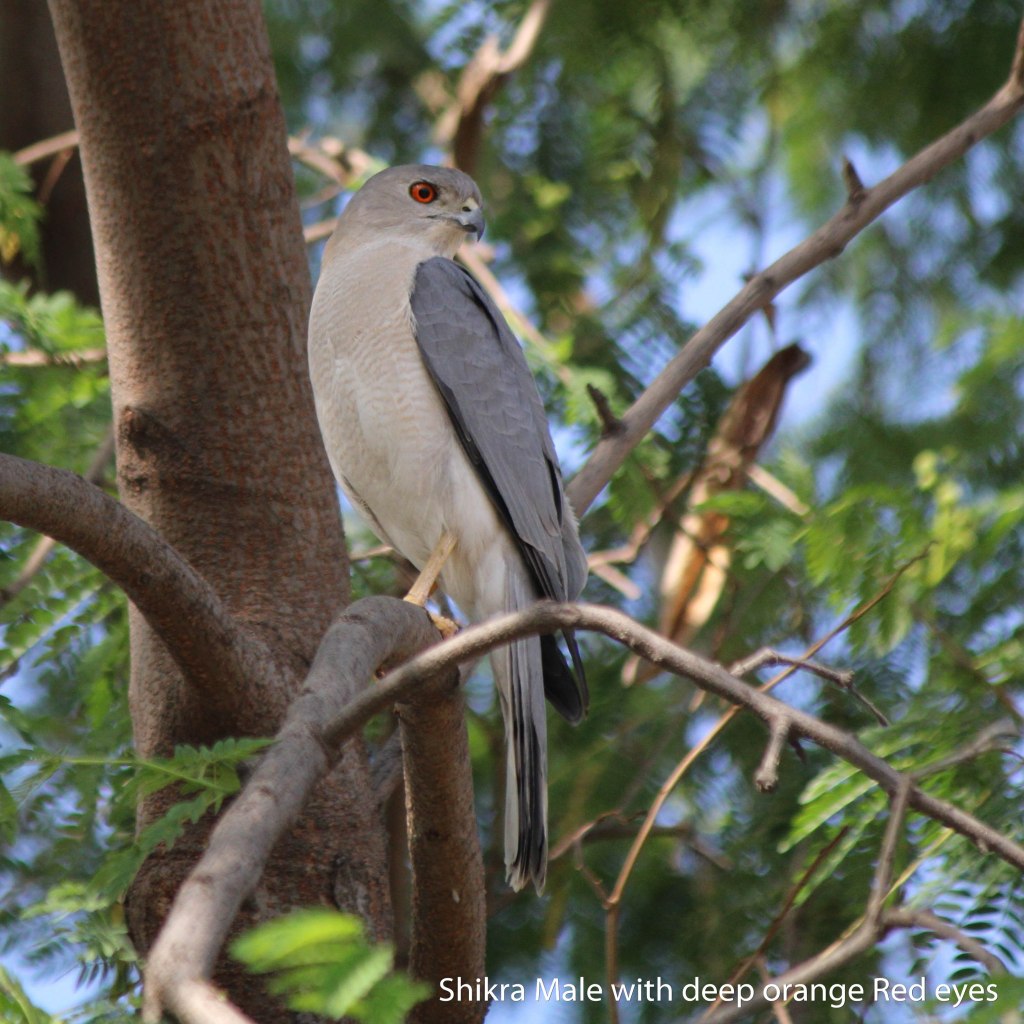
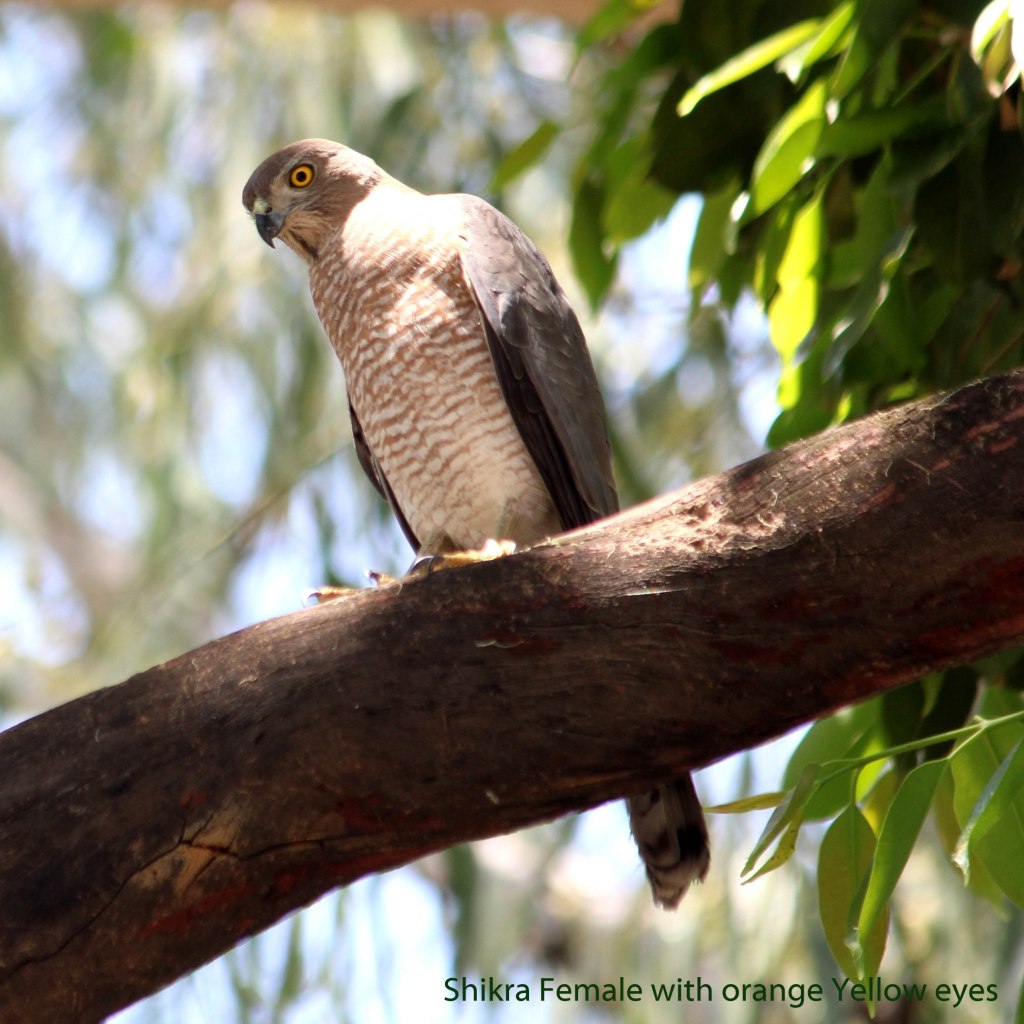
The adult males have deep orange-red eyes whereas the females have their eye color varying from deep yellow to orange yellow. Shikras are frequent in open jungles, and even urban gardens and avenues.
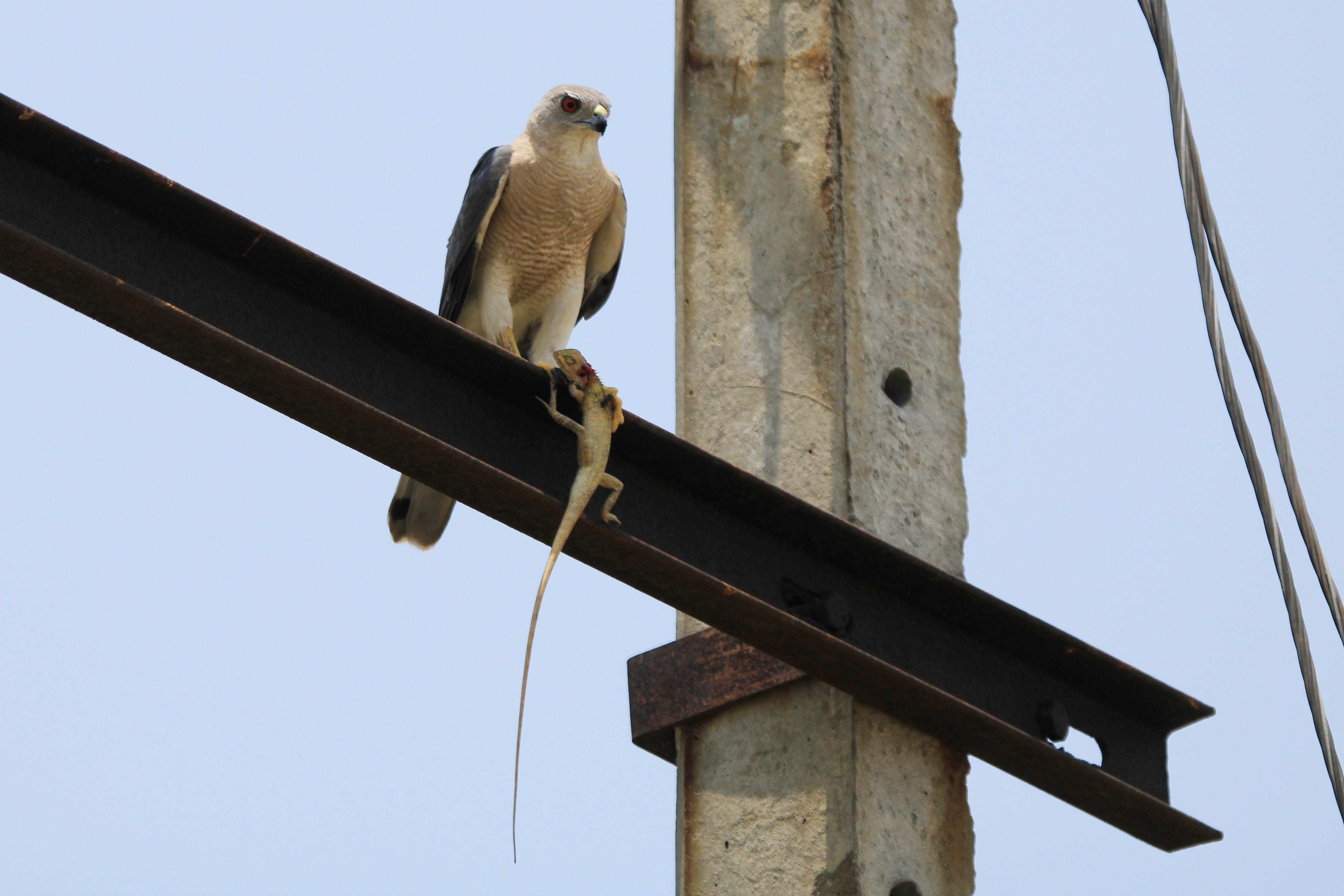
Shikra with a lizard
To hunt, it either takes a low, stealthy flight along the tree line, pouncing on an unwary bird or animal. Sometimes, it soars high in circles and dives down at the sight of prey. Its diet consists of lizards, frogs, grasshoppers, small birds, and fledglings.
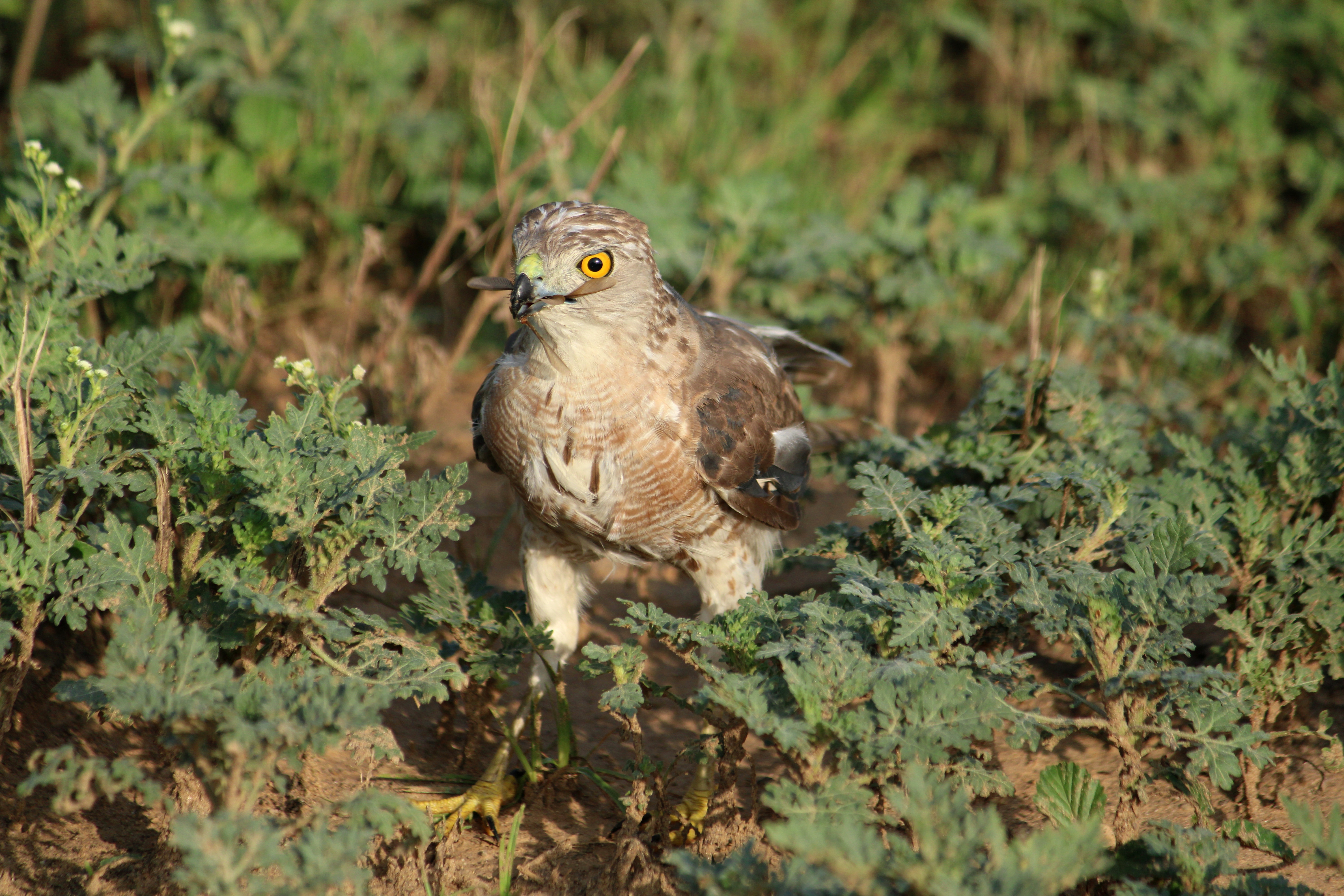
Shikra with an Insect
The Shikra – A bird with Brain & Brawn
The Shikra most often can be observed flying from one tree to another, with rapidly flapping wings, followed by short glides, and disappearing into the foliage. Their nesting season lasts from April to June, which is quite interesting to observe their behavior from a distance.
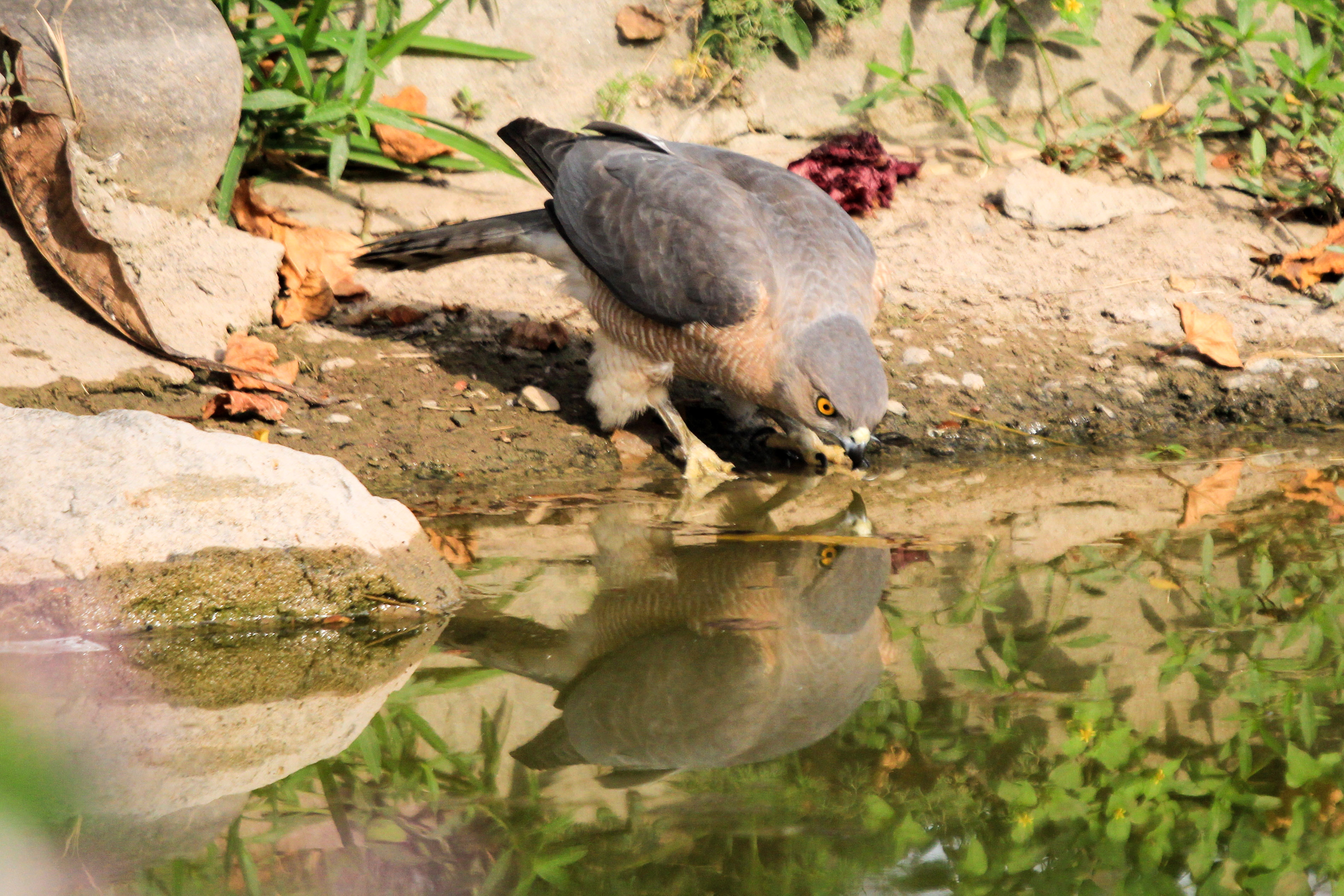
Mystic Encounter
Cactus Garden, Panchkula
ओ माये नीं
मैं इक शिकरा यार बनाया
The Shikra – A bird with Brain & Brawn
Legendary Punjabi Poet Shiv Kumar Batalvi famous composition “Main ek Shikra Yaar Banaya…” also describes the character of the bird.
 naturetrail