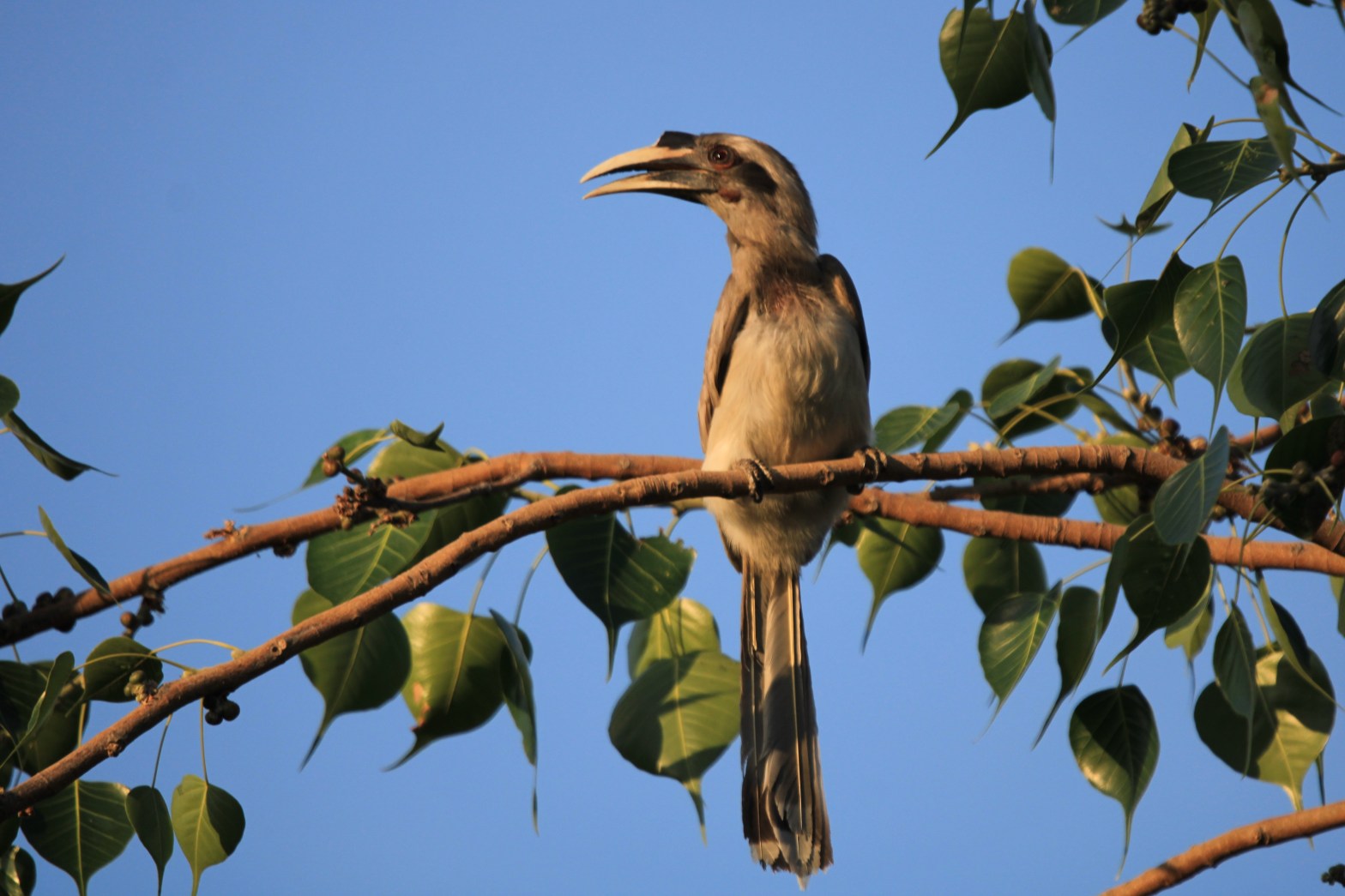
The Indian Grey Hornbill, as its name suggests, the bird has a unique casque (or horn) on its grey-coloured bill. Apart from being the State Bird of Chandigarh, it is common across the city these days, especially in areas where there are large and contiguous tracts of trees. The male sports a blacking bill, narrow casque, and red-brown eyes, while the female has a smaller, less prominent casque, with browner irises. The featured image above is of a female hornbill clicked in May 2021, whereas the rest are of the male.
The breeding season of the bird lasts from March to June. The bird begins to display courtship behaviour in January, with the male offering the female different food items to woo her. Their breeding season commences in March. To nest, these birds use natural cavities or holes) in tall trees such as Gulmohar, Neem, Peepal, Banyan, or Jamun. The female hornbill enters the coater of the tree and seals its entry with her excreta and mud provided by the male. She would remain inside for around two to two and half months, leaving only a small, vertical crack in the opening, around 2-3cm wide and 7-8cm long.
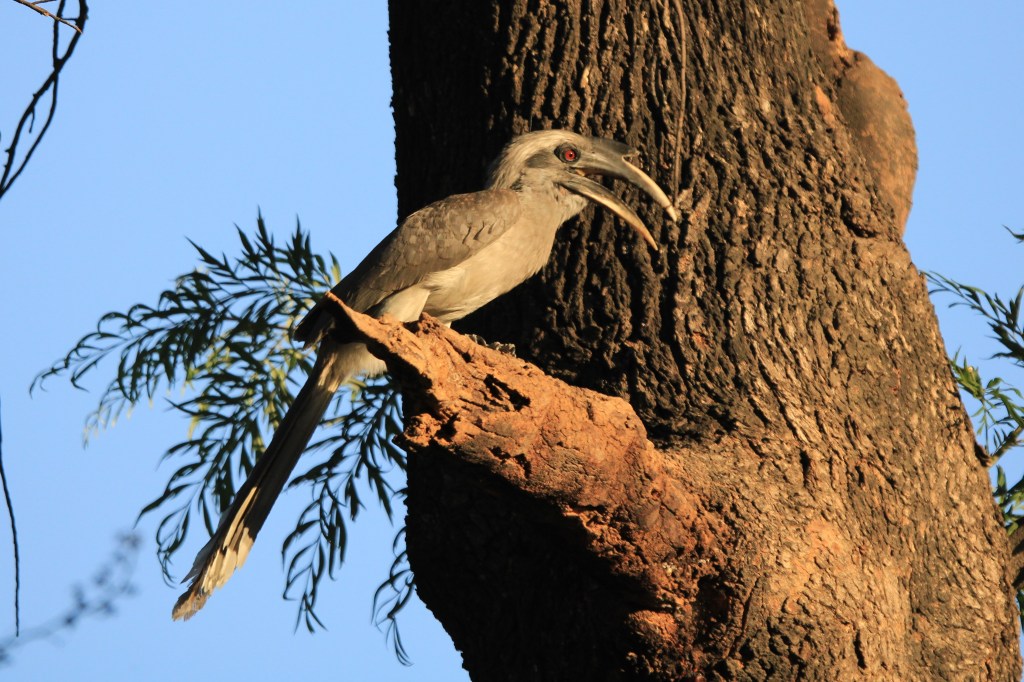
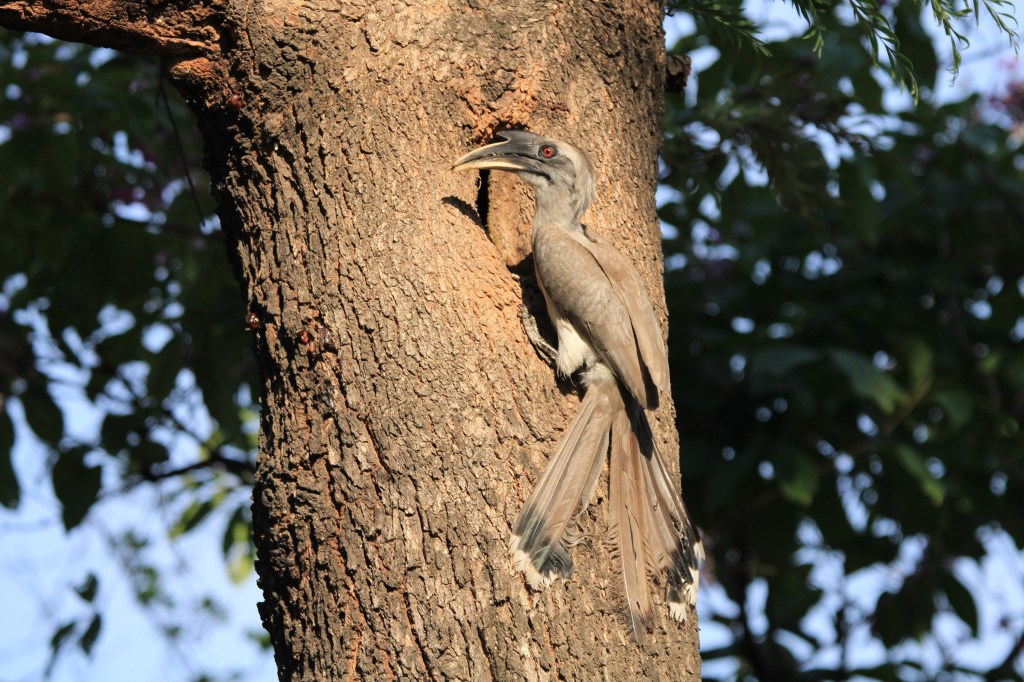
The female hornbill answers the call of motherhood by confining herself in the coater for two months. Once inside the nest, she lays 2-3 milky white eggs and incubates them for around 20-25 days. During the incubation period, she shed her flight wings and depended totally on the male for all her food requirements. The female drops her feathers from the nest and threw feces out of the tiny crack, to maintain the nest sanitation.
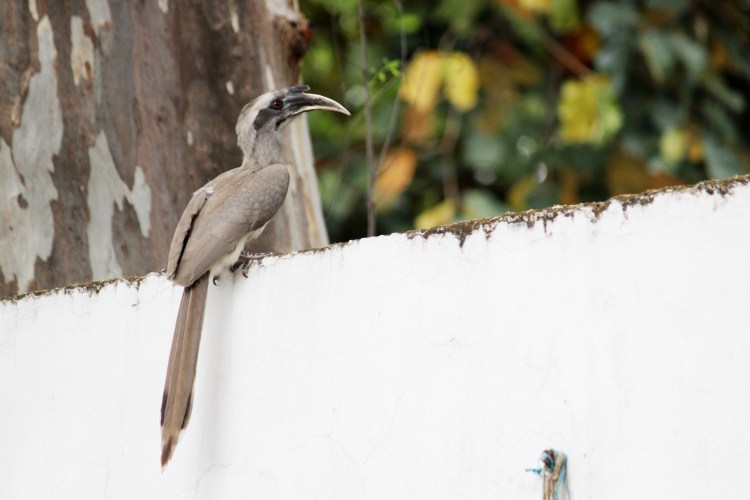
With his mate safely ensconced in the nest, the male hornbill had to forage for long distances to collect the food. The hornbill diet mostly consists of figs, the fruits of Jamun, Neem, Bargad or Banyan, Peepal, and Gular. The male holds the food in his throat and brings the same up again to the mouth one by one to feed his partner in the nest. Many times he would also bring her insects as well. In a single day, he makes around 20-25 trips to the nest.
As soon the chicks hatched, their calls for food could be heard and the father increased the supply of food to cater to the chicks’ insatiable appetites too. When they were about one-and-a-half months old, roughly half the size of their parents, the space inside the nest began to become congested, it’s time for the mother to get out of her self-confined prison. But since the cavity hole had narrowed further due to some hardened mud pieces, her escape is very painful.
Now, with their mother absent from the nest, the chicks had to fend for themselves. The chicks continued to grow. The small crack in the tree was to be their sole source of air, light, and food for the chicks for 2-3 weeks more, until they fledged out.
 naturetrail
Really very Nice and full of knowledge.
LikeLike