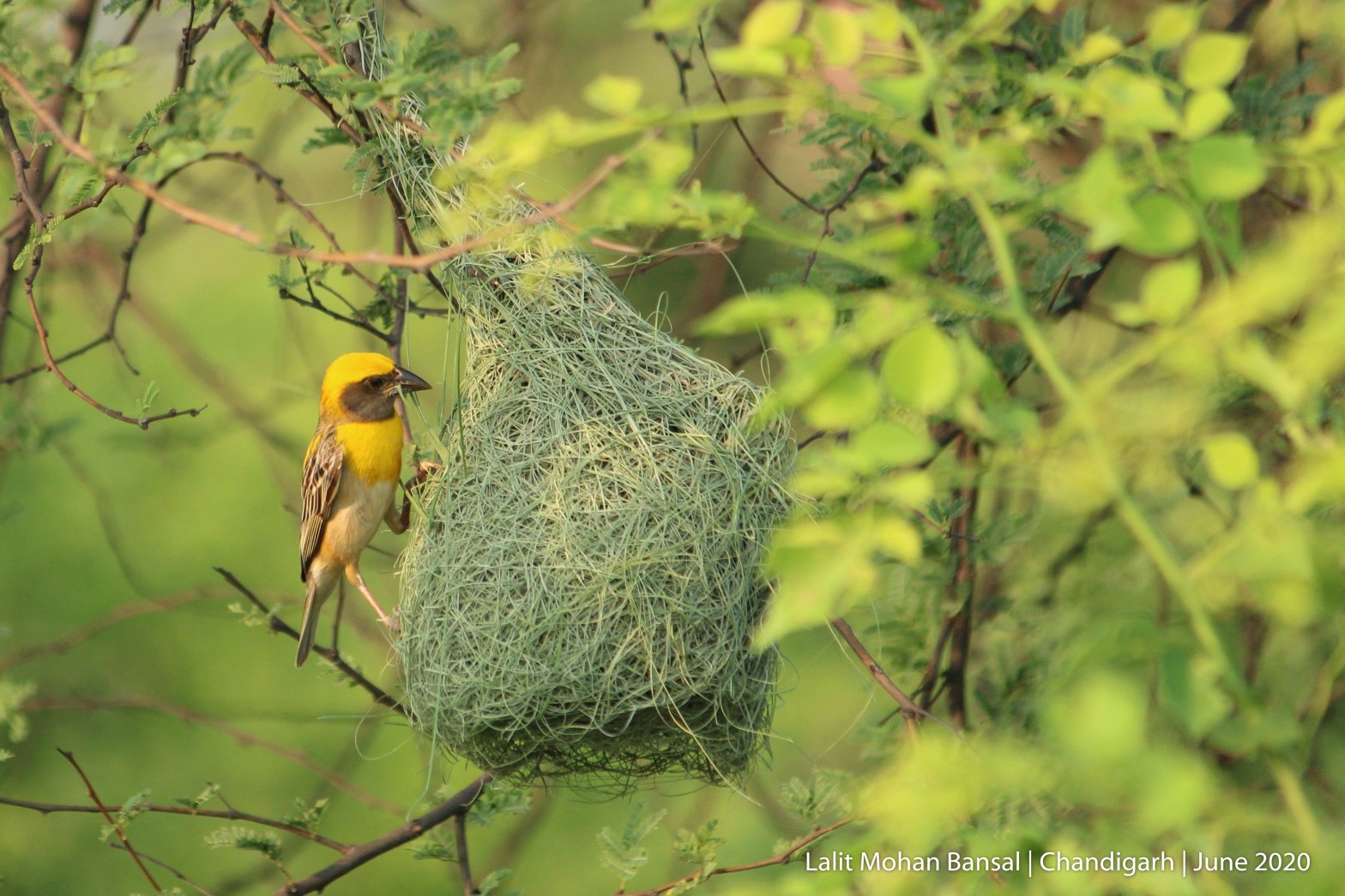
Baya Weaver is a small sparrow-sized bird known for its amazing nesting skills. It is monsoon again, and bayas (or the weaver birds) are back using their artistic skills in building nests and bringing up families. We can easily notice helmet shaped nests hanging from the Palm Trees, which is one of the favored trees for nest making.
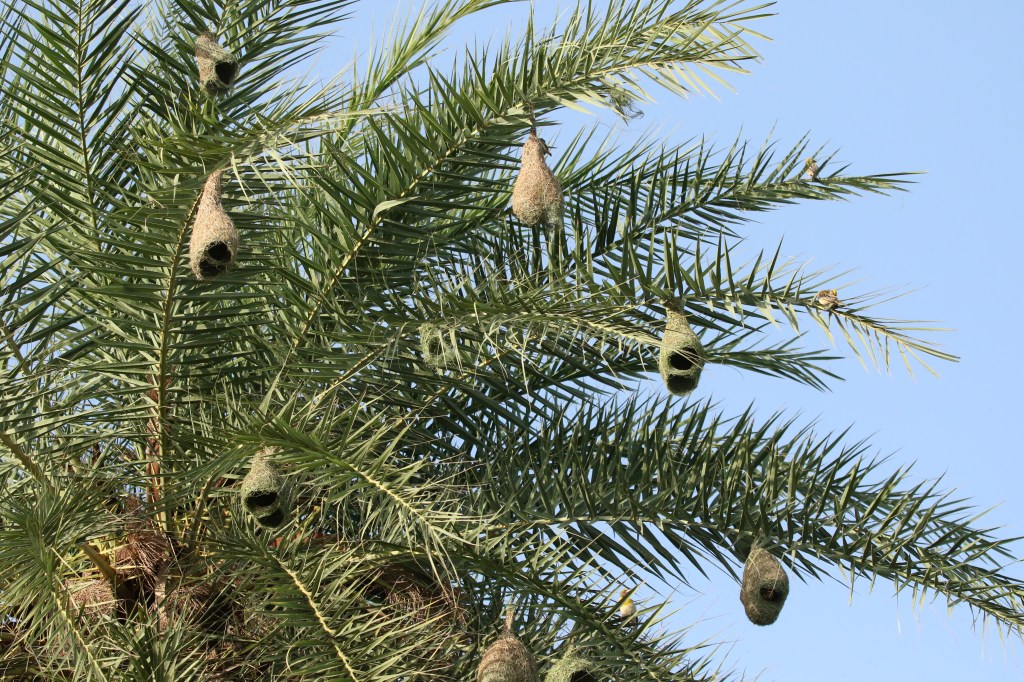
Palm Tree with a colony of nests of Baya Weavers
The baya, also known as the baya weaver, is a small songbird that takes up residence in huge nests it has constructed for the breeding season. Their homes are composed of an entrance and chamber in which they can raise a successful brood. The name of the baya comes from the local Hindi name for the species. The small sparrow-sized bird known for its amazing nesting skills. During the non-breeding plumage, both males and females look similar to the female house sparrow but during breeding seasons between April and August, the baya males acquire a distinctive yellow breeding plumage.
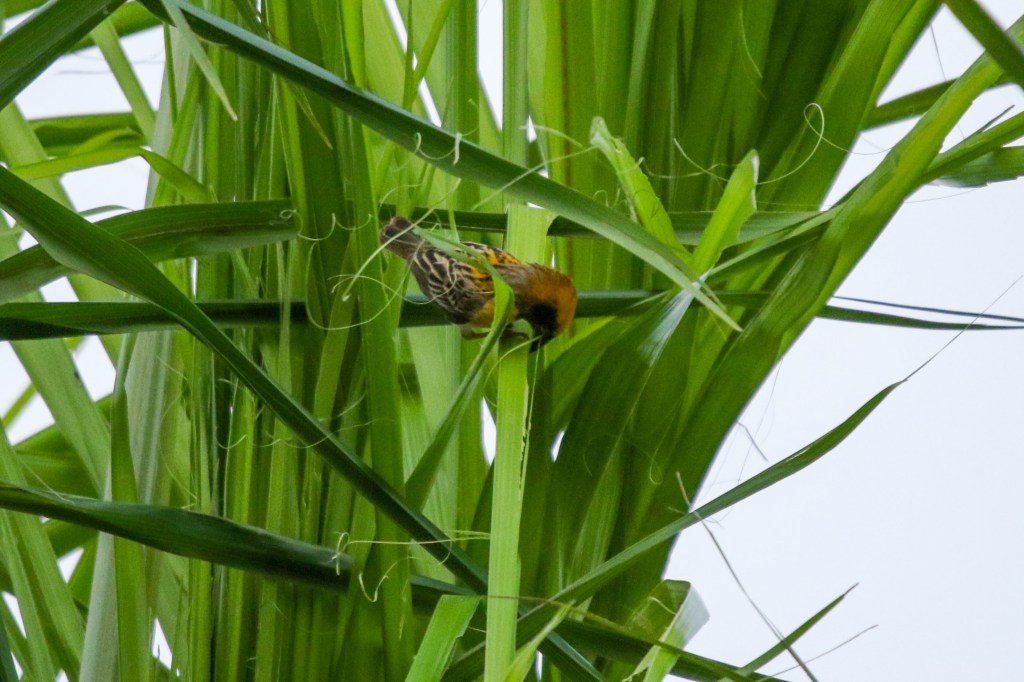
Male Baya Weaver collecting nesting material from Palm Tree leaves
During their breeding season in monsoon, the male birds started to weave the nests with long strips torn from palm fronds, paddy leaves and using the rough grasses. A baya weaver uses its beak and legs to weave and knot. When they weave the nest, the strips are green. He builds a ring and then completes the roof so that the nest resembles a helmet with a chinstrap. Blobs of mud are added to the nest, most probably for reinforcement. It is beautiful to watch them fetching strips, waving them in the air like a dupatta while in flight, and then weaving them meticulously for building a nest.This stage is called helmet stage. At this time the female baya starts visiting the tree in search of a nest and a mate.
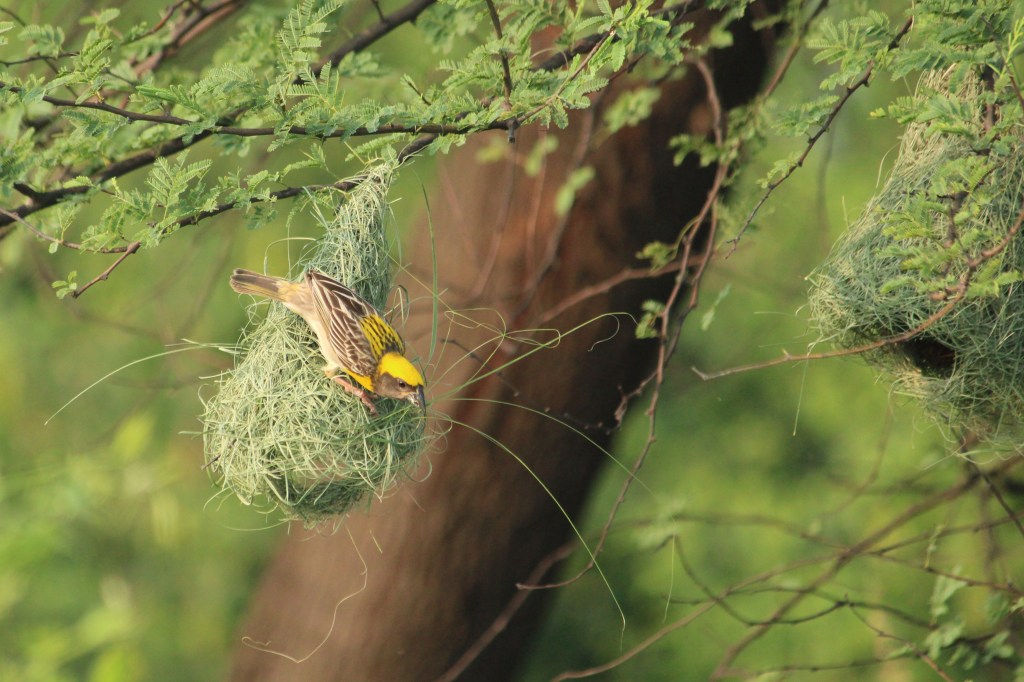
Male Baya Weaver busy in making the nest up to Helmet Stage
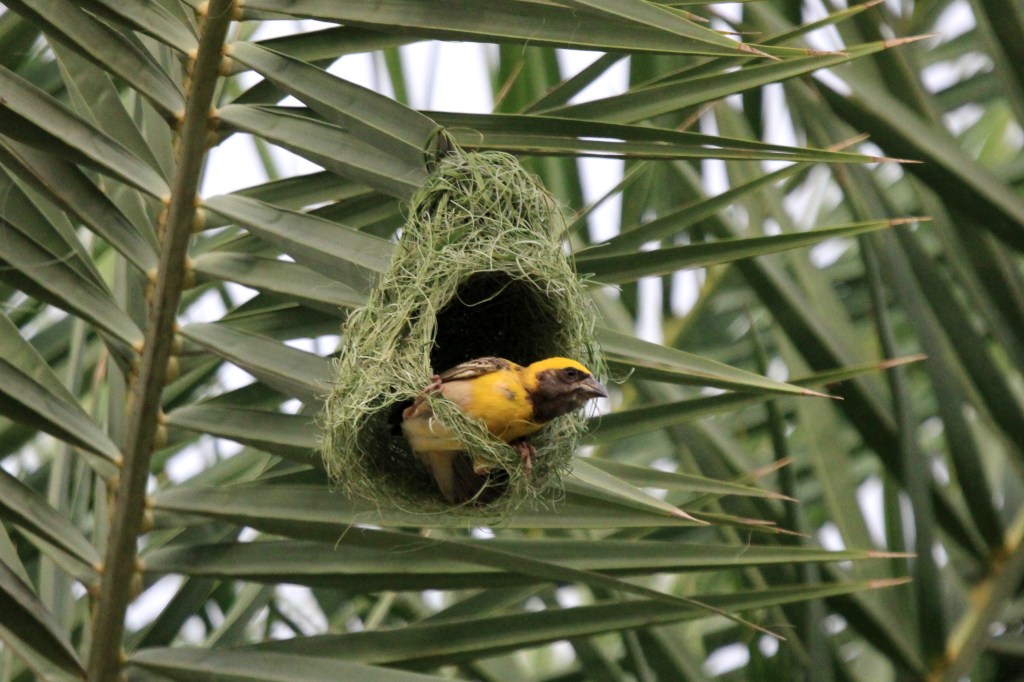
First storey Construction Complete & waiting for female
When a female is sighted from far off distance, the males of the colony are beside themselves with excitement and there is a big commotion with hectic flights around the trees. Each male was perching on his nest and fluttering his wings and lifting the nest towards the female.
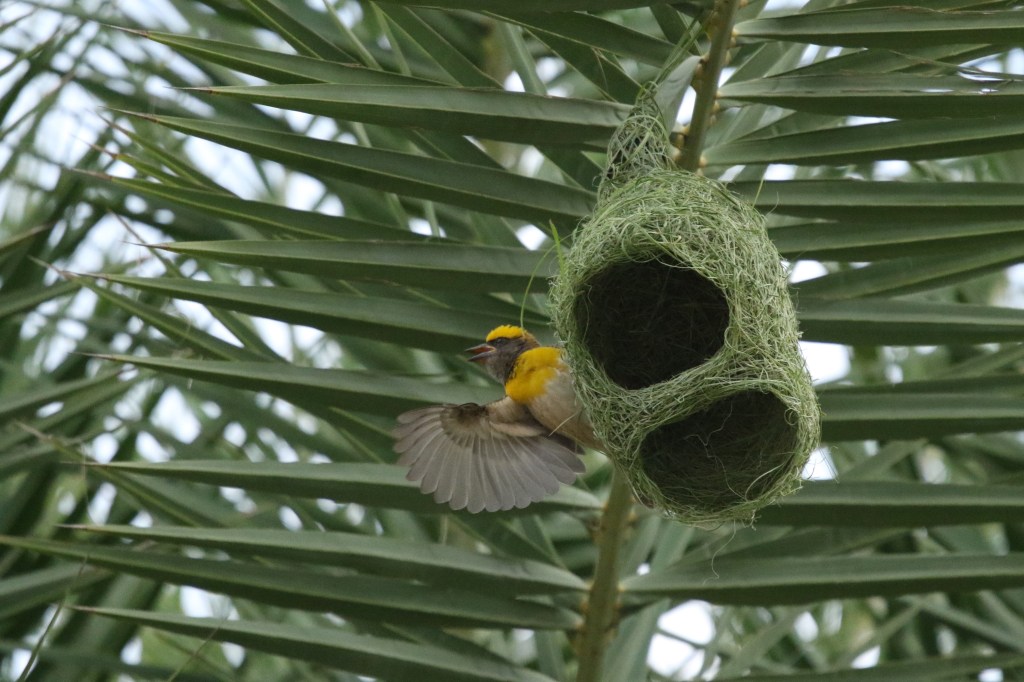
The female baya inspects all nests by poking her beak into wall and pulling out some fibre as if performing a ritualized test of building standards. Finally, she selects the best nest indicating her willingness to accept the architect of that nest as her mate. The female selected a nest and the male designed and structured the egg chamber. Then the chamber was expanded and connected with other half of the helmet. Thereafter the bird developed a tube from the bottom of the dome called as entrance tube.

Inspection in progress by Female Baya Weaver
Once a male and a female are paired, the male goes on to complete the nest including the entrance tunnel, males are solely in charge of building the nests, though their female partners may join in giving the finishing touches. The female lays about 2 to 4 white eggs and incubates them. The females are solely responsible for incubating and bringing up the brood.
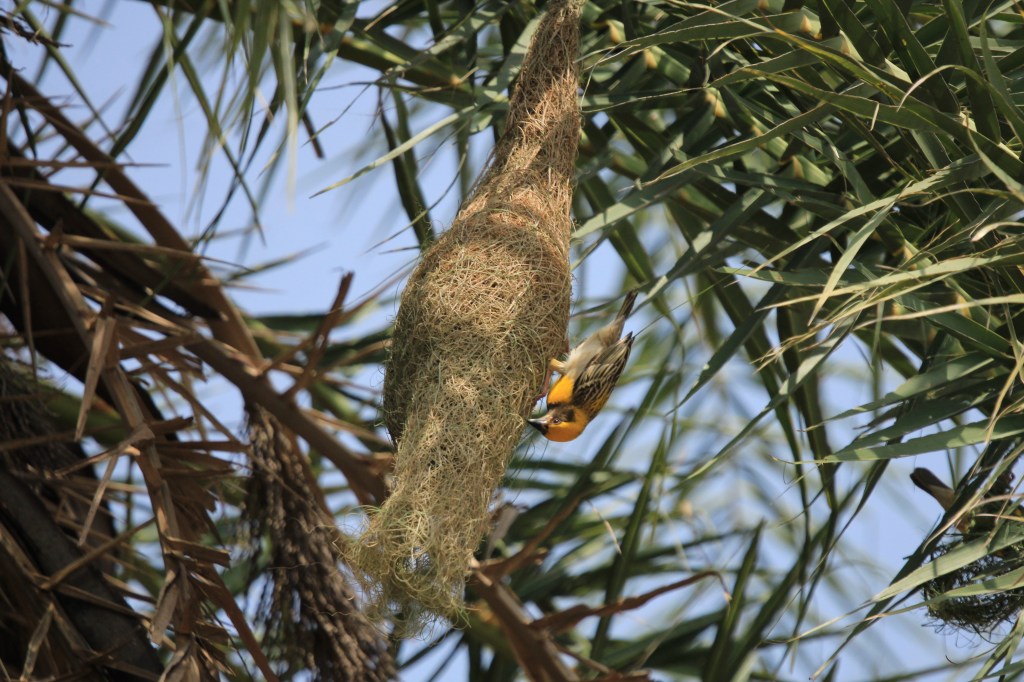
Completing the nest after selection by Female Baya Weaver
The males are polygamous, mating with 2 to 3 females one after another. Males build many partial nests and start attracting females. Once a female likes his nest, he courts her and completes the nest. She modifies the nest a little as per her choice and lays eggs. Meanwhile, the male goes on to woo more females with its other nests.
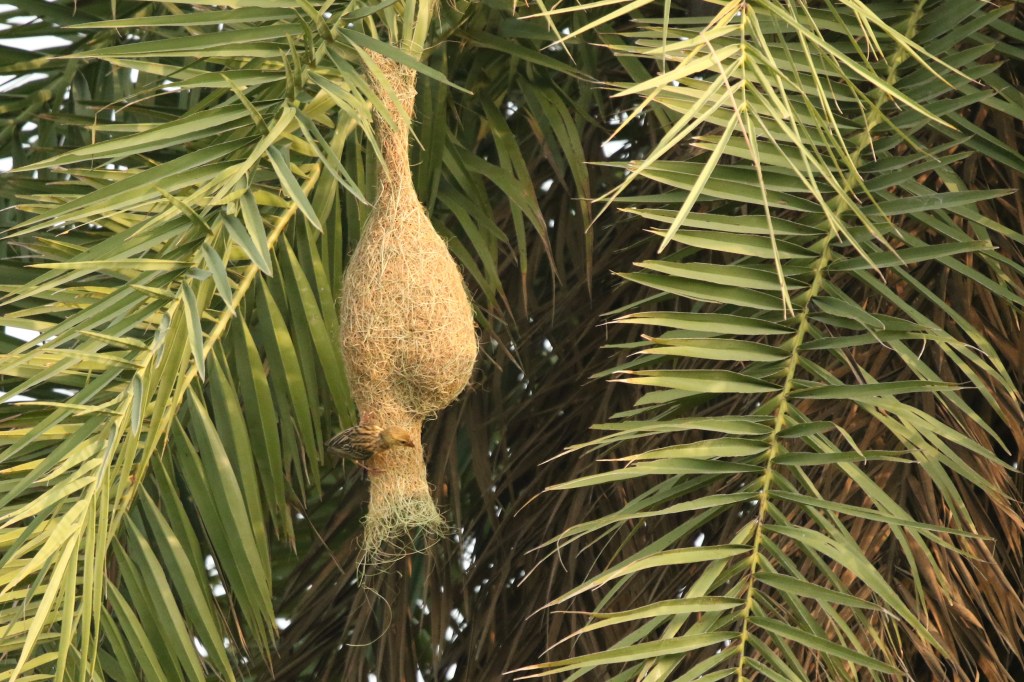
A completed nest and a Female Baya Weaver
These birds build their nests on almost all species of palms that grow tall. One of the obvious reason is safety. Predators such as snakes cannot climb a thorny shrub or a hanging nest. Hence, such nests provide safety for the eggs and young ones. Another reason for the choice for a nesting colony would be partly dictated by quick access to nest material. The male baya weaver collects 500 to 600 different strands of grass to craft a nest. To collect the nest material, it has to head out often, and if these trips are long, there is the risk of pilferage by a neighbour.
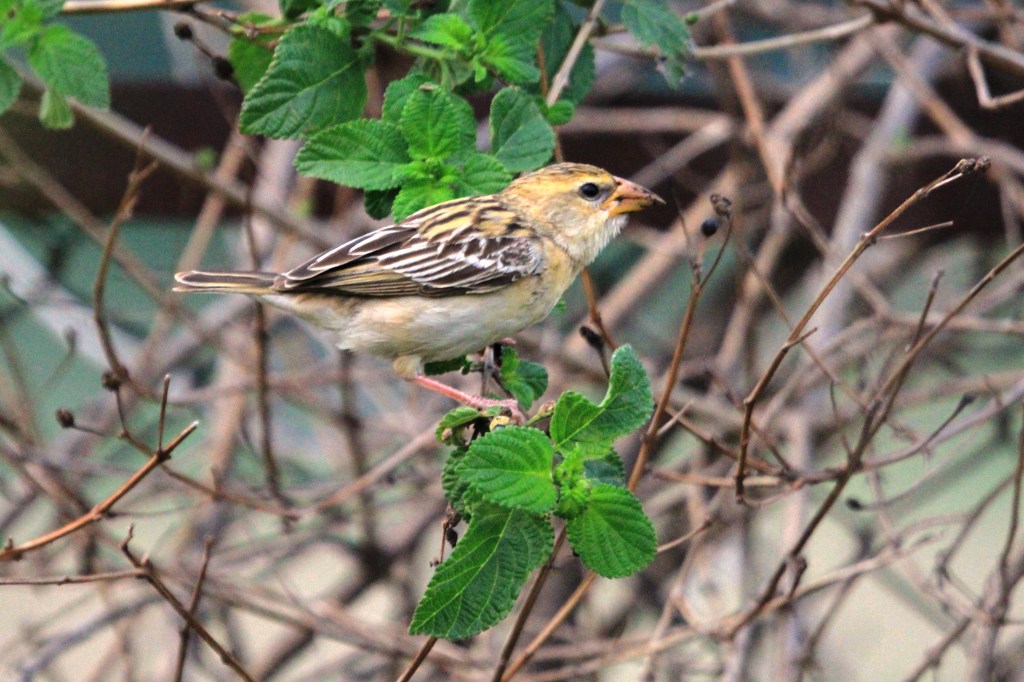
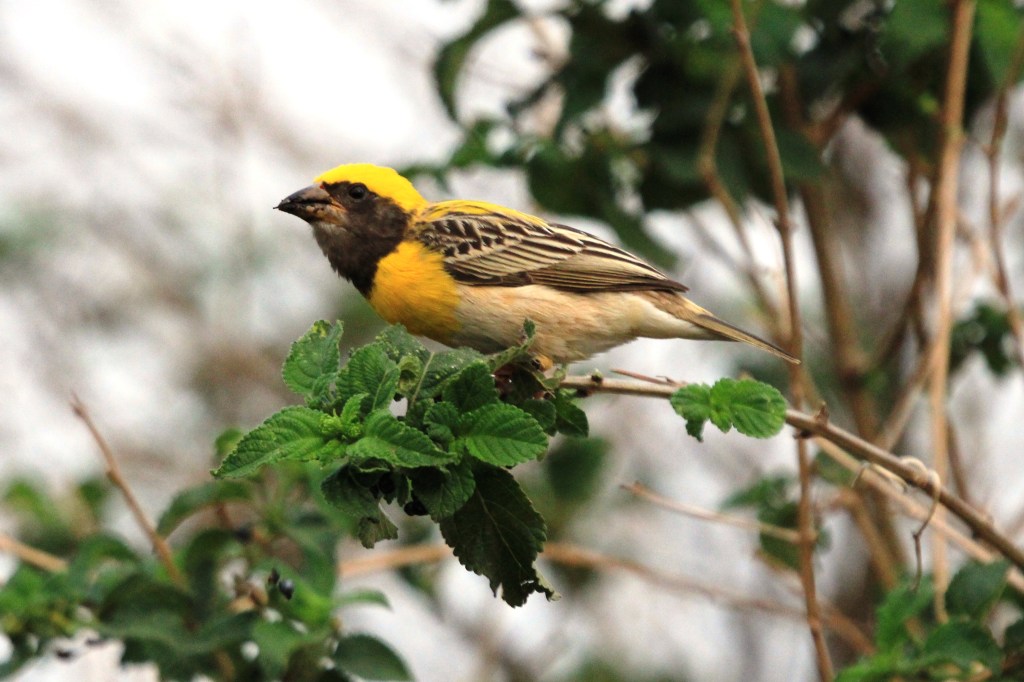
Female and Male Baya Weaver
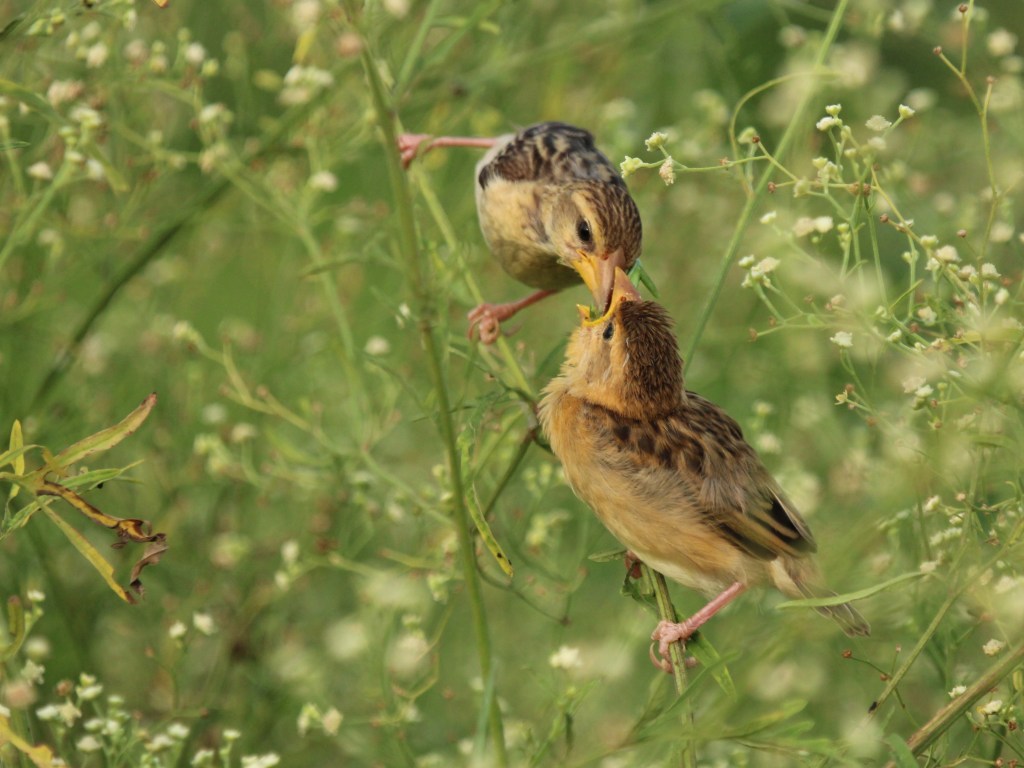
An Adult feeding a new born
 naturetrail
Perfect harmony…everybody doing its duty
LikeLike