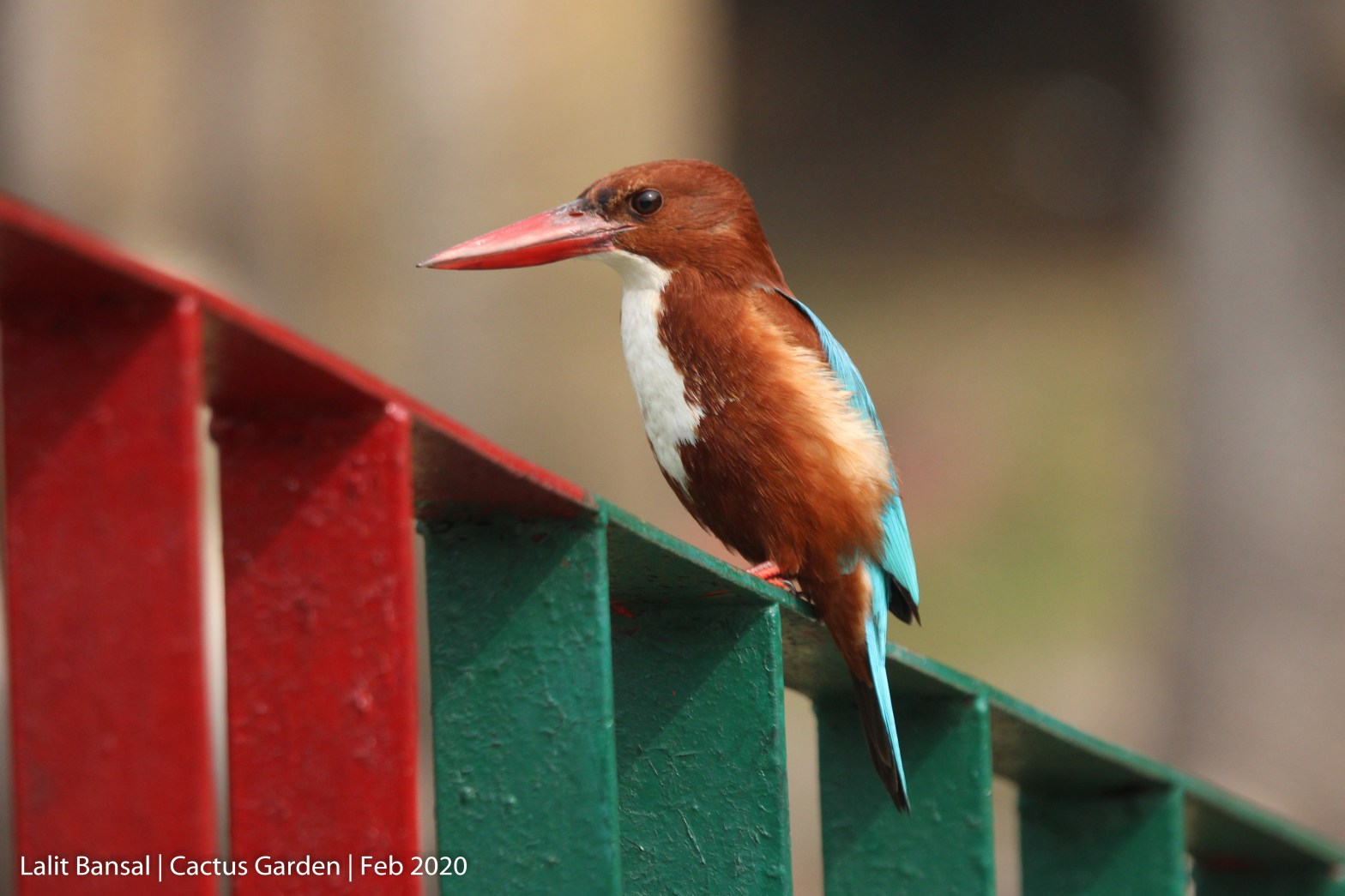
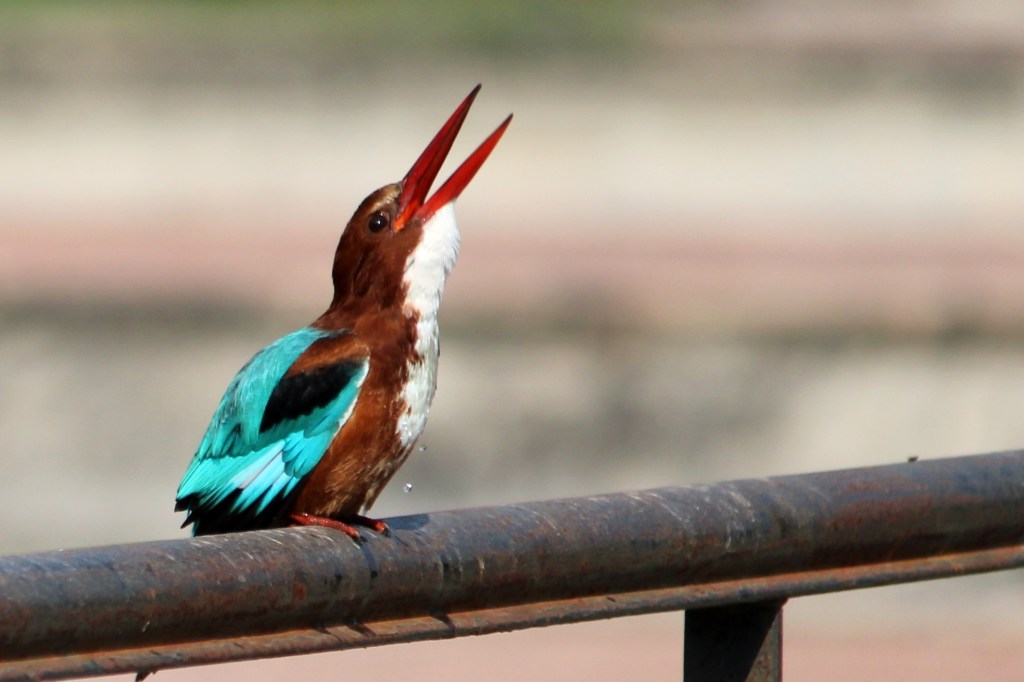
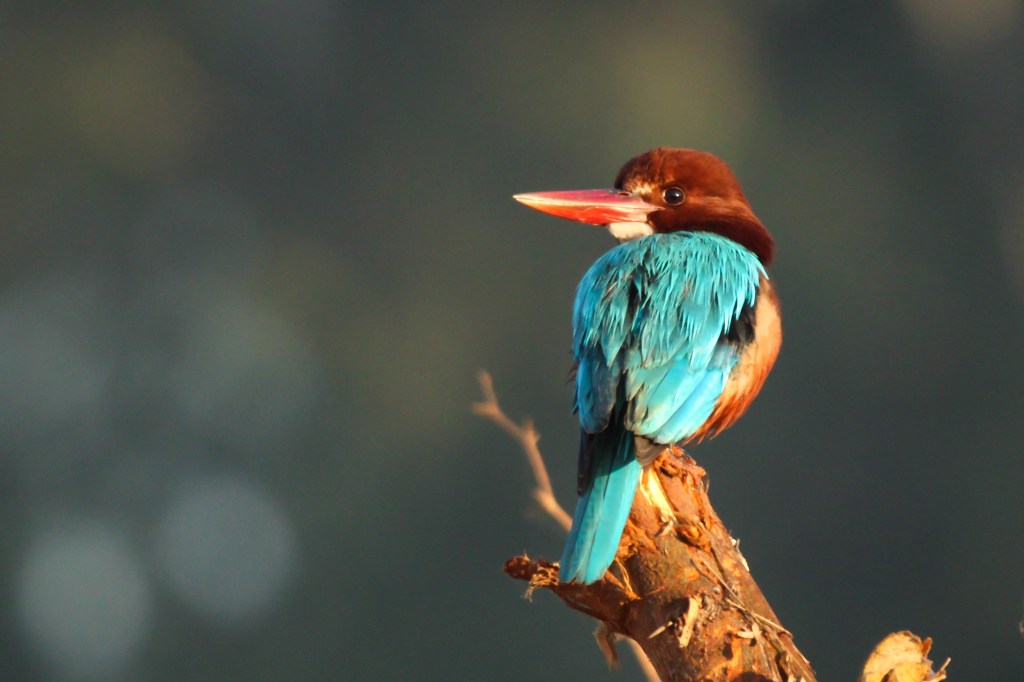
A brilliant turquoise blue Kingfisher with deep chocolate brown head, neck and under parts, a conspicuous white ‘shirt front’ and long heavy , pointed red bill. A white wing patch is noticeable in flight. It is perhaps the most familiar of our kingfishers and also known as white-breasted kingfisher. It is also the state bird of West Bengal. This kingfisher is a resident over much of its range.
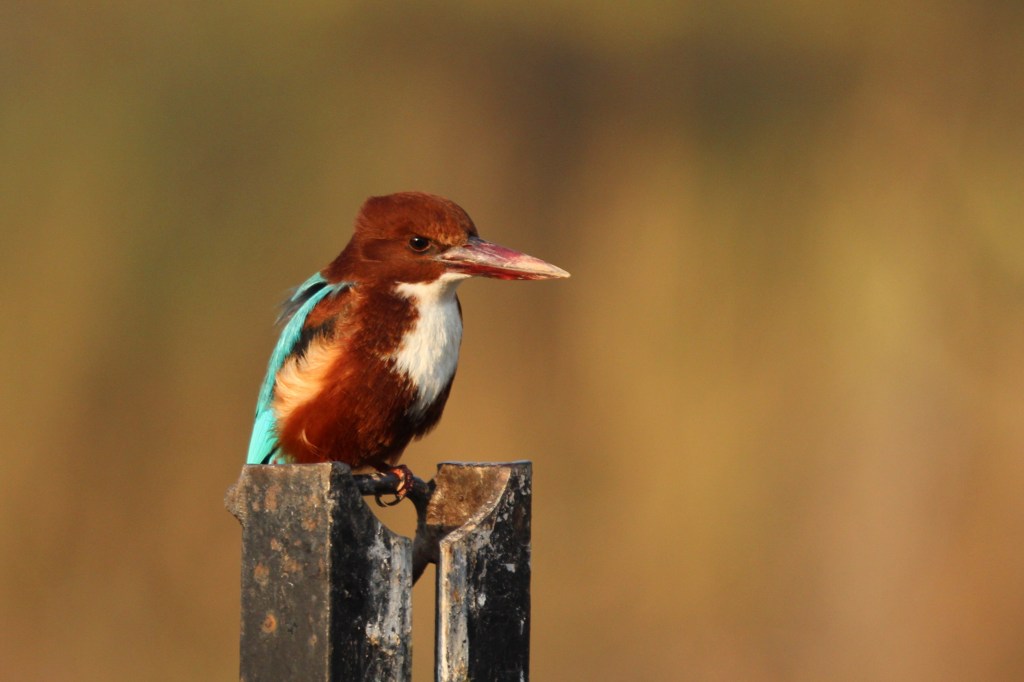
Kingfisher is a Passerine or perching bird meaning it has feet having three toes in front and one behind, the kind of arrangement helps them to not only capture and hold the prey but also hold on to branches while resting.
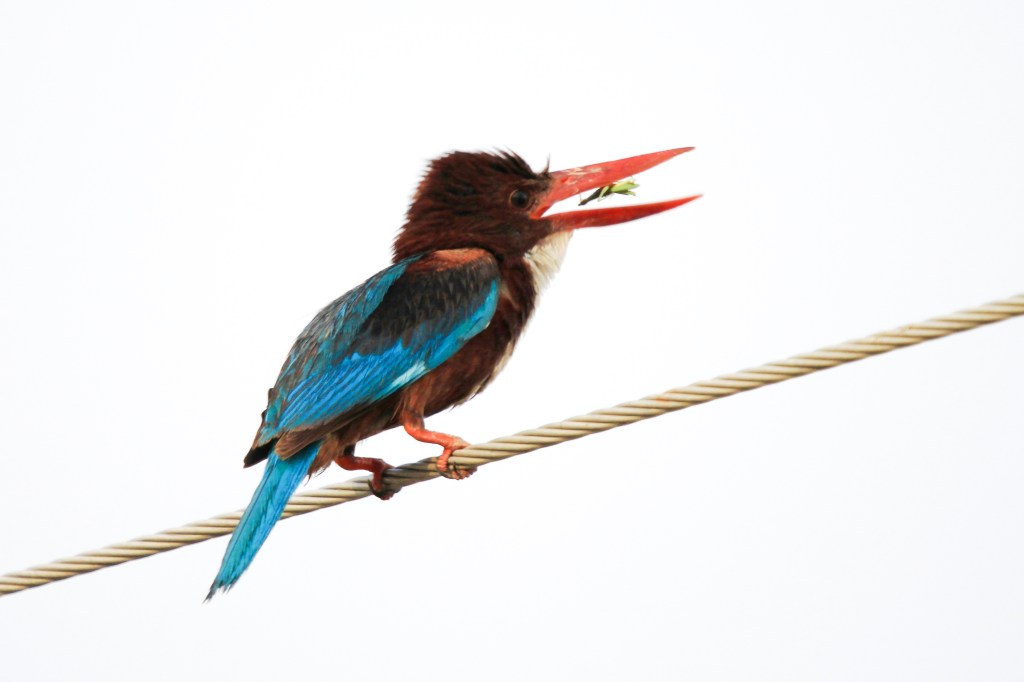
It feeds on earthworms, lizards, grasshoppers and other insects occasionally even capturing mice and young birds, from a favourite perch on some bare branch or telegraph wire, which it occupies day after day and whence it can survey the country around, the bird hurls itself down on creeping prey and flies off with it to another perch nearby where the victim is battered and swallowed.
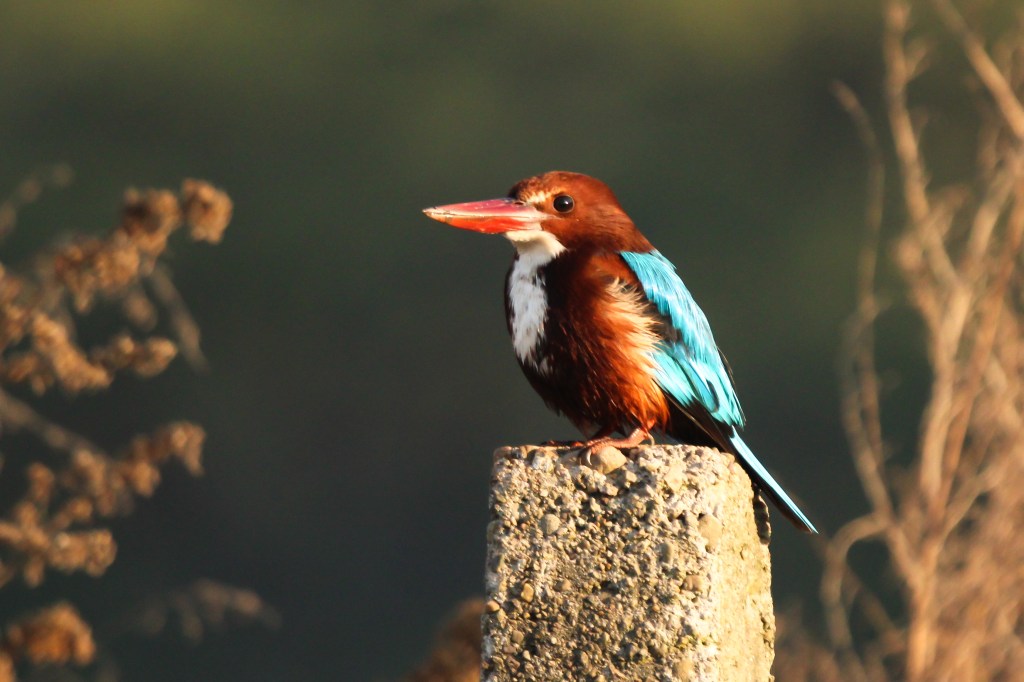
The white-throated kingfisher begins breeding at the onset of the Monsoons. Males perch on prominent high posts in their territory and call in the early morning. The tail may be flicked now and in its courtship display the wings are stiffly flicked open for a second or two exposing the white wing mirrors. They also raise their bill high and display the white throat and front. The female in invitation makes a rapid and prolonged kit-kit-kit… call.
The nest is a tunnel (50 cm long, but a nest with a 3-foot tunnel has been noted in an earth bank. The nest building begins with both birds flying into a suitable mud wall until an indentation is made where they can find a perch hold.
 naturetrail