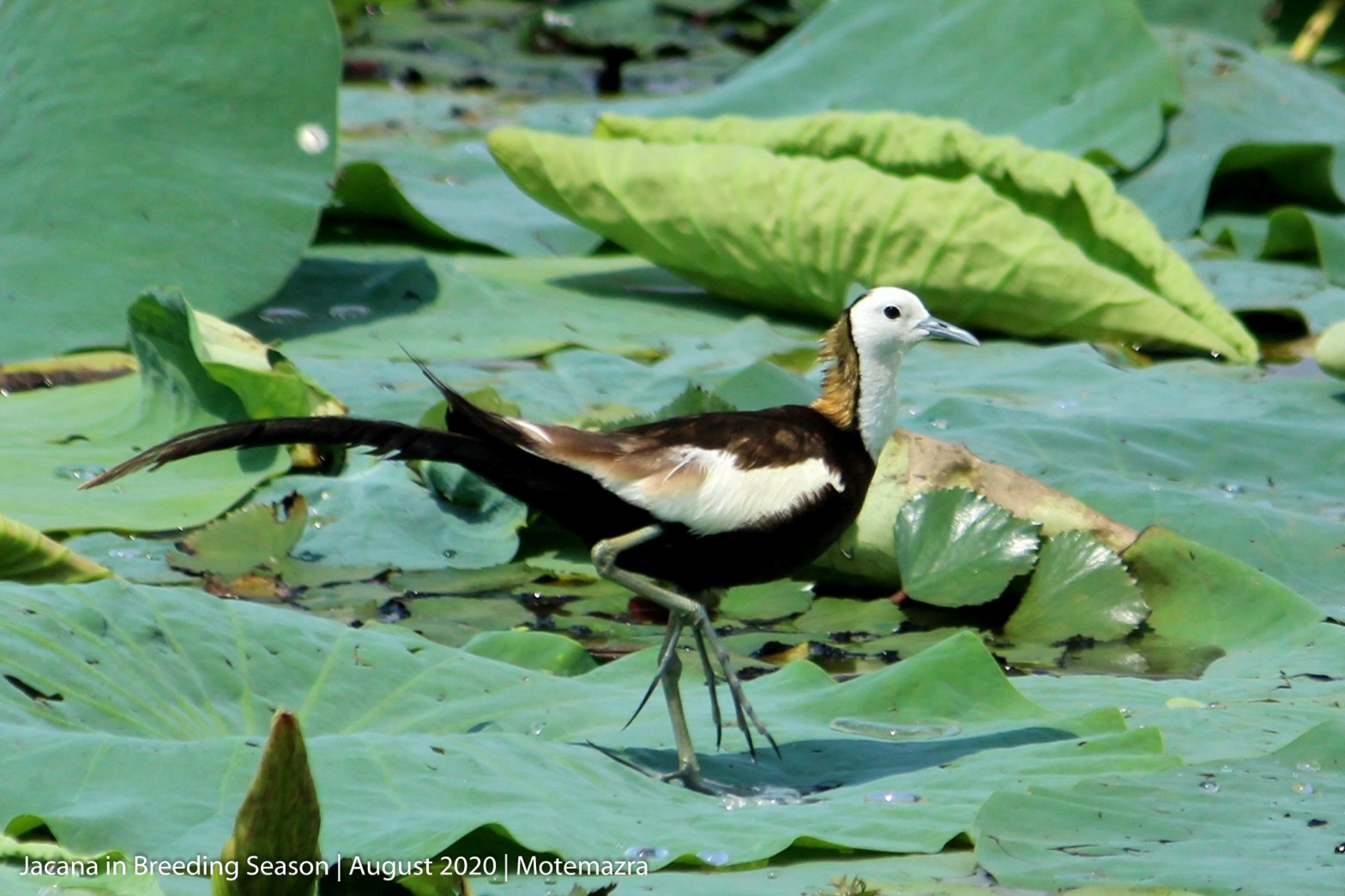
This lovely south-east Asian mystery bird is unique because it is the only Jacana to have different plumages for the breeding and non-breeding seasons — unique in its taxonomic family. Jacana is also called a lily-trotter or lotus bird.
The seven or eight species of the genus Jacana include the American jacana; the African jacana; the Australian lotus bird; and the pheasant-tailed jacana, of India and the Philippines, a handsome black, yellow, and white bird that acquires long tail feathers in the breeding season.
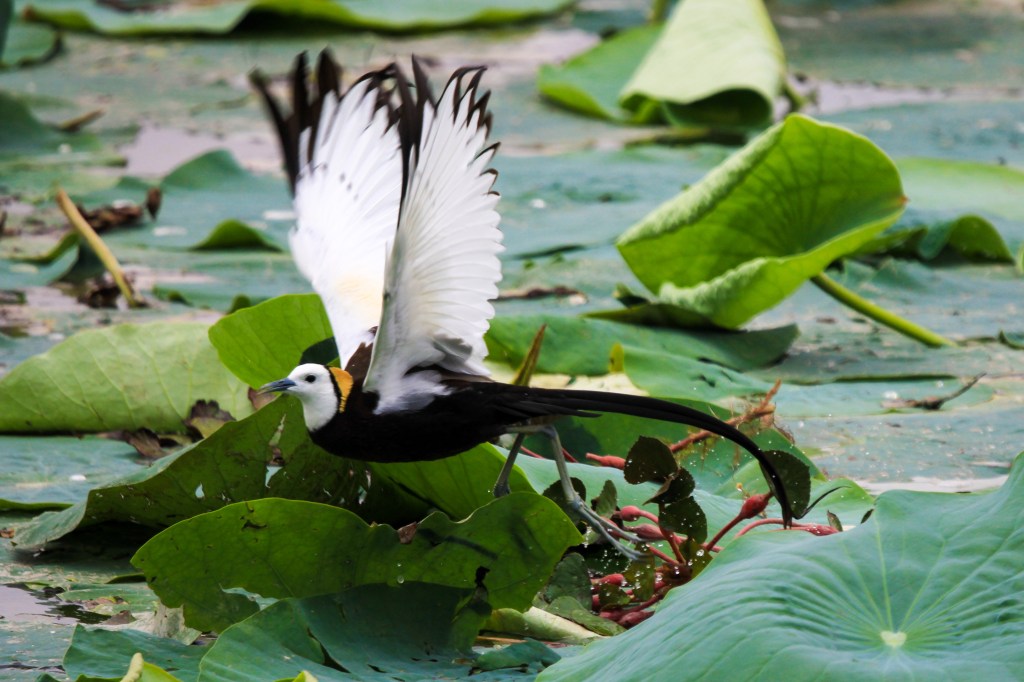
Pheasant tailed Jacana | June 2021
The bird is also known as Water Pheasant. It is a group of waders that are identifiable by their huge feet and claws which enable them to walk on floating vegetation in shallow lakes, their preferred habitat. The Pheasant-tailed Jacana is capable of swimming, although it usually walks on the vegetation. The females are more colourful than the males and are polyandrous and thus, they are slightly larger than the males and have brighter plumage colouring.

Pheasant tailed Jacana – Non breeding season
The Pheasant-tailed Jacana is a conspicuous and unmistakable bird. In breeding plumage, the central tail feathers grow very long, resembling a pheasant’s tail, which is how this bird got its common name. On the nape of the neck there is a patch of brilliant, gleaming gold feathers. The wings and under-parts are dazzlingly white in flight in both plumages, as you can see in this photograph. During the breeding season, the long tail adds another 8 cm. Breeding adults are mainly black other than white wings, head, and fore neck. The hind neck is golden. There is a striking white eye-stripe. The legs and very long toes are grey.
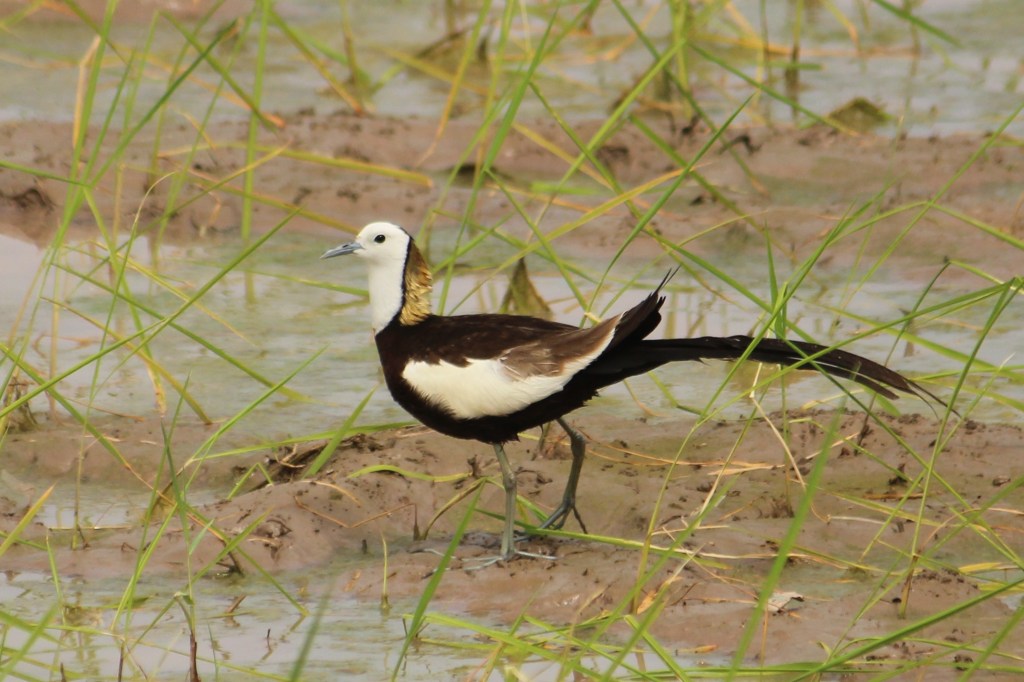
Pheasant tailed Jacana – Breeding Season
Non-breeding adults lack the long tail. The underparts are white except for a brown breast band and neck stripe. The side of the neck is golden.
 naturetrail
Beautifully captured images and well written blog.
LikeLike