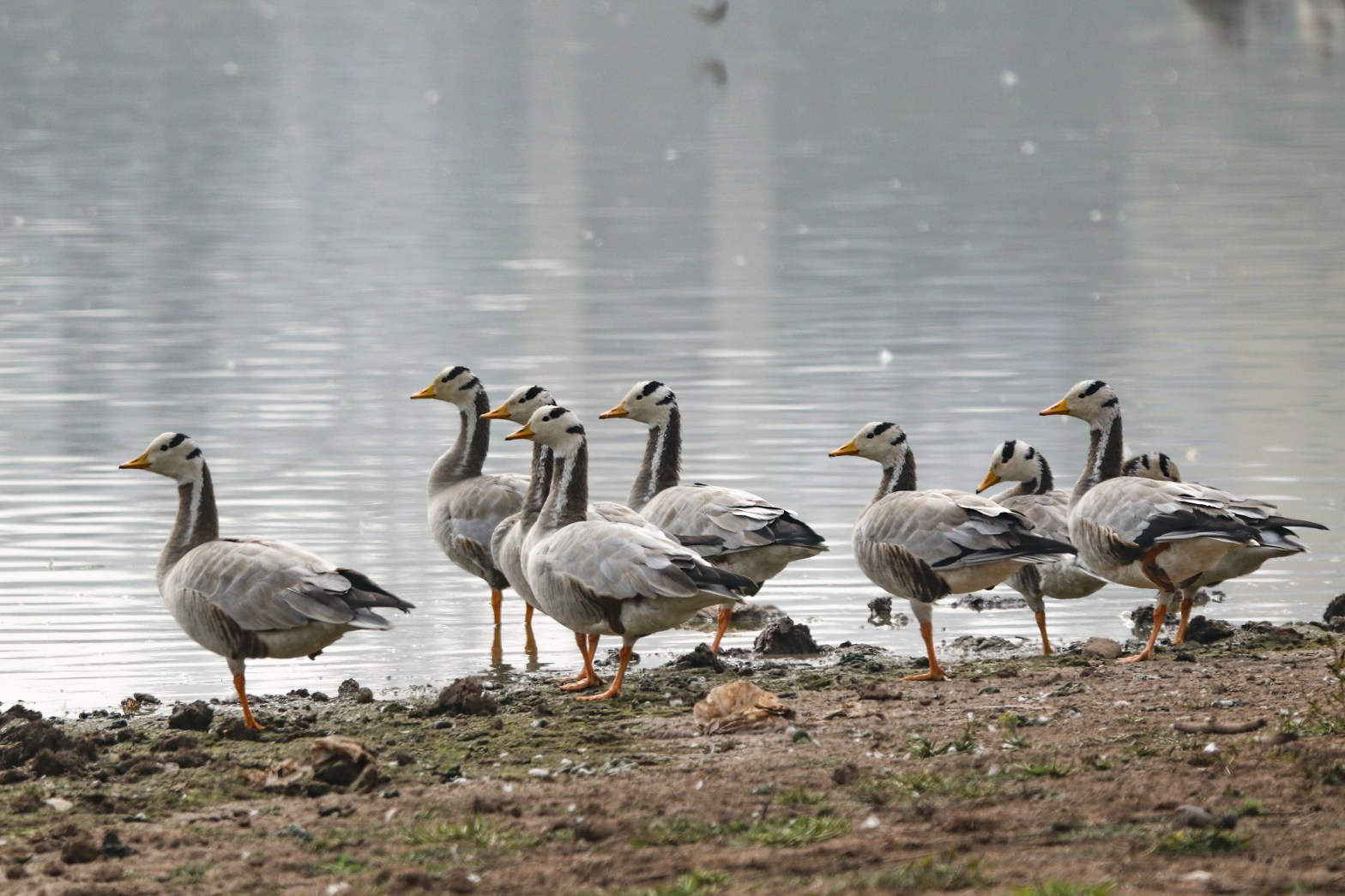
They don’t train or acclimatize. They could walk on the top of Everest and have no problem at all. They achieve physiological feats that seem impossible – flying at extreme altitude, where there is less than 10% the oxygen found at sea level. They never stop flapping their wings and one or two of the flights tracked were up to 17 hours long.
One of the highest and most iconic transmountain migrator in the world, the Bar-headed goose flies at heights that may reach 30,000 feet during its twice-yearly migrations above the Himalayan Mountains. This handsome stout-bodied goose gets its name from the double bars of dark feathers that wrap around the back of its white head. Its body is light gray, and its legs and bill are bright orange. Males and females are identical.
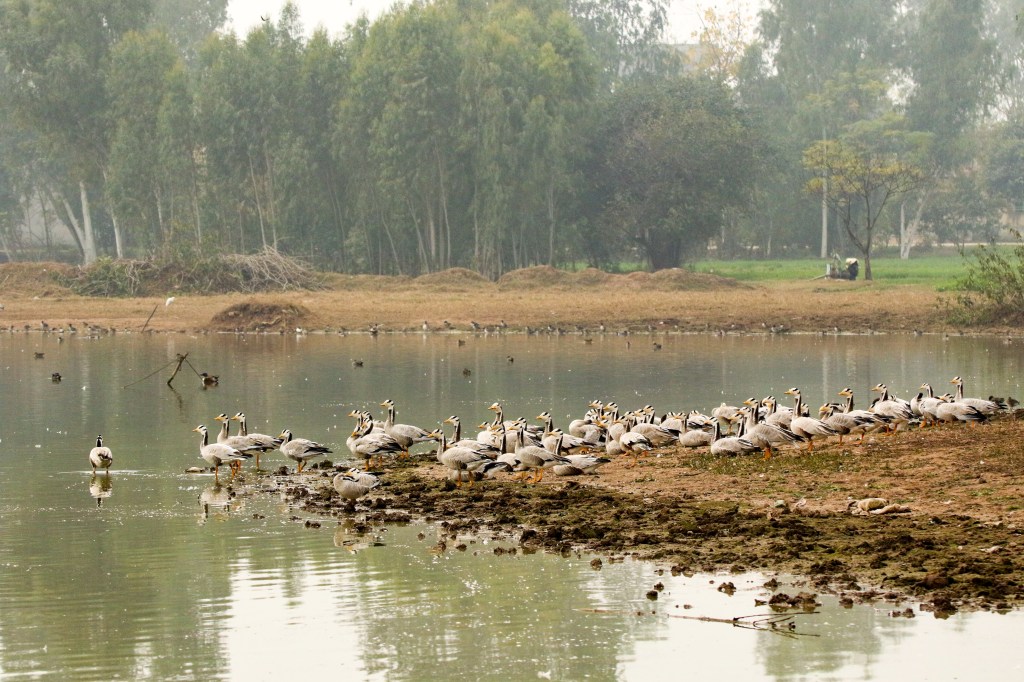
Sukhna Lake Chandigarh
Every winter season, a large number of Bar-headed geese arrive at Inter State Chandigarh Region at Sukhna Lake or near Chandigarh at Mote Mazra. These can be sighted from the Month of December to February. In 2024 also, though this species has not been sighted by me at Sukhna Lake, but at Mote Mazra, they have arrived in large number.
The bird, native to Central Asia, is known to migrate over the Himalayas to spend the winter in South Asia, from Assam to as far as Tamil Nadu. A tracking study has revealed the secrets of the world’s highest bird migration – the Himalayan flight of the bar-headed goose.
It is interesting to note that instead of passing through the valleys at lower altitude, it prefers to cross the Himalayas at its peak height. The physiological and biomechanical requirements of flight at high altitude have been the subject of much interest. Flight costs increase more rapidly than anticipated as air density declines. It requires a lot of energy to create lift and also oxygen intake. And the bar-headed goose has special abilities to counter these hardships. The bar-headed goose develops mitochondria that provide oxygen to supply energy to its cells. At this altitude, there are temperatures that would freeze exposed flesh. Even kerosene cannot burn there, and helicopters cannot fly at that altitude. They have more arteries and special hemoglobin to carry more oxygen in the blood. The special hemoglobin can be a source of scientific research for high altitude sickness and heart ailments.
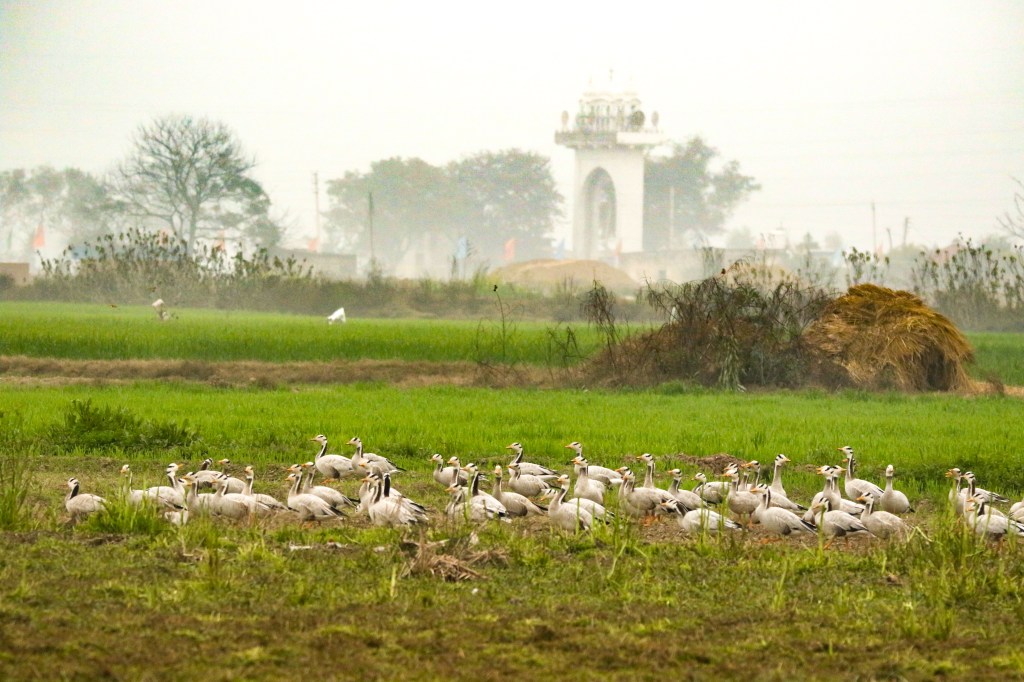
Bar Headed Goose – Fields of Mote Mazra – January 2024
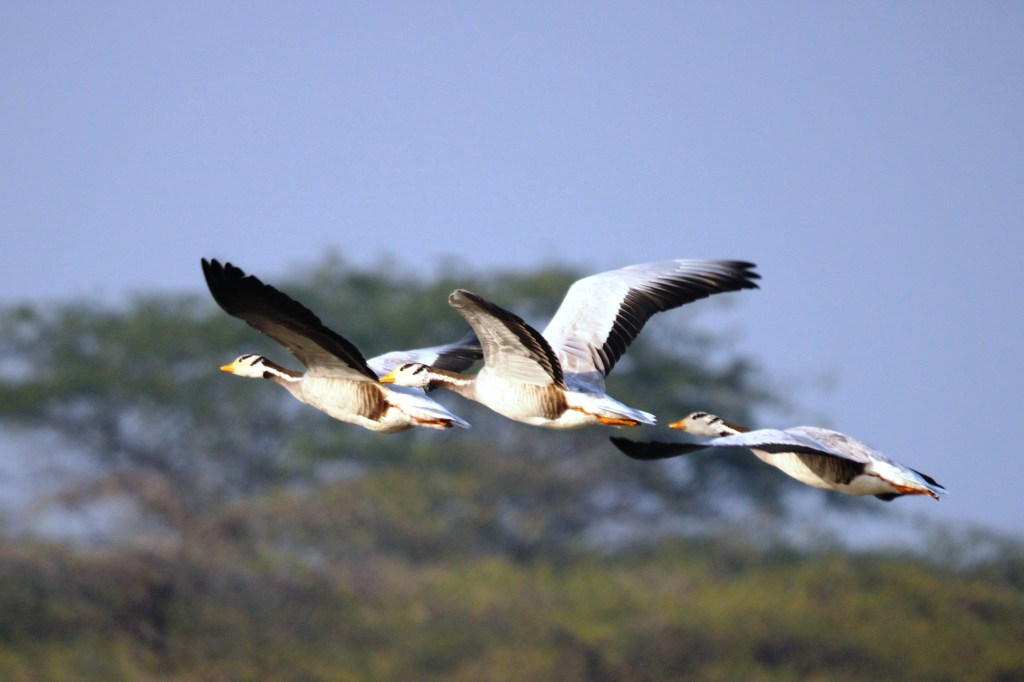
They fly in V shape, to conserves their energy. Each bird flies slightly above the bird in front of them, resulting in a reduction of wind resistance. The birds take turns being in the front, falling back when they get tired. In this way, the geese can fly for a long time before they must stop for rest.
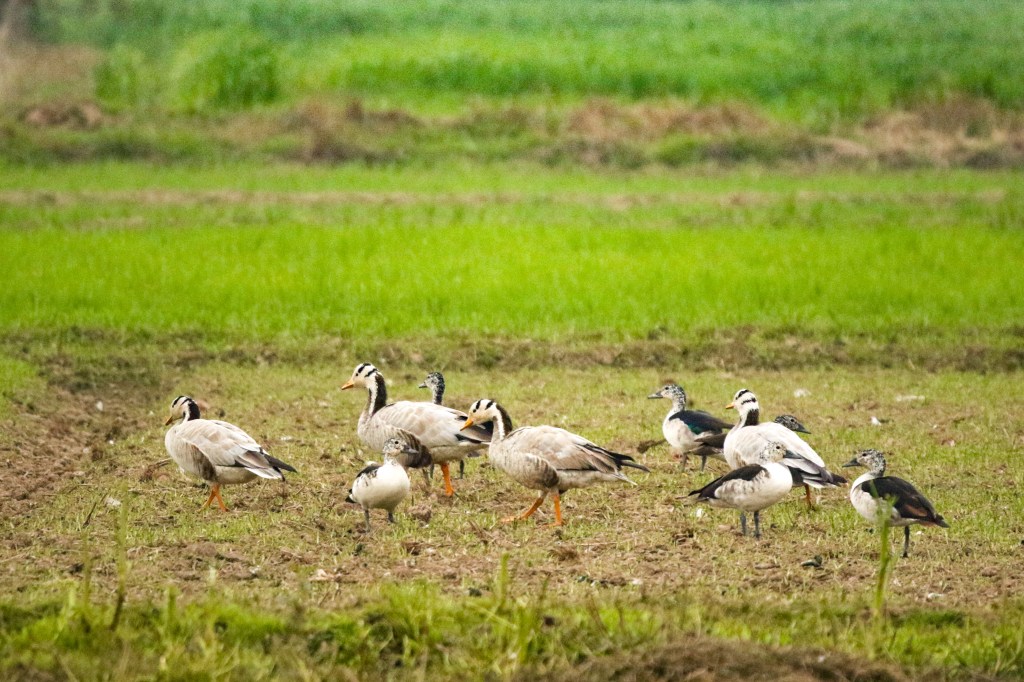
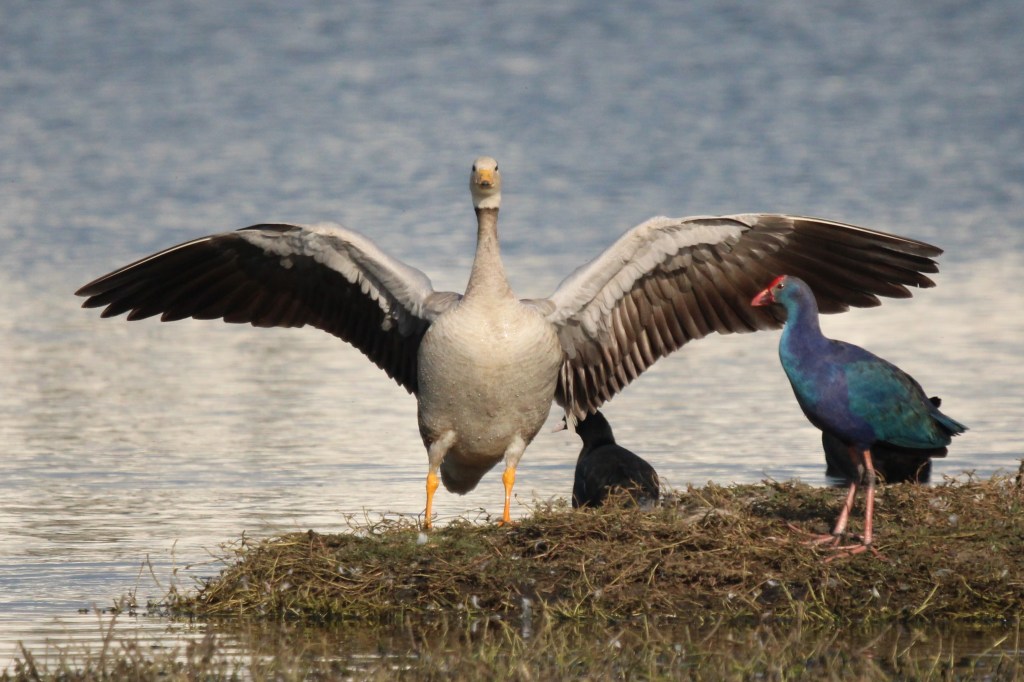
Winter Visitors with local residents Knob billed Ducks – January 2024
The second benefit to the V formation is that it is easy to keep track of every bird in the group. Flying in formation may assist with the communication and coordination within the group. Fighter pilots often use this formation for the same reason.
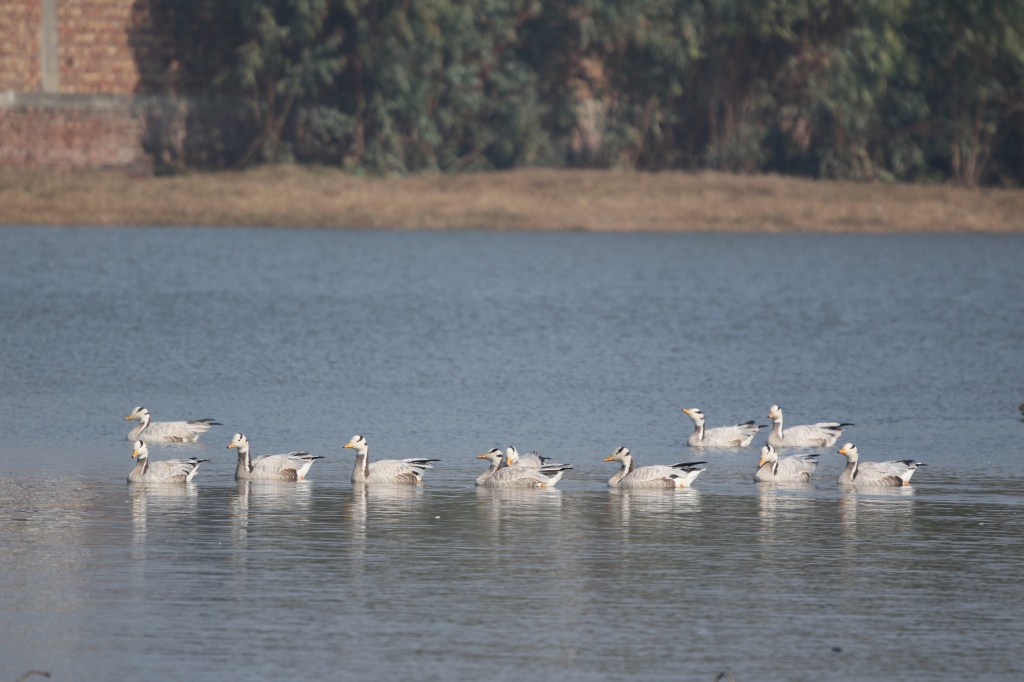
These are monogamous geese that may mate for life, though there are recorded occasions of polygamy when females significantly outnumber males on the breeding grounds. The nest is a shallow scrape lined with down, but occasionally bar-headed geese will nest in trees.
Bar-headed geese are mainly vegetarian. They feed primarily on grasses, roots, stems and other plant parts, as well as on grains, tubers and occasionally seaweed. The birds usually nest in dense colonies. A female lays from four to six eggs, which take about a month to hatch. Chicks leave the nest after about 53 days.

In the colder months (October through March), bar-headed geese live in low-lying swamps in northern India and Burma. When the weather warms up they take to the skies on their annual migration to their summer breeding grounds in the high mountain lakes and wetlands of central Asia.
 naturetrail
Well illustrated. Keep it up.
Subhash Sapru
LikeLike