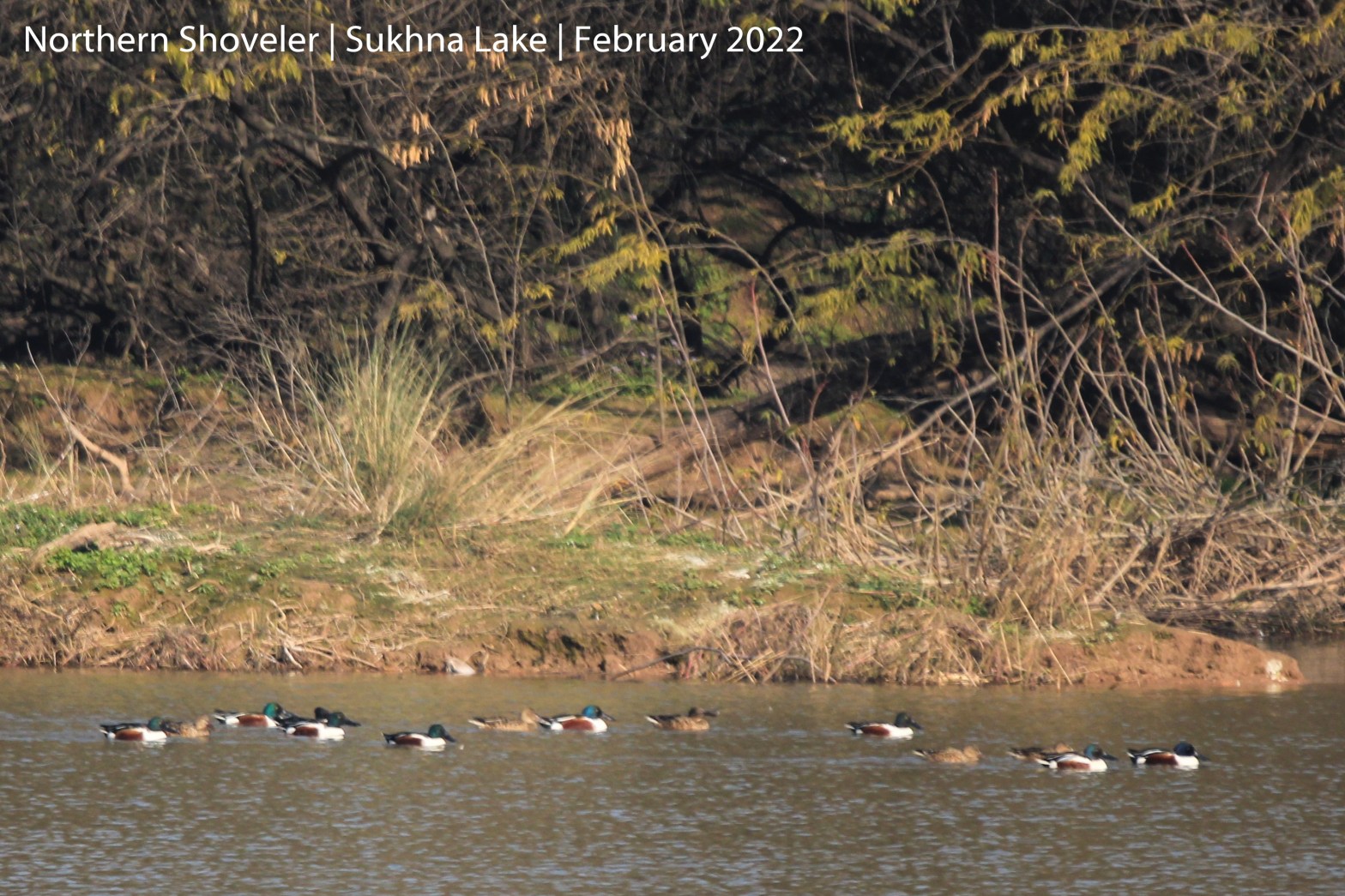
The next in the list of Winter Visitors to the City Beautiful is Northern Shoveler. The name of the Northern Shoveler is derived from its highly specialized spoon shaped bill that is used to forage for aquatic invertebrates. I spotted Northern Shoveler at Sukhna Lake, Chandigarh in the second week of February. Though the flock is generally at a distance, yet we can have some closer shots at Motemazra which is 30 km from Chandigarh.
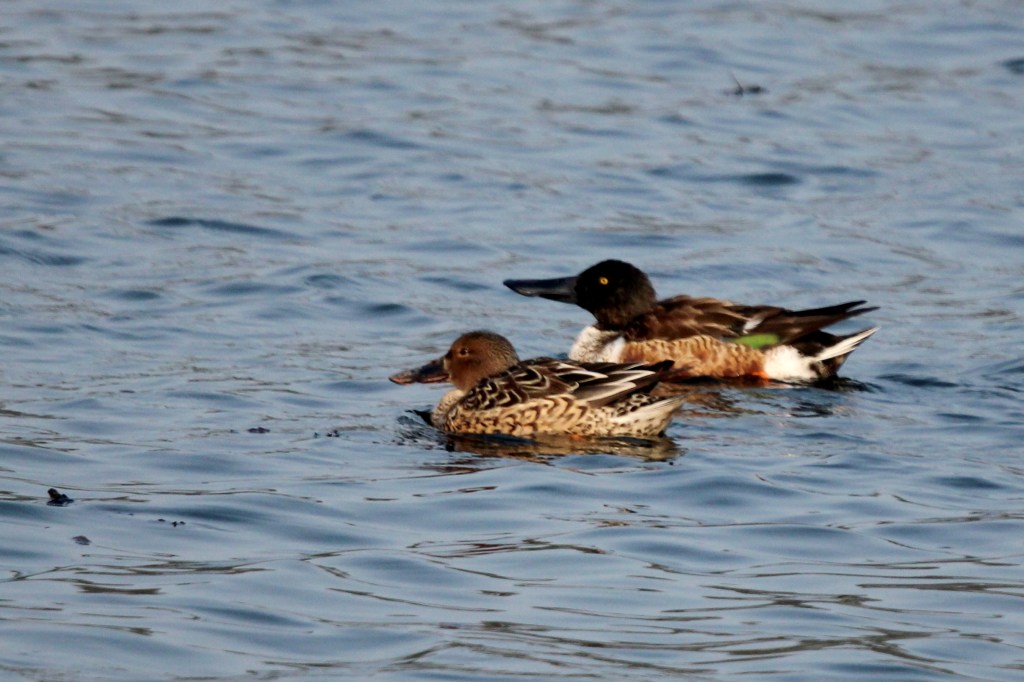
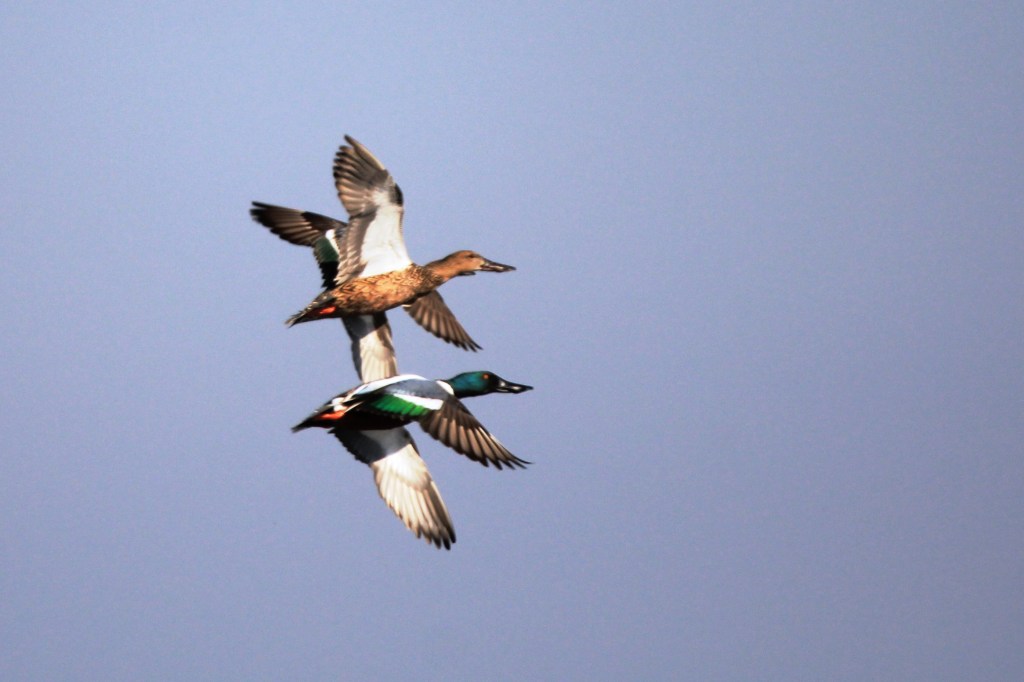
Both males and females have different patterns and colorings. Breeding male shovelers are bold white, blue, green, and rust, but their most notable feature is their white chest and white lower sides. In flight, males flash blue on the upper wing and green on the secondaries (the speculum). Female and immature shovelers are mottled in brown and have powdery-blue on the wings that is sometimes visible on resting birds. Their very large orange bill is their most notable field mark.
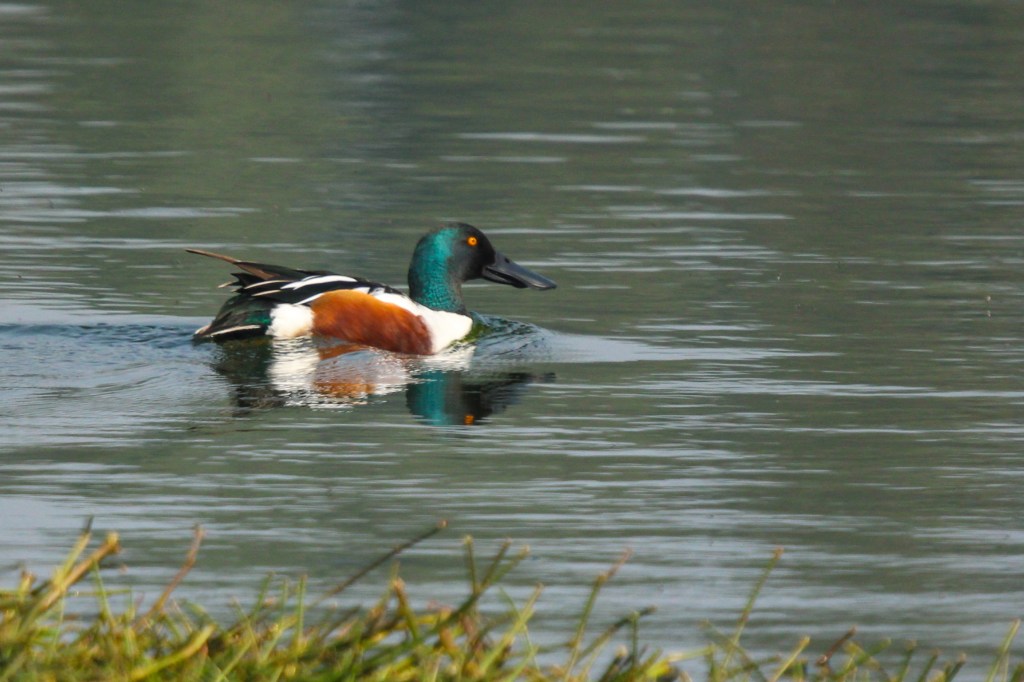
Northern Shovelers often have their heads down in shallow wetlands, busily sweeping their bills side to side, filtering out aquatic invertebrates and seeds from the water. Northern Shovelers forage in shallow wetlands, coastal marshes, rice fields, flooded fields, lakes, and sewage lagoons. They nest along the margins of wetlands or in neighboring grassy areas.
 naturetrail