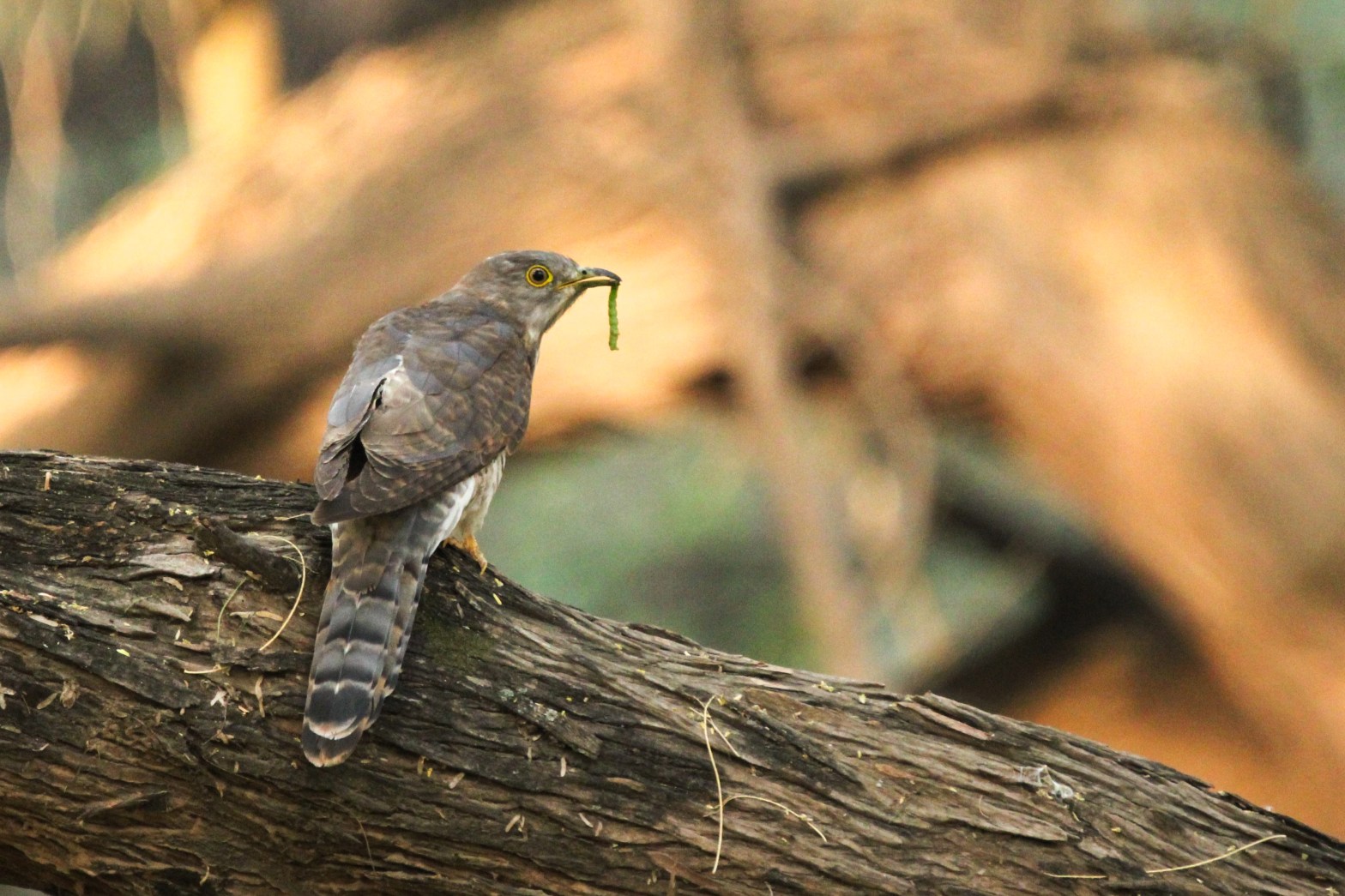
The Common hawk-cuckoo , popularly known as the brainfever bird, is a medium-sized cuckoo resident in the Indian subcontinent.
This brainfever bird is a brood parasite, that is, it lays eggs in the nests of other birds and relies on the hosts to take care of its chicks. Hence, the chicks are taken care of by the foster parents. The common hawk-cuckoo hosts include laughing thrushes and babblers. Babblers are preferred because the breeding time or the breeding season of the two species takes place around the same time. Its breeding season is March to June.
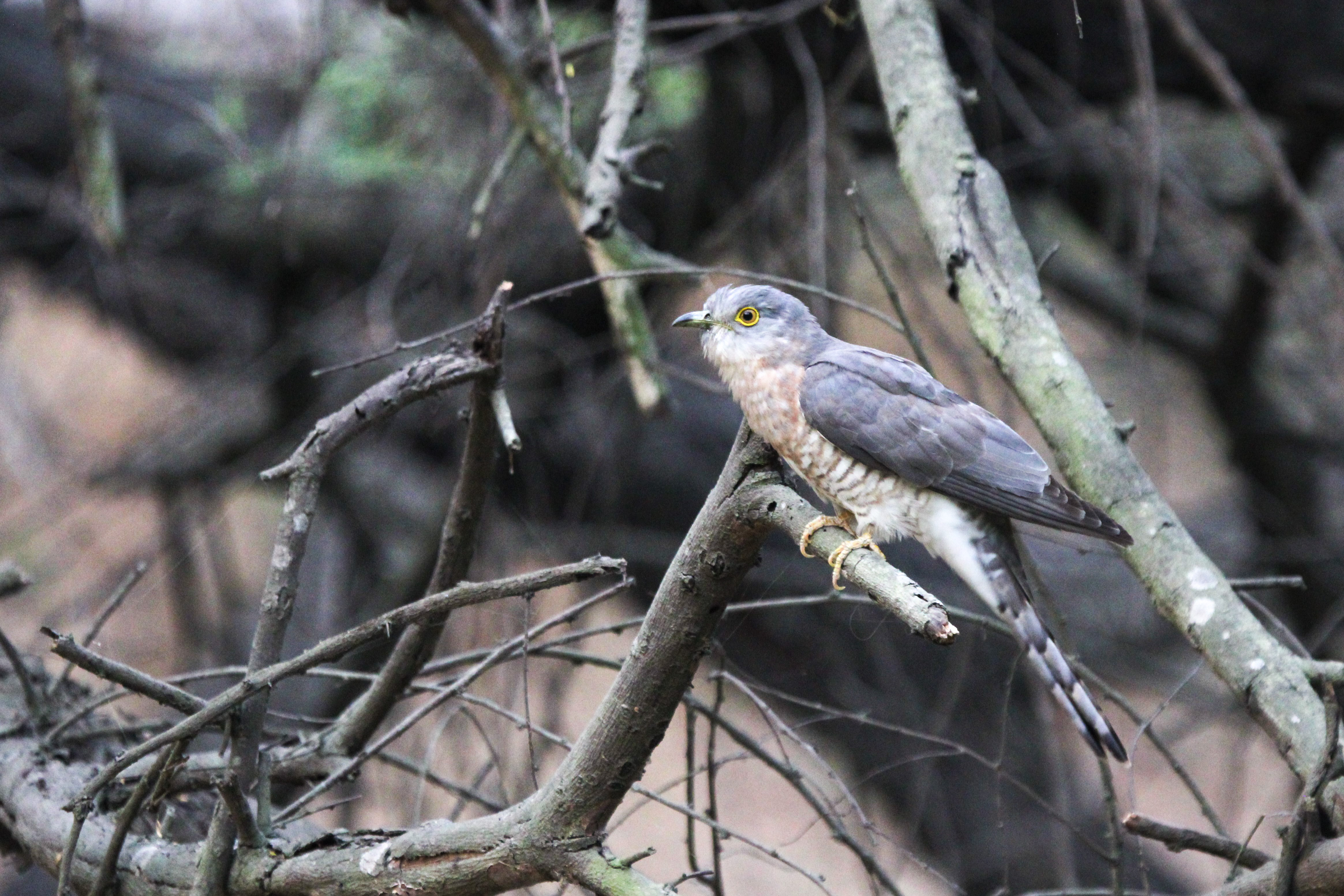
During their breeding season in summer males produce loud, repetitive three note calls that are well-rendered as brain-fever, the second note being longer and higher pitched. These notes rise to a crescendo before ending abruptly and repeat after a few minutes; the calling may go on through the day, well after dusk and before dawn.
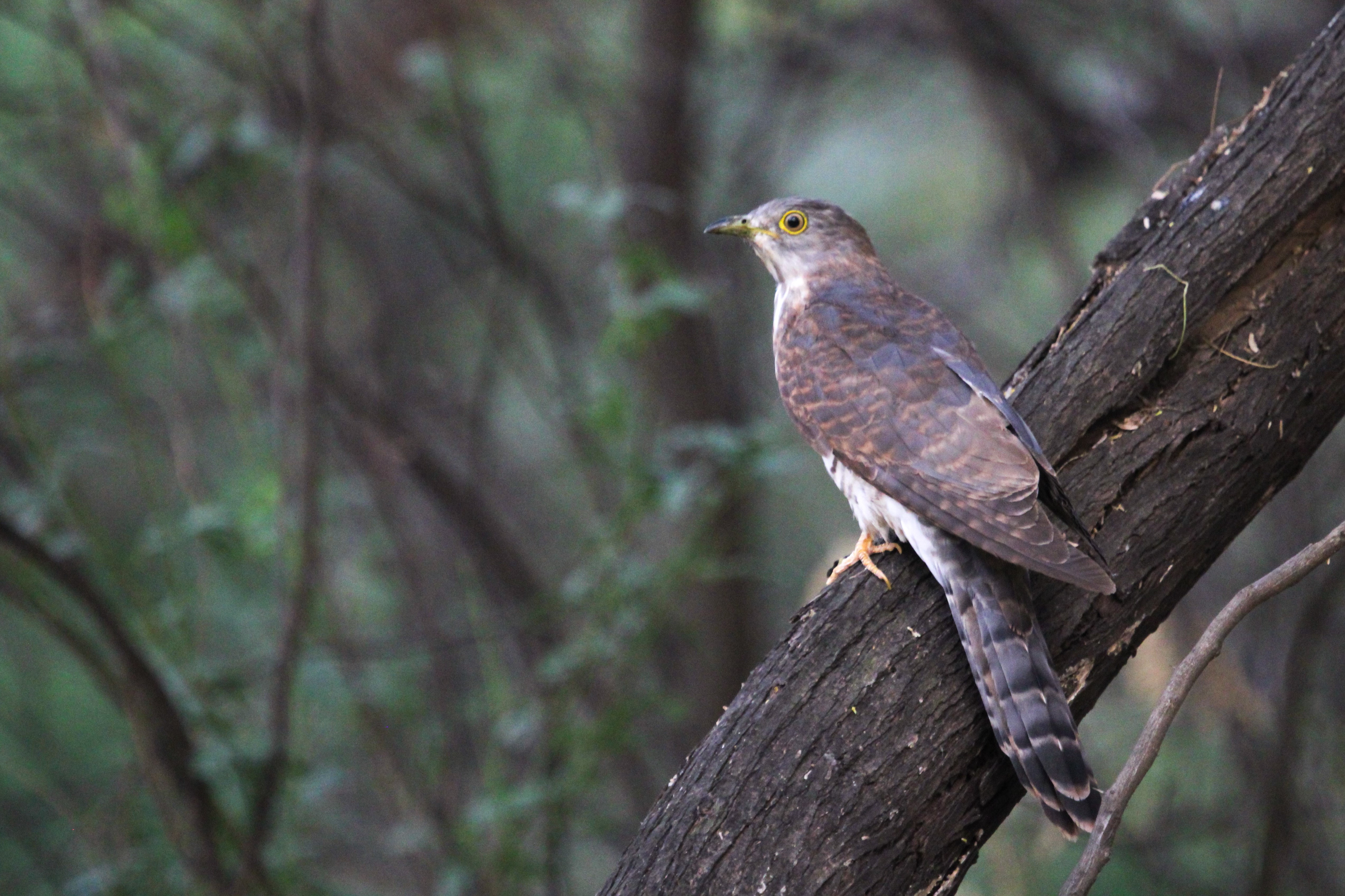
The plumage is ashy grey above; whitish below, cross-barred with brown. The tail is broadly barred. They have a distinctive yellow eye ring. The sexes are alike but males tend to be larger.
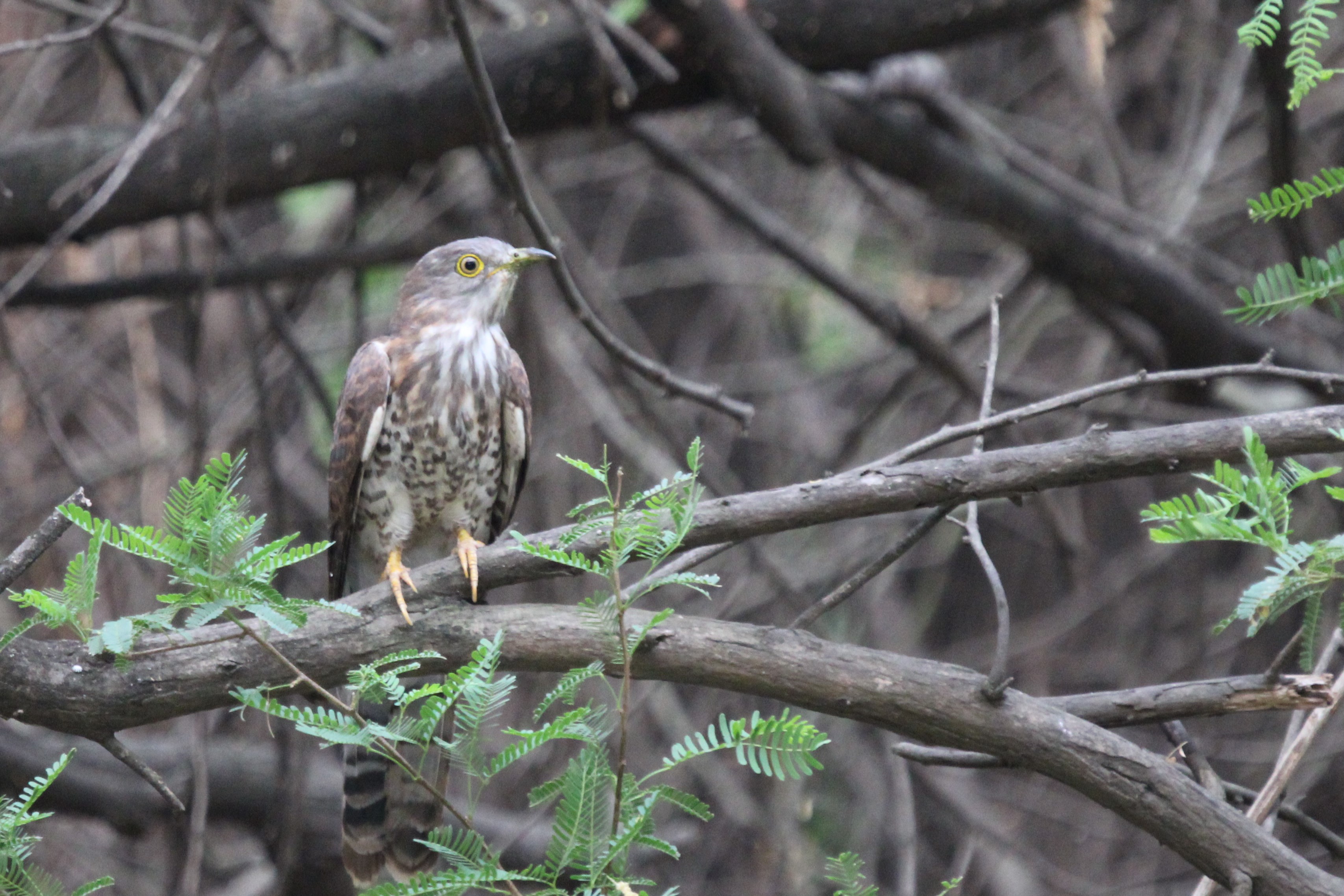
When flying they use a flap and glide style that resembles that of sparrow hawks (especially the Shikra) and flying upwards and landing on a perch they shake their tails from side to side. Due to this resemblance to hawks, this group has been given the generic name hawk-cuckoo. Many small birds and squirrels raise the alarm just as they would in the presence of a hawk.
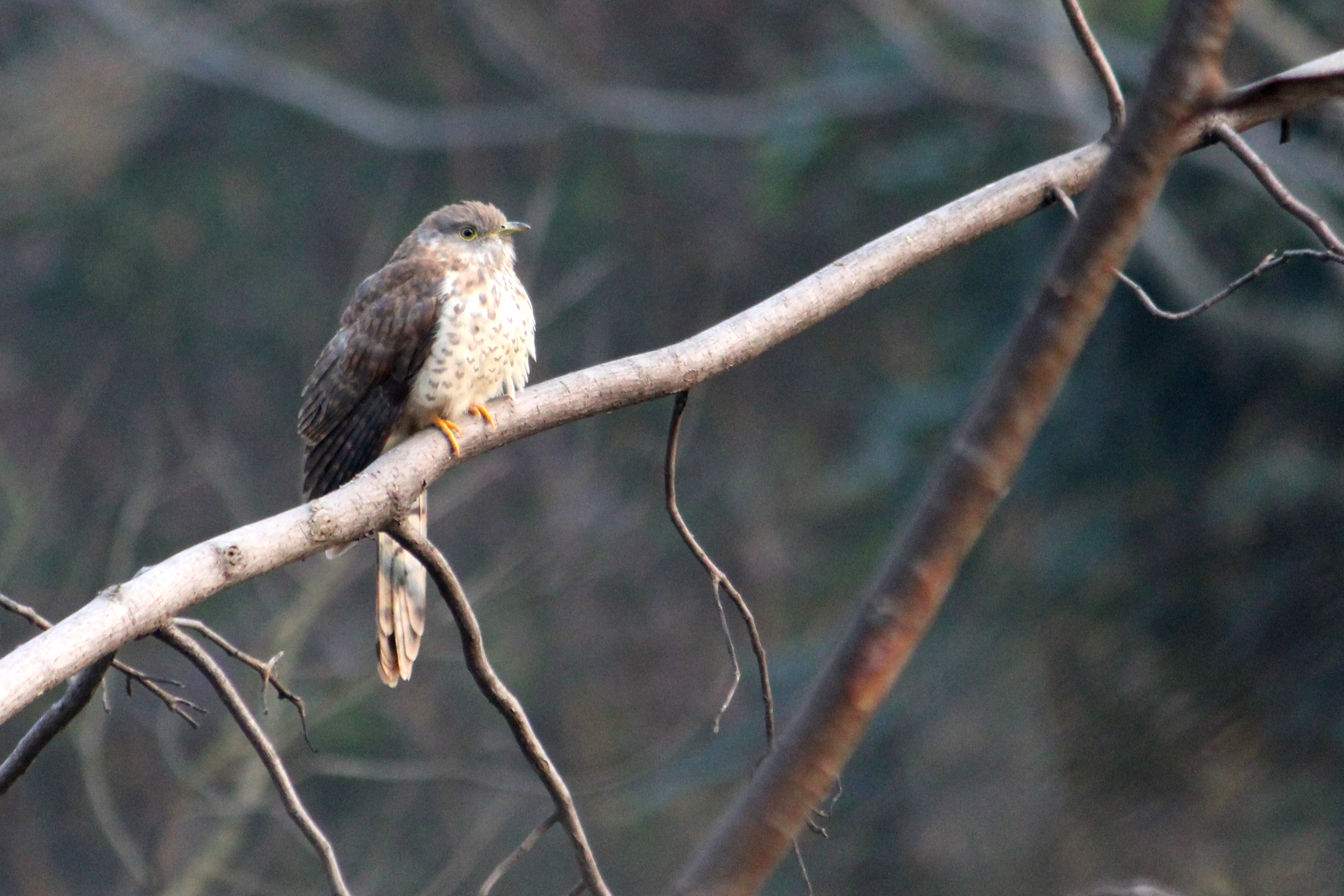
Common hawk-cuckoos feed mainly on insects and are specialized feeders that can handle hairy caterpillars. Caterpillar guts often contain toxins and like many cuckoos they remove the guts by pressing the caterpillar and rubbing it on a branch before swallowing it. The hairs are swallowed with the caterpillar and are separated in the stomach and regurgitated as a pellet.
The greatest pre-requisite for a common hawk-cuckoo showing up in a place is sufficient vegetation,
 naturetrail
Thanks for sharing. It’s well written. My best wishes
Subhash Sapru
LikeLike