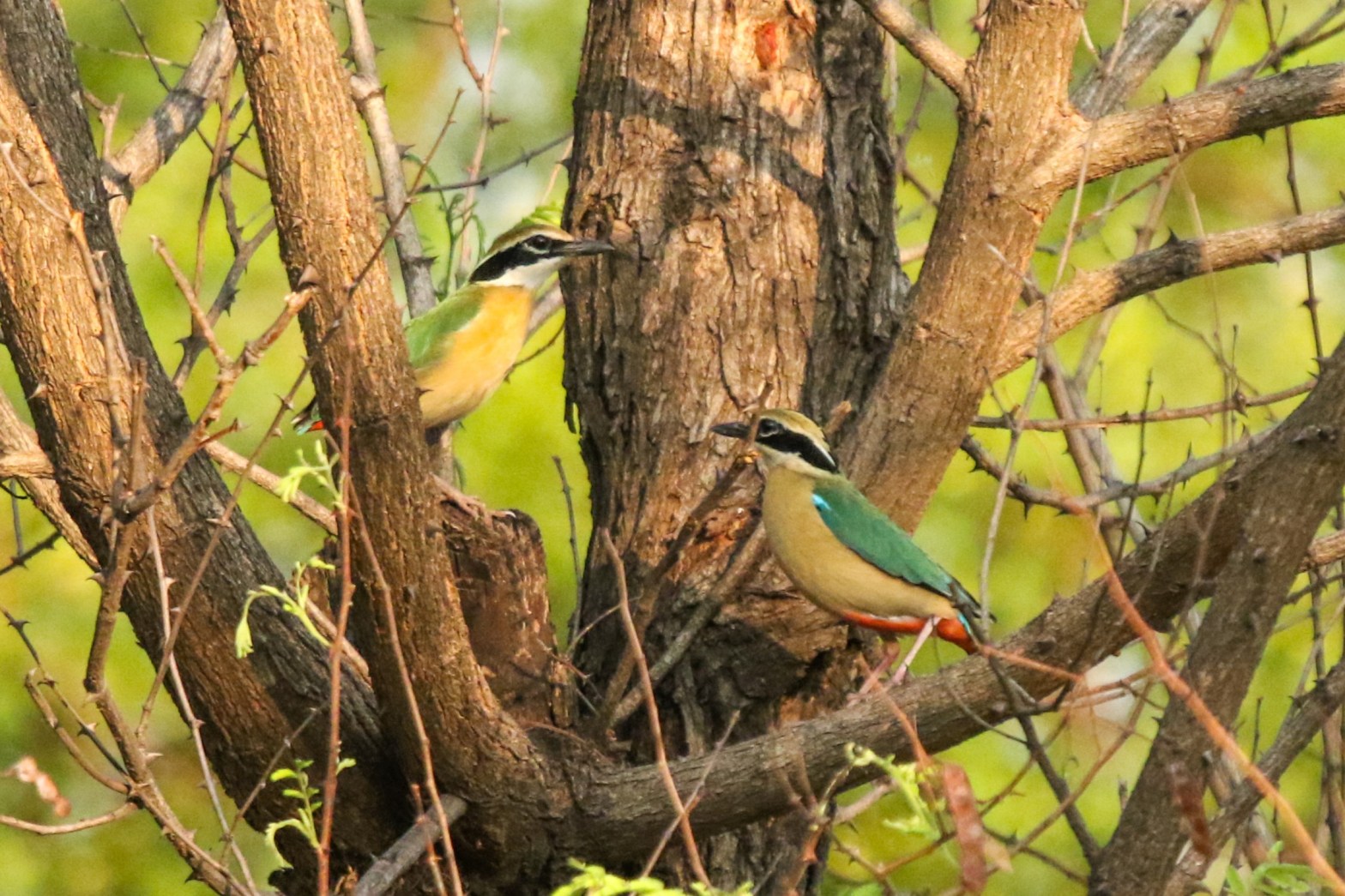
The Indian Pitta has always been a dream bird for me since I started birding three years ago. I spotted this beautiful colorful summer migrant, first time in the month of May 2022 at Thapli , since then every year in the month of May, I eagerly wait for this bird to arrive at Thapli and try to get as many clicks as possible.

May 2024, Thapli
Like every year this year also this beautiful bird has not disappointed and came in time in the month of May. Thanks to Gaurav, a bird lover at Thapli, this year, it was possible to capture the pair in single shot. This summer season, apart from its regular location i.e. at Thapli where this summer migrant come every year for breeding, I have spotted this bird near my residence at Sector 19, Chandigarh and heard its call at Lake Reserve Forest. However, capturing the beauty of this bird was only possible at Thapli.

Indian Pitta perching on a branch of tree, May 2024, Thapli
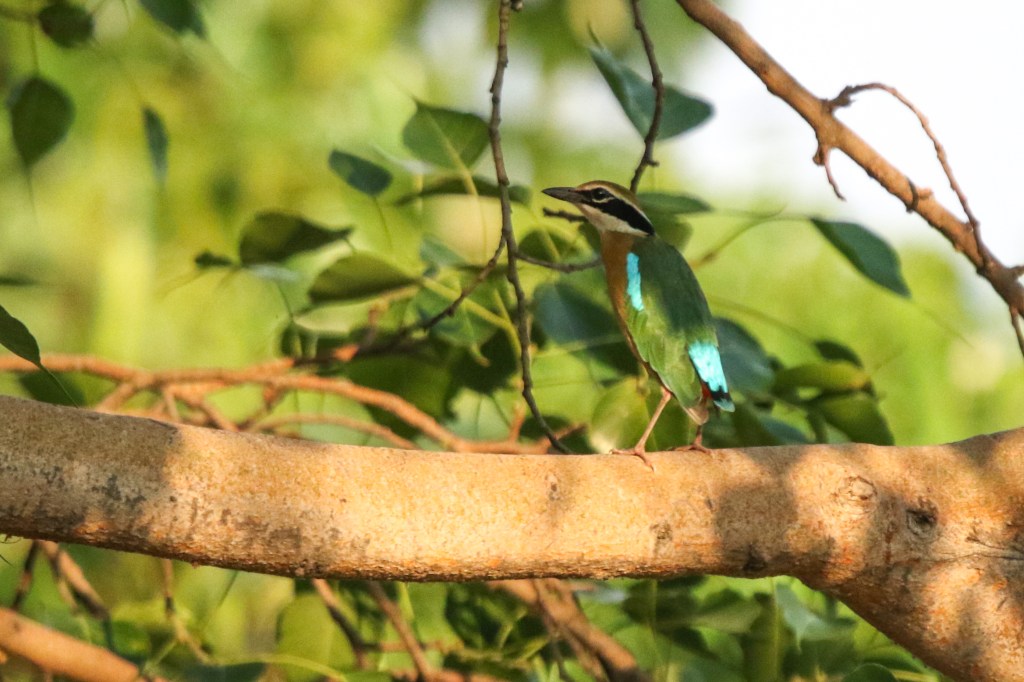
May 2024, Thapli
To spot this bird, first wait for its melodious call “wheet-teuu” and then follow the source of that distinct two-note whistle. Its two-note whistle, that is repeated after a noticeable gap, is hard to miss. This is the commencement of the breeding season and the birds become increasingly vocal right up till the end of June. The Pitta is not sighted easily in urban clusters. The Pitta’s typical behaviour is to walk on ground, upturning leaf litter to gobble insects.
May 2023, Thapli
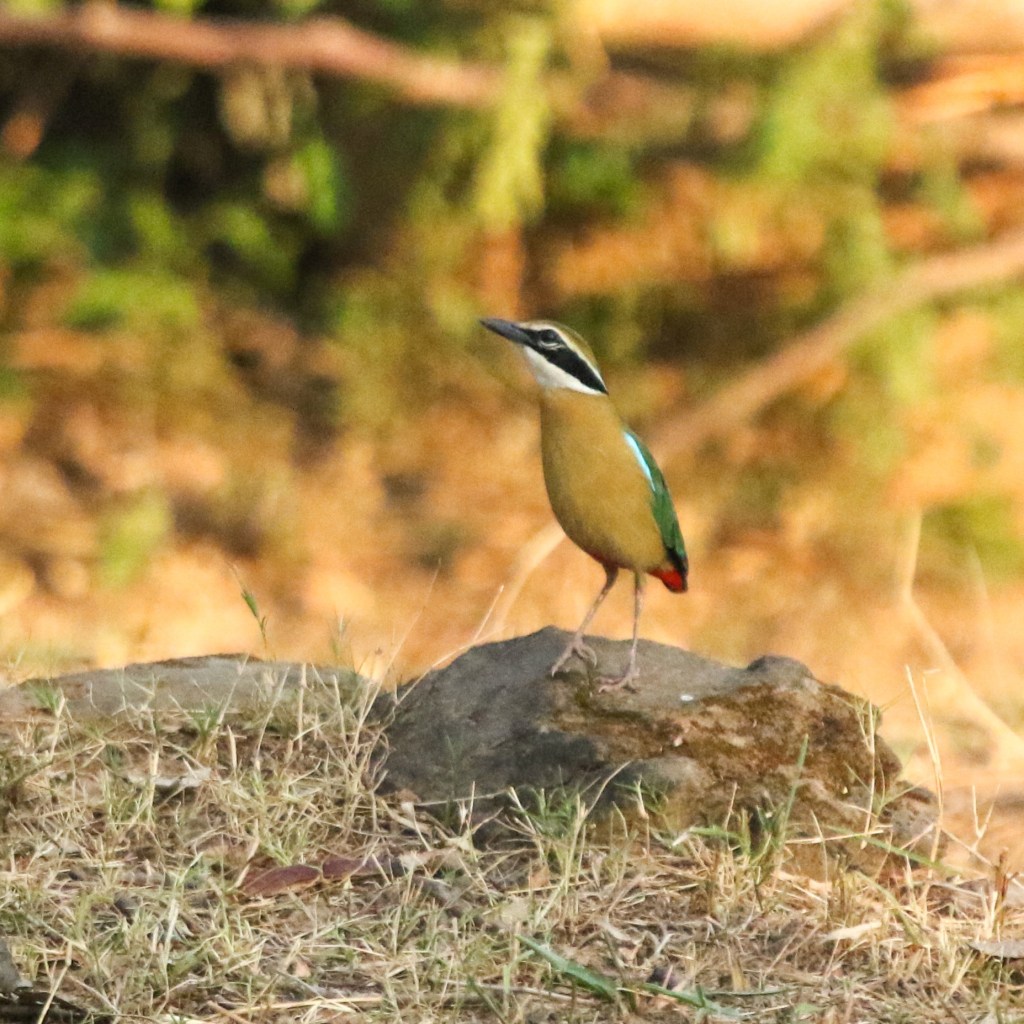
A bird with vivid colors, a glimpse at the Indian Pitta’s flamboyant plumage might just take your breath away! However, finding this bird might not be as easy as it sounds, since the Pitta is shy by nature and often hides in areas with dense undergrowth. The bird’s name ‘pitta’ originated in southern India and is derived from the Telugu language meaning ‘tiny bird’. As the name suggests, this bird is native to central India.
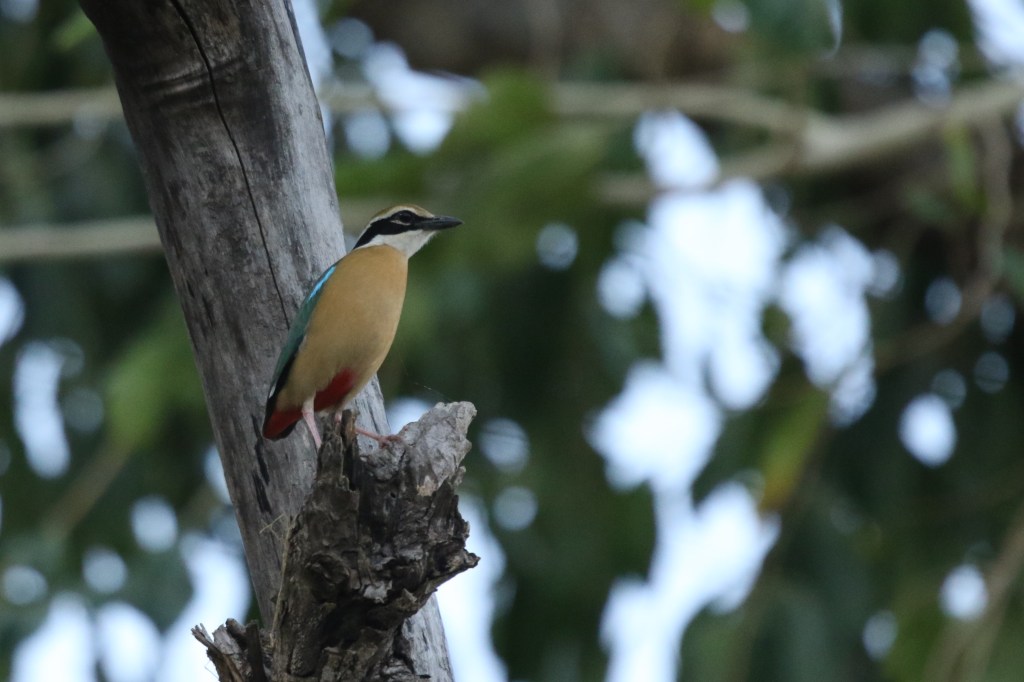
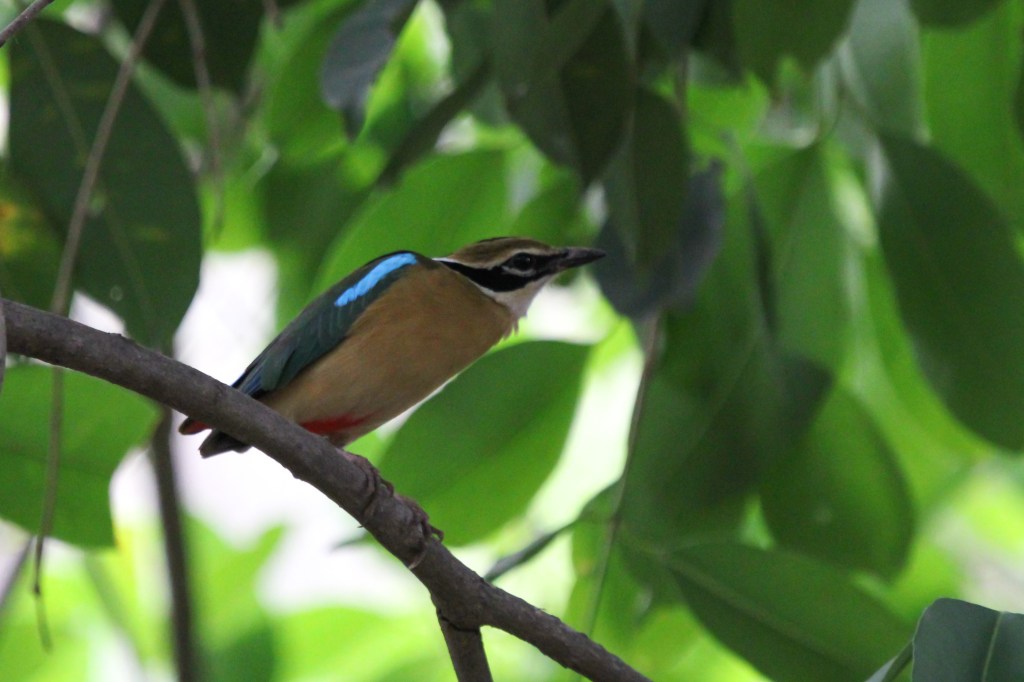
Nine colours – brown, black, white, green, blue, orange, pink, red, buff. A buff-coloured crown stripe, black coronal stripes, a thick black eye stripe and white throat and neck. The upperparts are green, with a blue tail, the underparts buff, with bright red on the lower belly and vent.
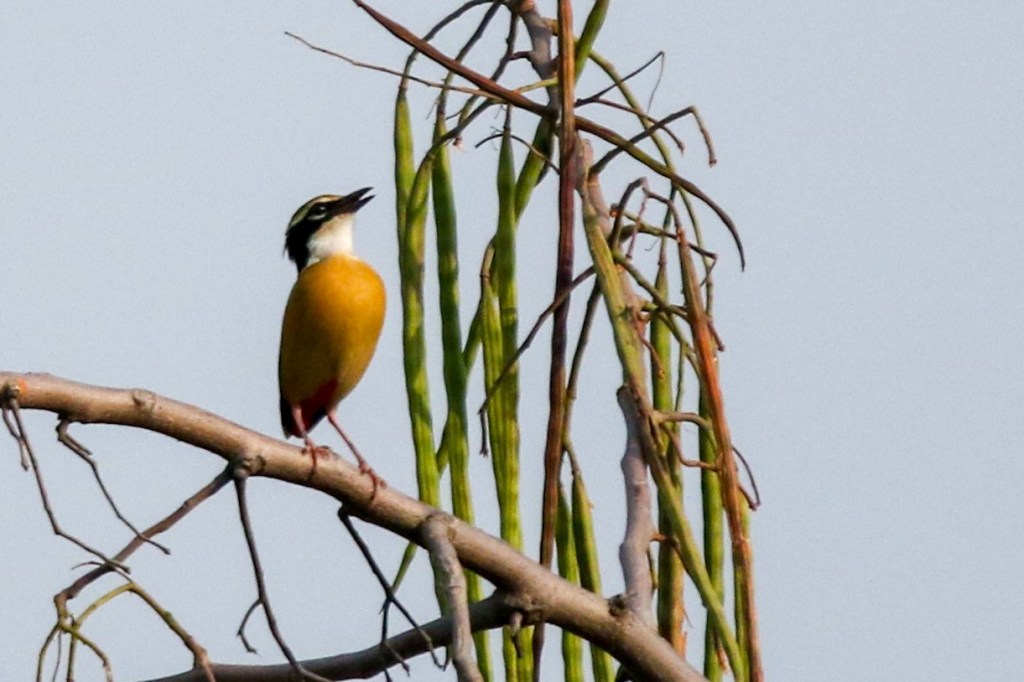
May 2023, Thapli
The Indian Pitta calls with its head up towards the sky, often together or in pairs, charming the woods with sweet music.
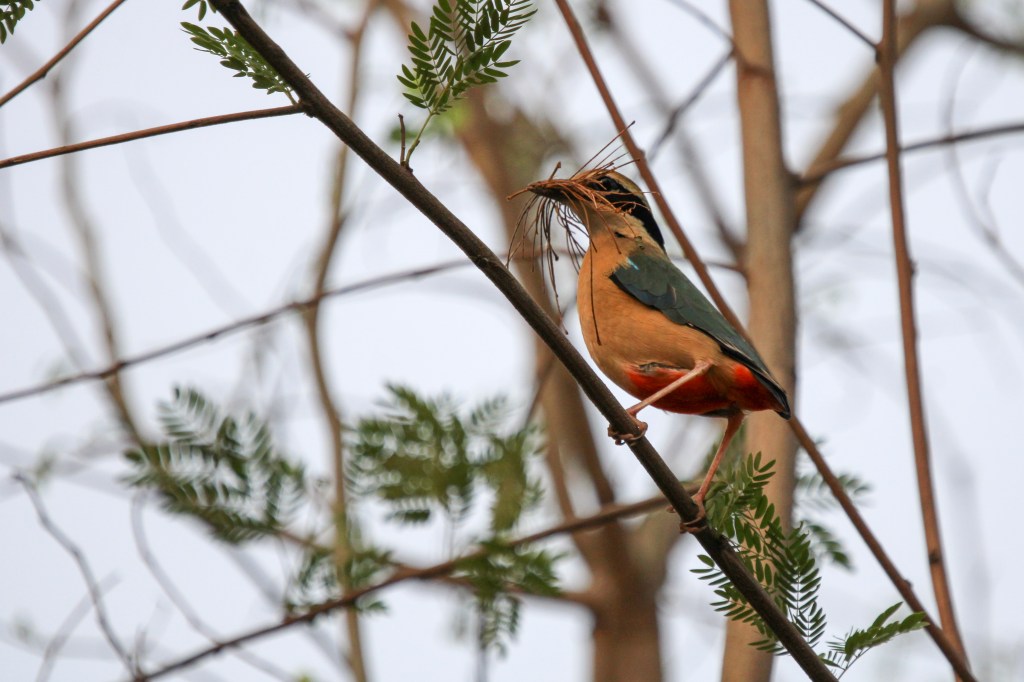
Indian Pitta collecting Nesting Material | Thapli | May 2022
Since this beauty travels across the peninsula, it has earned local names in many languages—Hindi, Naorang; Punjabi, Nauranga; Bengali, Shumcha; Gujarati, Navaranga or Hariyo; Tamil, Aru-mani kuruvi, Kathelachi, Thotta kallan; Telugu, Polanki pitta, Ponnangi pitta; Malayalam, Kavi; Kannada, Navaranga and in Sinhalese, Avichchiya.
Of all these, it is the Tamil name which is particularly interesting. It’s called the ‘aru-mani kuruvi’, which translates to the “6-o-clock bird.” This bird is vocal, giving its characteristic two-noted whistle call at dusk and dawn, hence the name. Experts say, “they call in the morning and evening to mark their presence and territory. They want to announce to the other Pittas that they do not want them to unnecessarily come and poke around in their territory. It is to send out the signal that this place is occupied.”
Experts say that the bird, Navrang, inhabits deep-dense forests and green jungles where it forages on forest floors with thick undergrowth, catching insects in the leaf litter. The flock disperses into the forests of lower Himalayas, central and western India for breeding between the months of May to July. In winters during September and October they migrate to the southern peninsula and Sri Lanka.
 naturetrail