
Mote Majra village is situated on the Chandigarh Patiala Road in SAS Nagar Mohali, just 30 km from Chandigarh. At the entrance to the village is a small pond about 20 acres in size. But despite its small size, it is popular for the winged guests which arrive here every winter from different parts of the world due to plenty of food and habitat accessibility. Also due to the shallow depth of water, birds do not have to forage deep into the water for their food, making this a favorite destination. Every year many species of birds arrive here in winter season from different parts of the world. This wetland provides inhabitation to various species of birds and supports biodiversity. Some of the bird species use this pond as a stopover and refueling destination for a few days during their migration before moving toward their final destination.
Like every year, in this year i.e. 2023 also many winged guests have arrived at the wet land .
Mote Majra wetland is also popular for its water chestnut farming. It is accessible from all sides, and you can go any time and enjoy bird watching irrespective of the sun’s position. It is a favorite destination for all the birders living in Chandigarh or other nearby areas. The Villagers too are very humble and cooperative and support bird watchers.
Let’s have a closer look at some of the migratory birds that have arrived here this year.

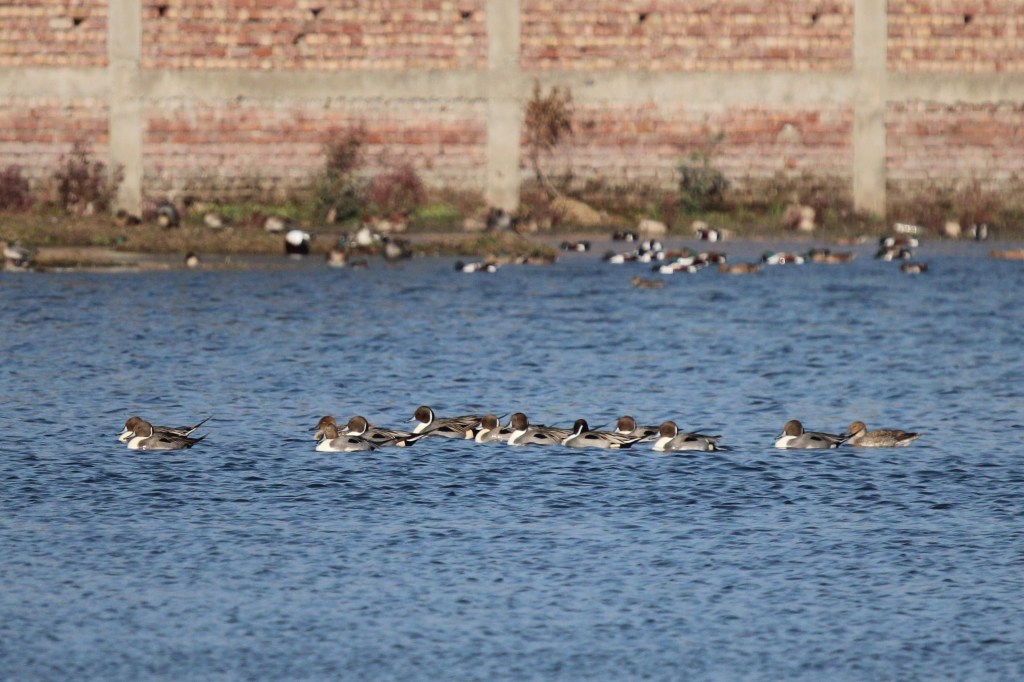
Northern Pintail – an elegant, slender, medium-sized dabbling duck with a slim profile, long narrow neck and pointed tail, that is native to the northern areas of Europe. The male’s long central tail feathers give rise to the species’ English and scientific names. Males have a chocolate brown head with a white slash coming up the neck, white breast, and mostly gray body. Females are patterned light brown. Forages in wetlands and in fields on agricultural waste grains.
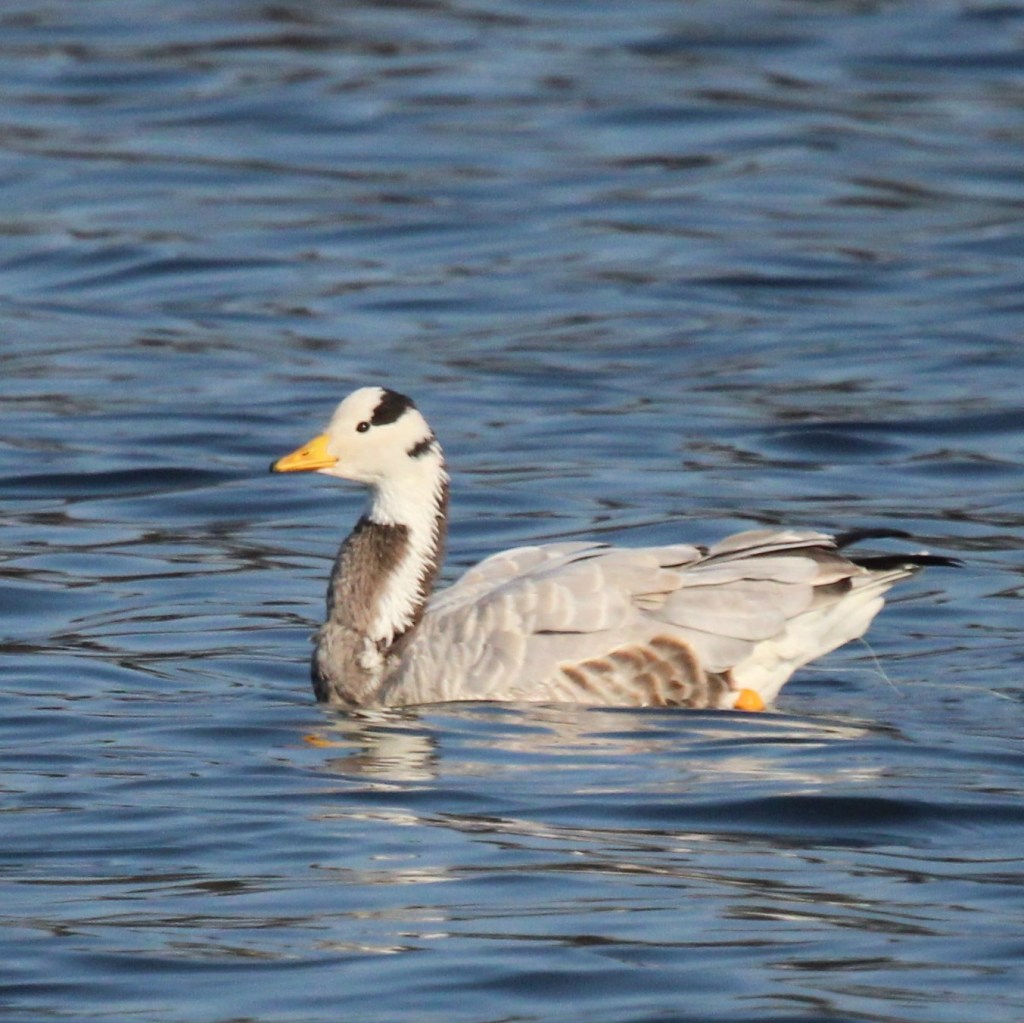
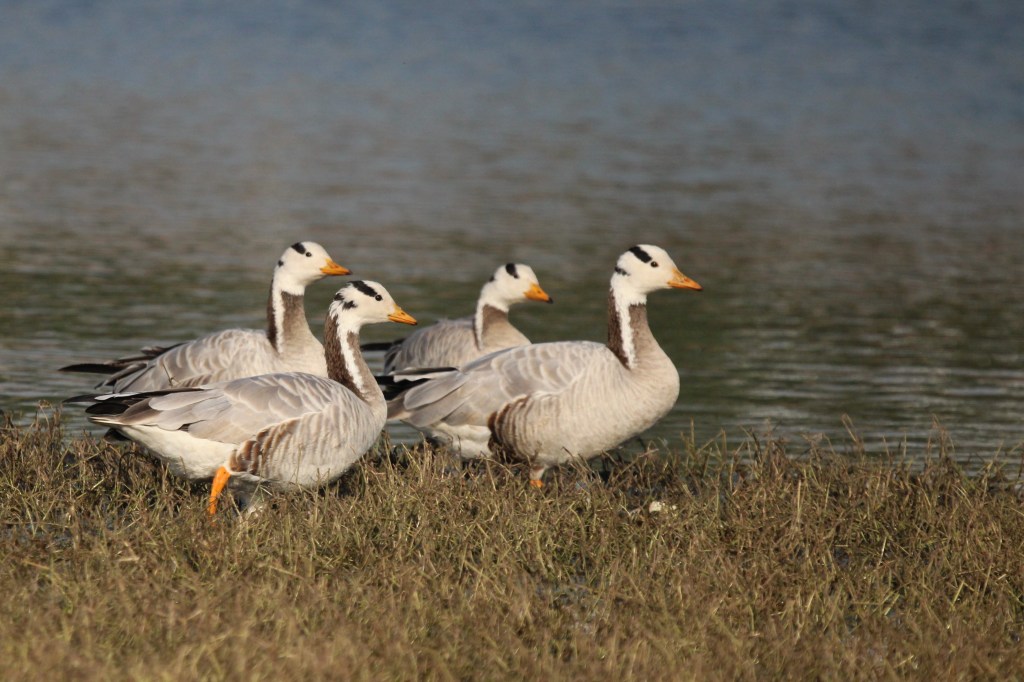
Bar-headed Goose -One of the highest flying birds in the world, the Bar-headed goose flies above the Himalayan Mountains when it migrates, at heights that may reach 30,000 feet. This handsome stout-bodied goose gets its name from the double bars of dark feathers that wrap around the back of its white head. Its body is light gray and its legs and bill are bright orange. Males and females are identical.
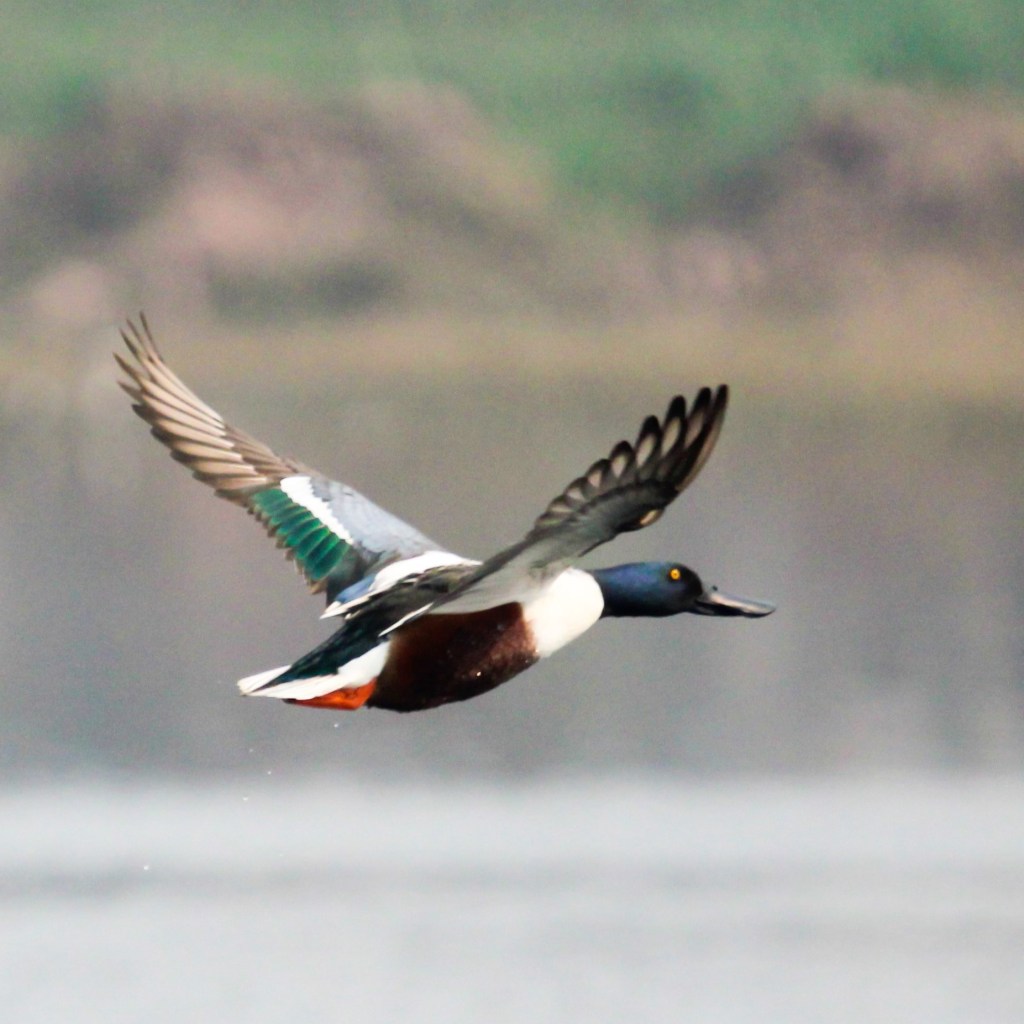
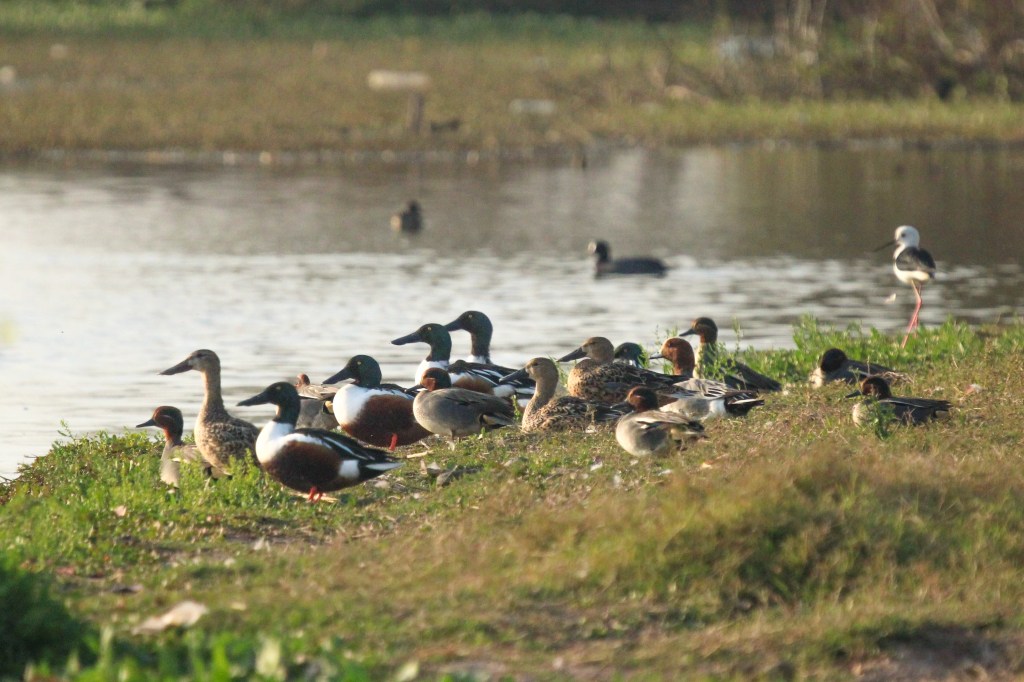
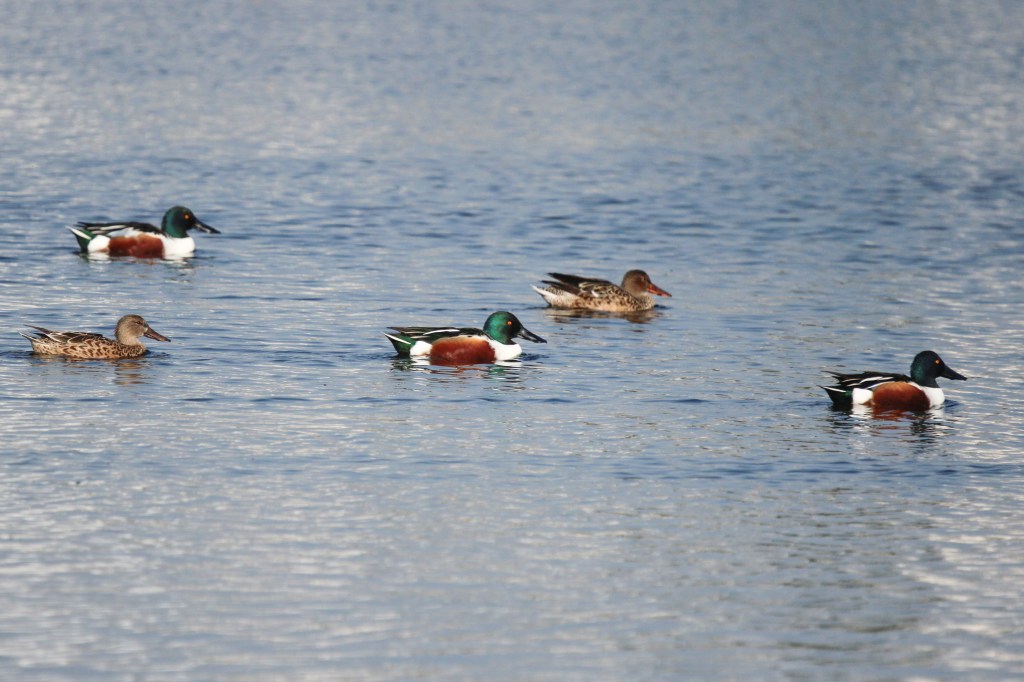
Northern Shoveler – Medium sized duck with its name derived from its highly specialized spoon shaped bill that is used to forage for aquatic invertebrates. Both males and females have different patterns and colorings. Breeding male shovelers are bold white, blue, green, and rust, but their most notable feature is their white chest and white lower sides. In flight, males flash blue on the upper wing and green on the secondaries (the speculum). Female and immature shovelers are mottled in brown and have powdery-blue on the wings that is sometimes visible on resting birds. Their very large orange bill is their most notable field mark.
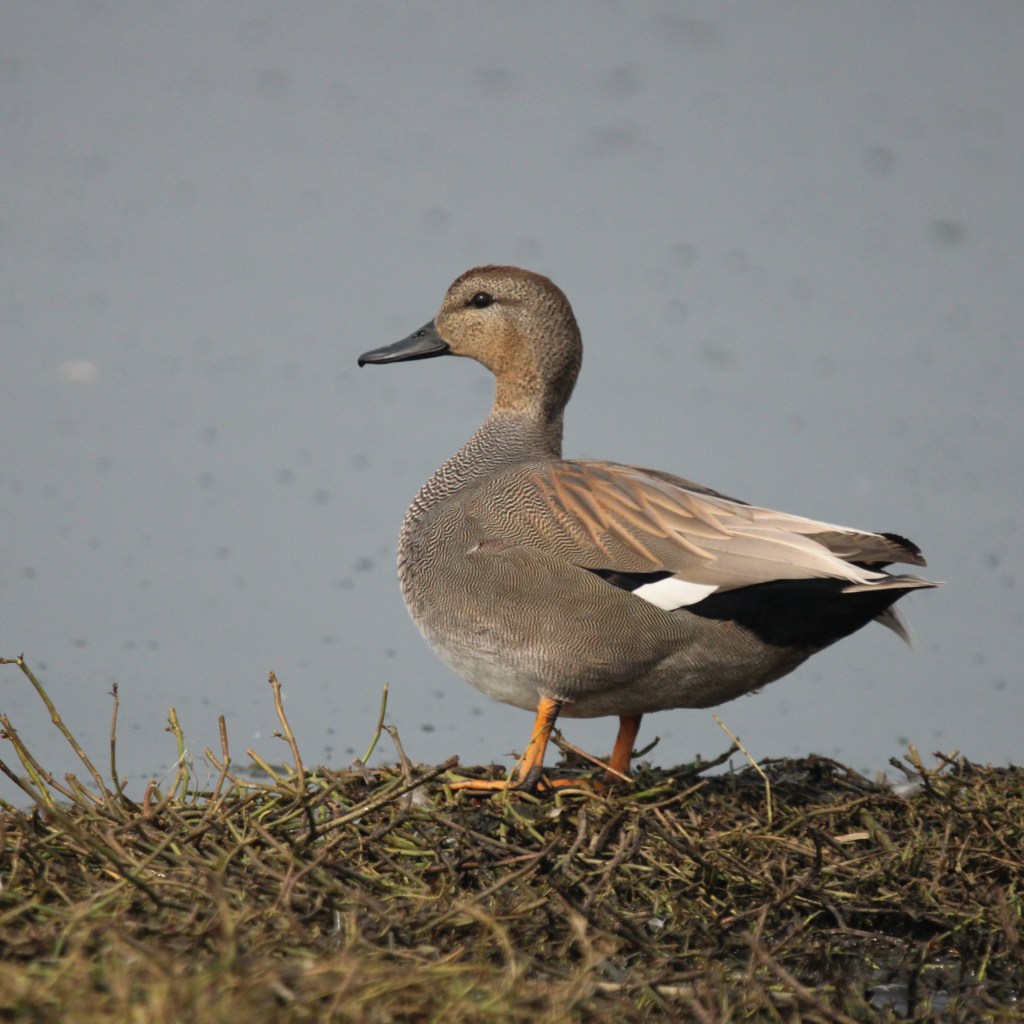
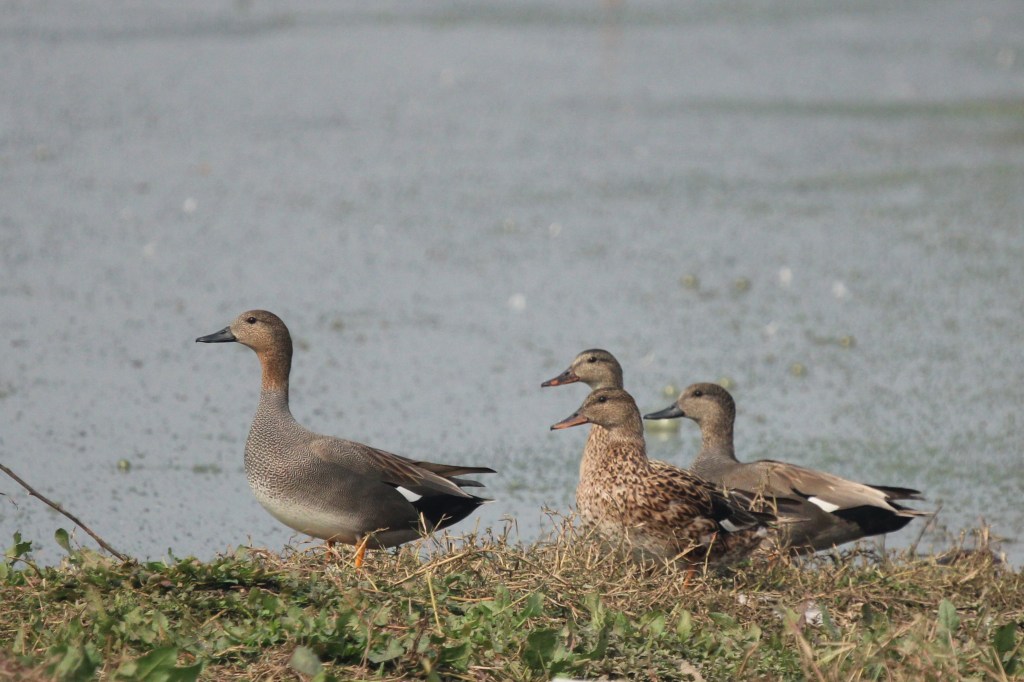
Gadwall – Fairly large duck with extensive range across Northern Hemisphere. Males are mostly gray with a black rear end and puffy head. Also look for small white wing patch in flight. Females are similar to Mallard, but note thinner bill, plainer face, orange line along the edge of the bill, and white wing patch in flight. Typically found in pairs or small flocks in shallow wetlands, ponds, or bays, sometimes mixed with other species of ducks.
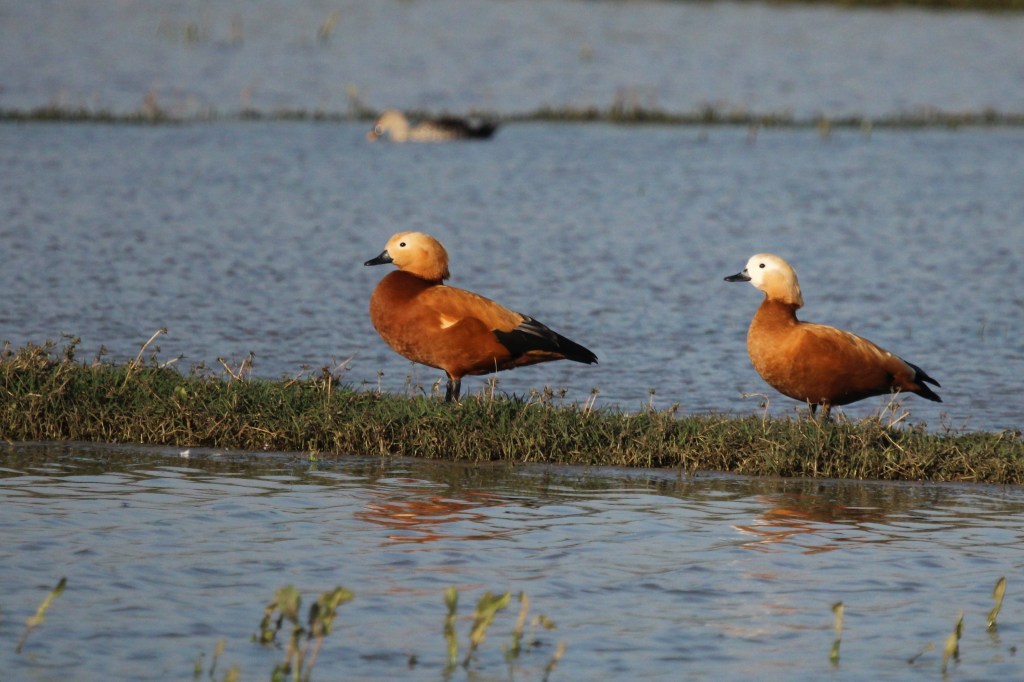
Ruddy Shelduck ( Brahminy Duck ) – Striking and distinctive gooselike duck. Plumage bright ruddy overall with contrasting pale creamy head and neck; male has narrow black neck ring. Big white forewing patches striking in flight. It may be due to their saffron color that resembled saffron robes of the Brahmins in ancient India, that these are also known as Brahminy Ducks in India.
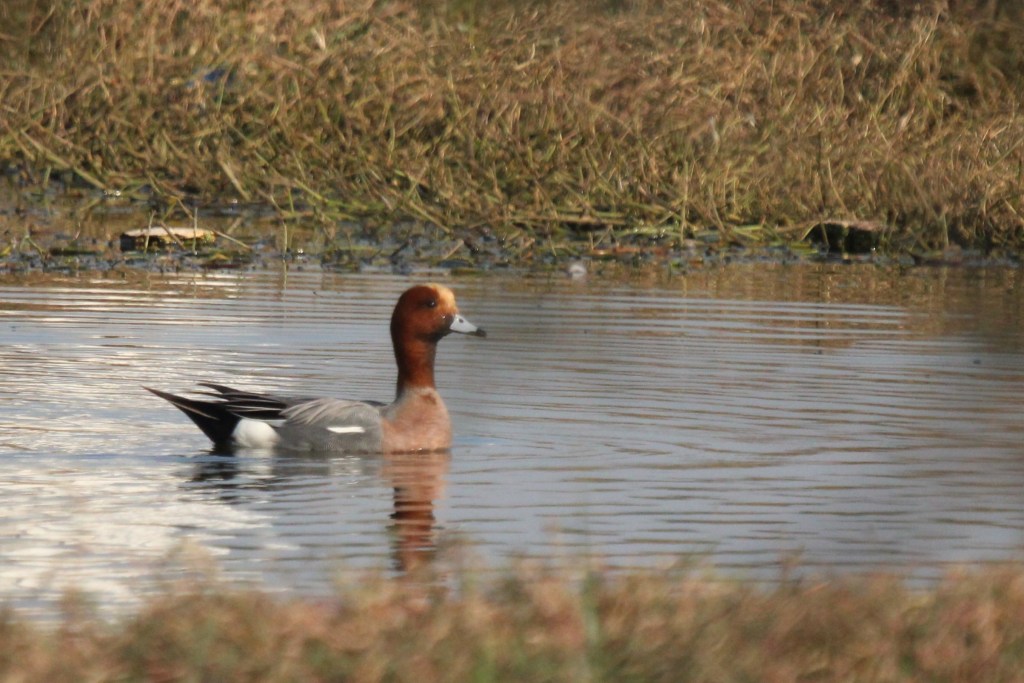
Eurasian Wigeon – Breeding males are beautiful and distinctive with rich reddish-brown head, buffy forehead, pearly gray body, and pinkish breast. Look for large white wing patches in flight. Females are plainer warm brown overall, with a small pale bill.
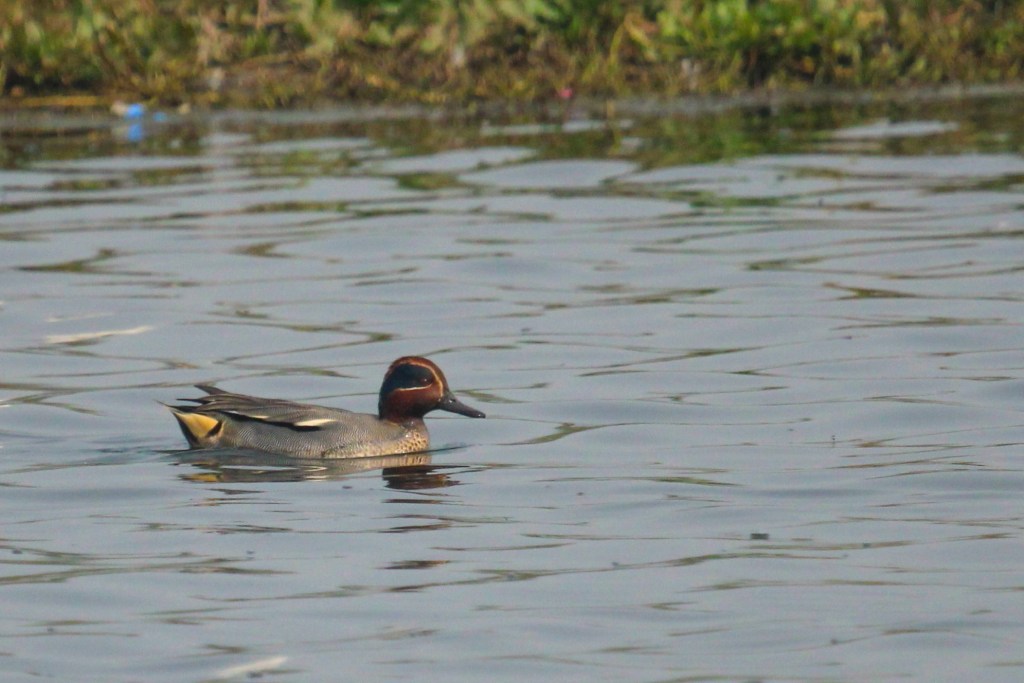
Green-winged Teal (Common Teal) – Its name is derived from the green crescent present on its wings that are mainly visible while it flies. This green mark or speculum is present in both male and female birds. The most striking thing about the green-winged teal is, of course, the green eye patch that is seen in the males. The females have a lighter brown color compared to the dark-colored plumage seen in the males. The males also have a chestnut head with the iconic green eye patch that stretches to the back of its head. The birds have a yellow rear end which is clearly seen when it is swimming. In contrast, the underbelly has a light color which is usually white.
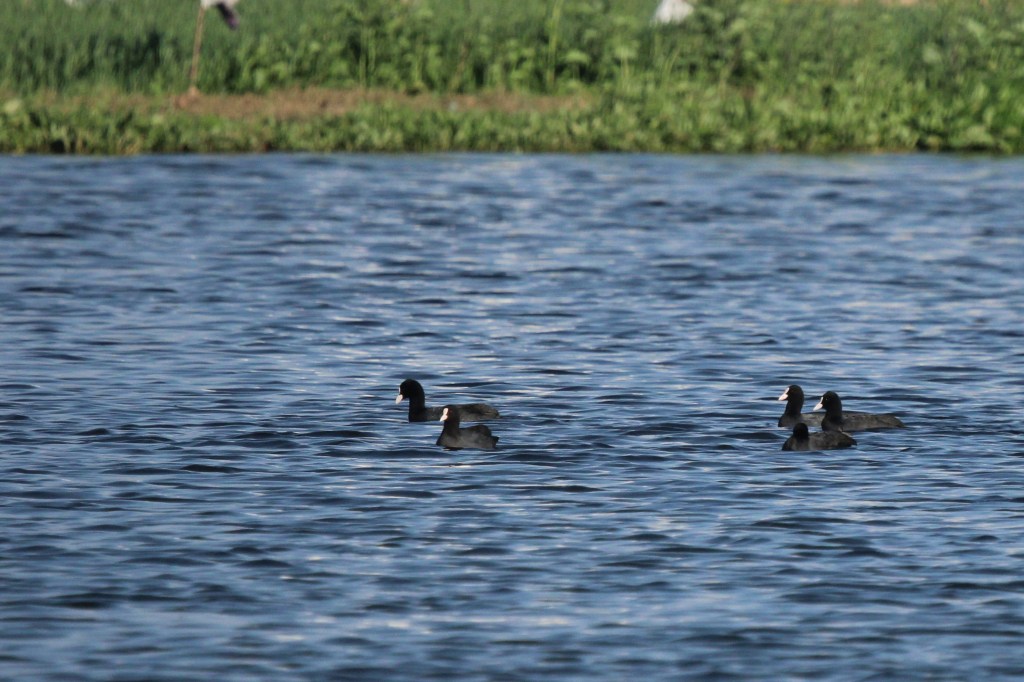
Eurasian Coot – Notable for its slaty black plumage and a lustrous white frontal shield and bill, this bird species is common on lakes, reservoirs, and slow-moving watercourses, in fresh and brackish marshes, and occasionally on saltwater. This white shield and bill against the black body feathers give the coot a distinctive look. The eyes of the bird are bright red.
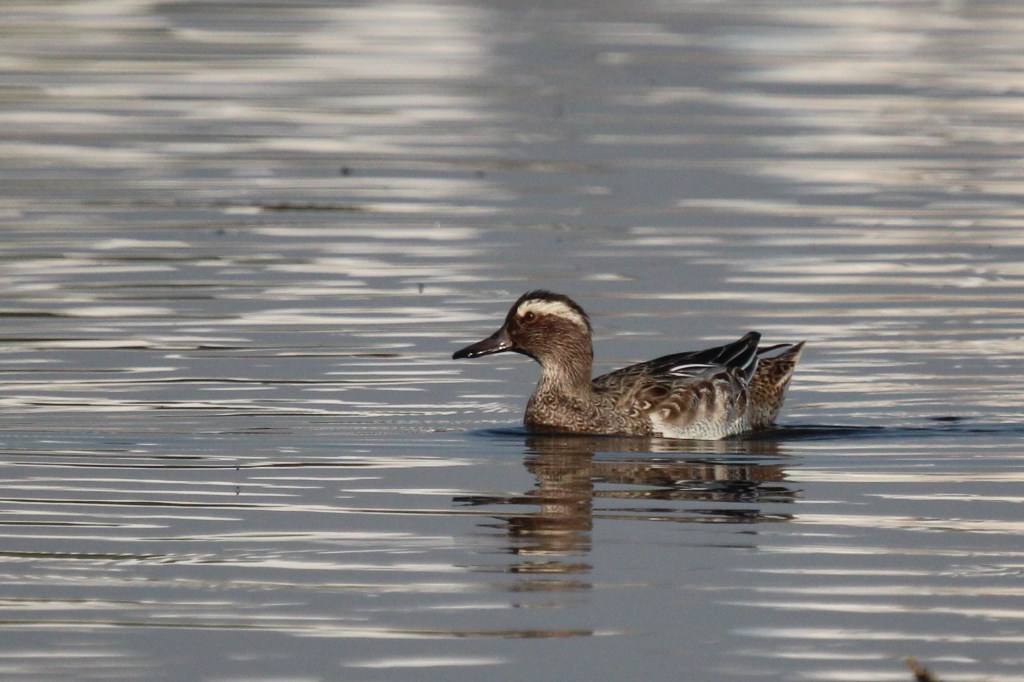
Garganey – Small and often rather unobtrusive duck of wetlands with reedy and other fringing vegetation. Handsome male distinctive, with big white eyebrow on dark brown head, pale gray flanks; pale gray forewing striking in flight. Female very similar to female Green-winged Teal but head pattern more contrasting, with paler eyebrow, darker eye stripe, and un-streaked whitish throat. Associates readily with other ducks, feeds mainly by dabbling.
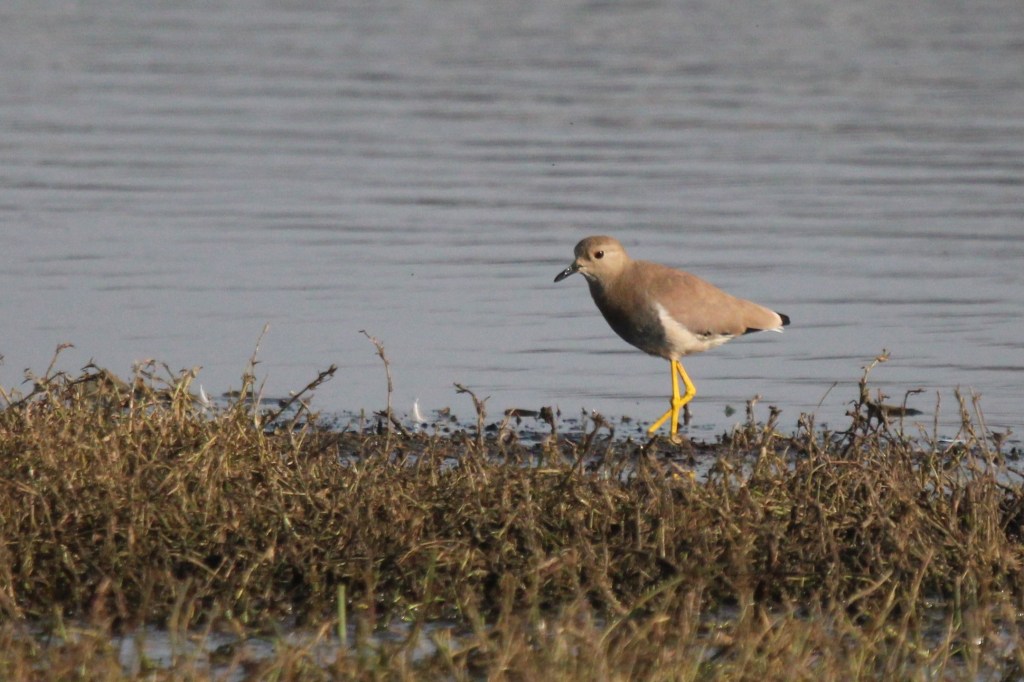
White-tailed Lapwing – An elegant, rather small lapwing. Pale sandy-brown overall with long, bright yellow legs. In flight, a striking tri-colored wing pattern of brown, black, and white is exposed. Somewhat similar to Sociable Lapwing, but note all-white, instead of black-tipped, tail. Often seen in heavily vegetated wetlands.
When so many guests were to arrive, the residents too were in their best to host the event. Some of the resident birds also posed their best shots.
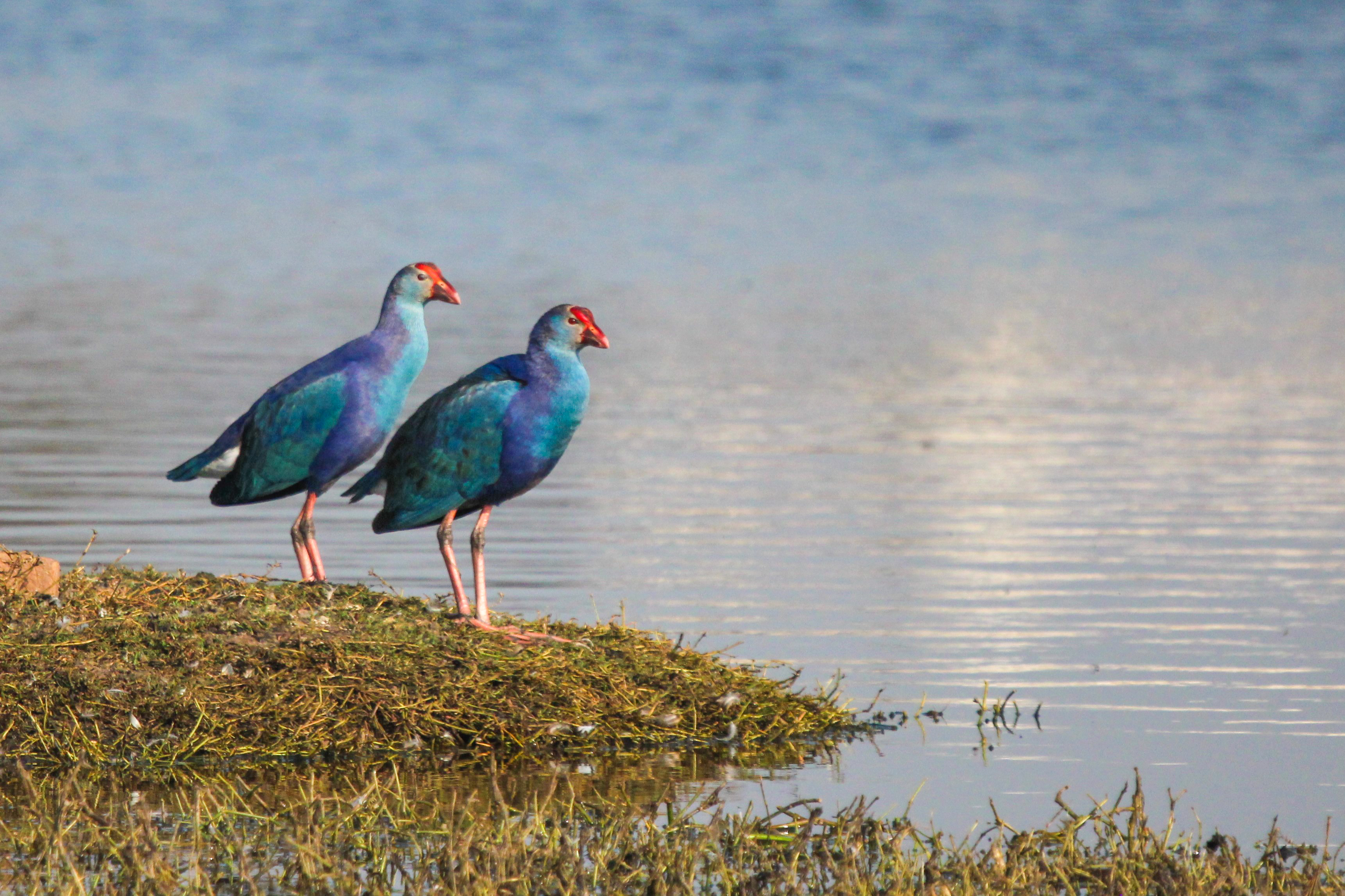
Grey-headed Swamphen

Purple Heron
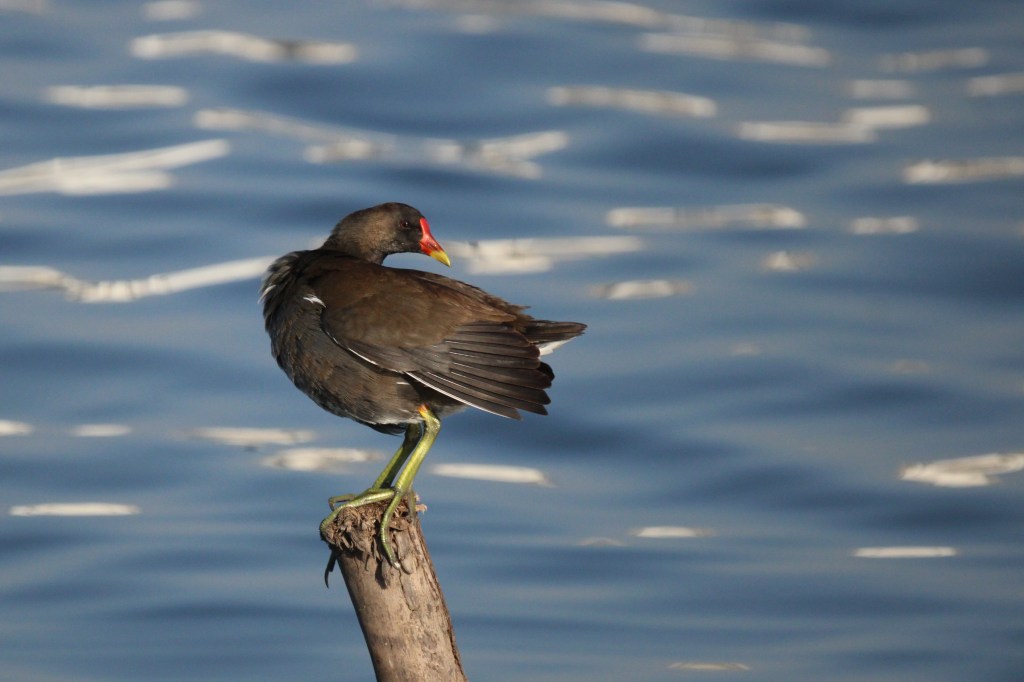
Eurasian Moorhen
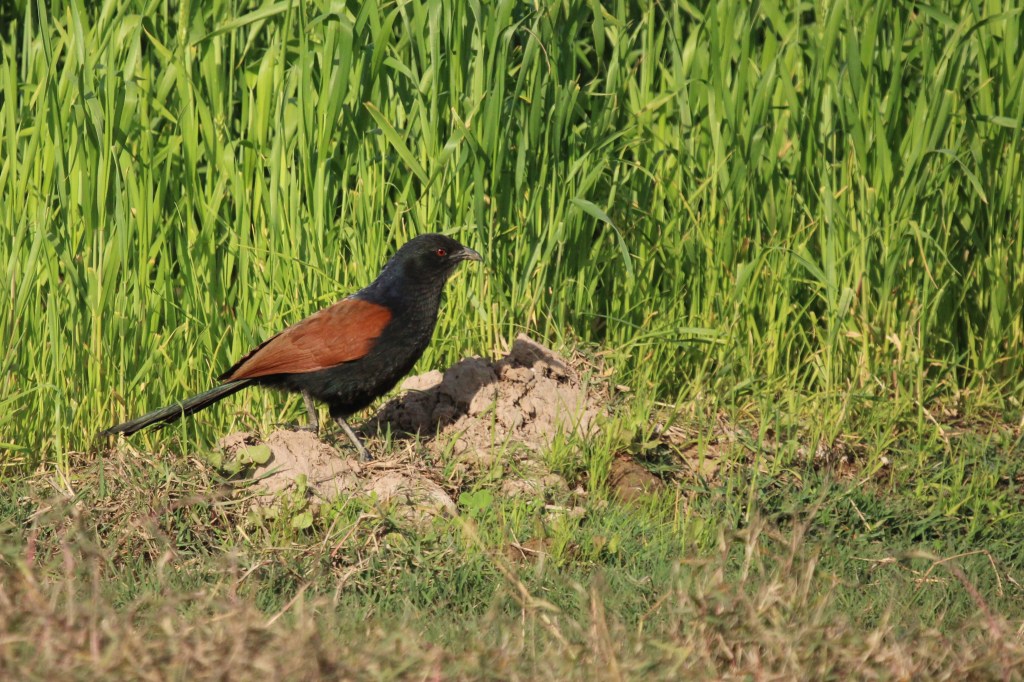
Greater Coucal
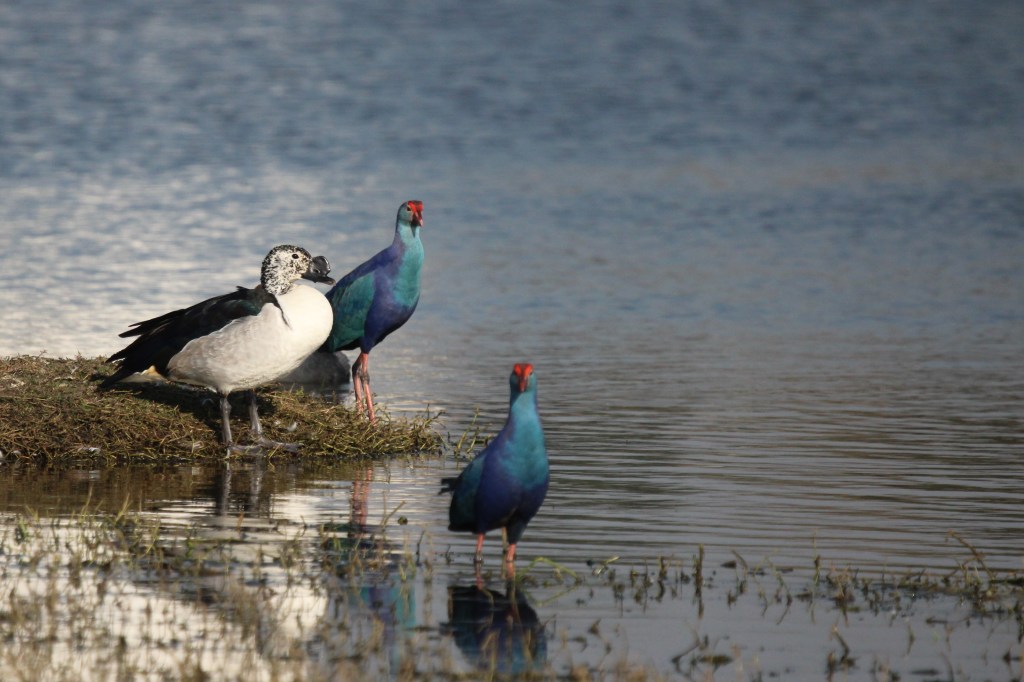
Knob – billed Duck
There are many other species of migratory and resident birds at the wet land including Common Pochards, Sandpipers, Indian Spot billed Ducks, Indian Pond Herons, Great Cormorants, Little Cormorants, Cattle Egrets, Little Grebes, Red wattled lapwings and Black winged Stilts.
 naturetrail
Very well written and illustrated . Keep doing good work . Subhash Sapru
LikeLike