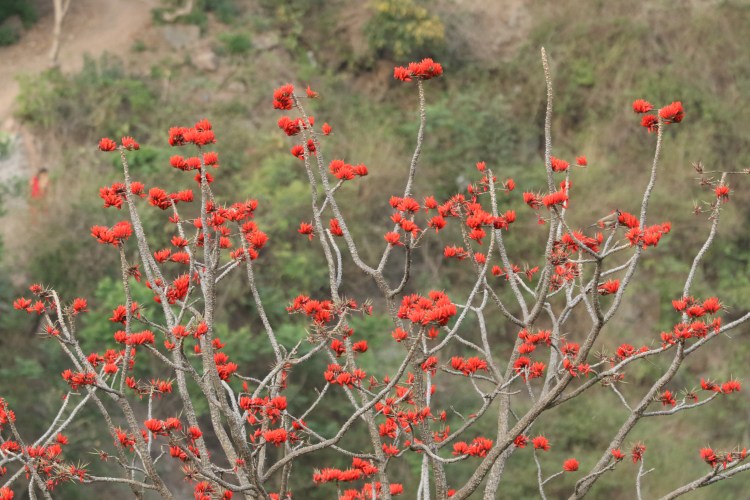
The Indian Coral Tree is undoubtedly one of the most colorful indigenous trees of India and captivating sights one might see in March and April. With bright crimson flowers, the tree appears to wear a magnificent ruby crown and puts on a spectacular show. The rich, red blooms making their striking appearance among the leafless branches attract humans. But added icing to the cake is the fact that the nectar rich flowers attract large number of beautiful colored birds including Bulbul with Crimson bills and legs, Purple Sunbird, Blue Whistling thrush, Golden Oriole, Bright Green Blue Throated Barbet, Plum headed Parakeets, Indian White Eye. With so many different species of birds with back drop of bright crimson flowers, this tree resembles an aviary when it is in full bloom.
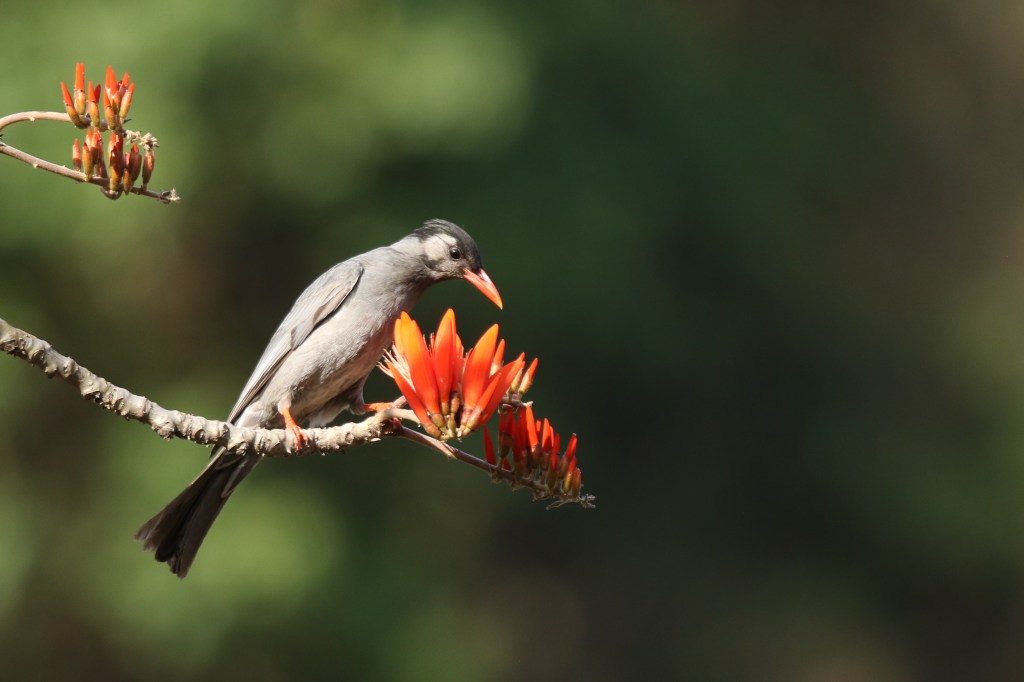
Himalayan Black Bulbul – April 2023
I also got a chance to admire two nearby trees on the Chakki Mor – Bhoj Nagar Road in the month of April 2023 and I was lucky enough to spot and click more than 25 species without spending much time.
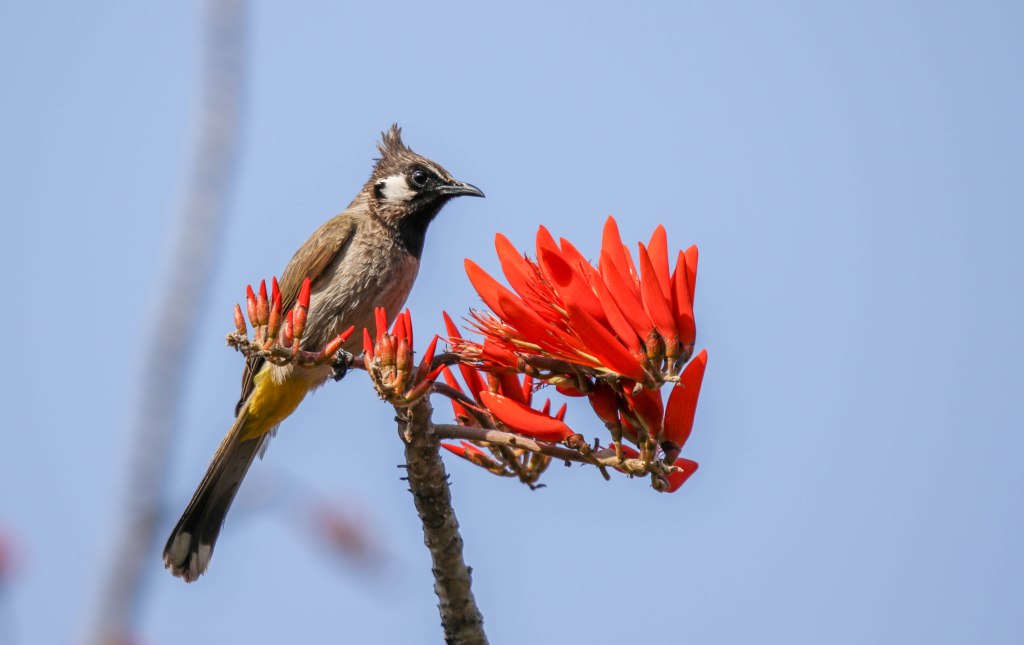
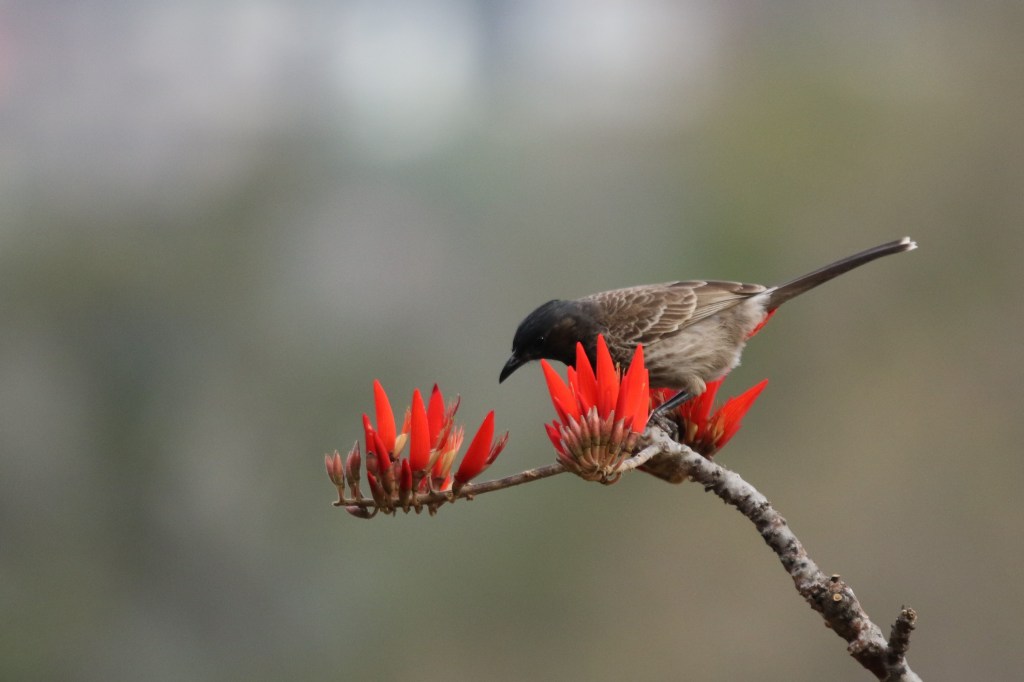
Himalayan Bulbul and Red Vented Bulbul with Coral Flowers – April 2023
When in bloom, the clusters of bright, orange, scarlet up-facing flowers at the end of branches give the tree another name Tiger Claw. The tree is well known for producing nectar-rich bird-pollinated flowers. A coral tree in full bloom is like an aviary, attracting numerous bird species as well as bees that swarm around to eat nectar, pollinating the trees. Despite having no scent, the flowers of the tree are very much popular among the birds.
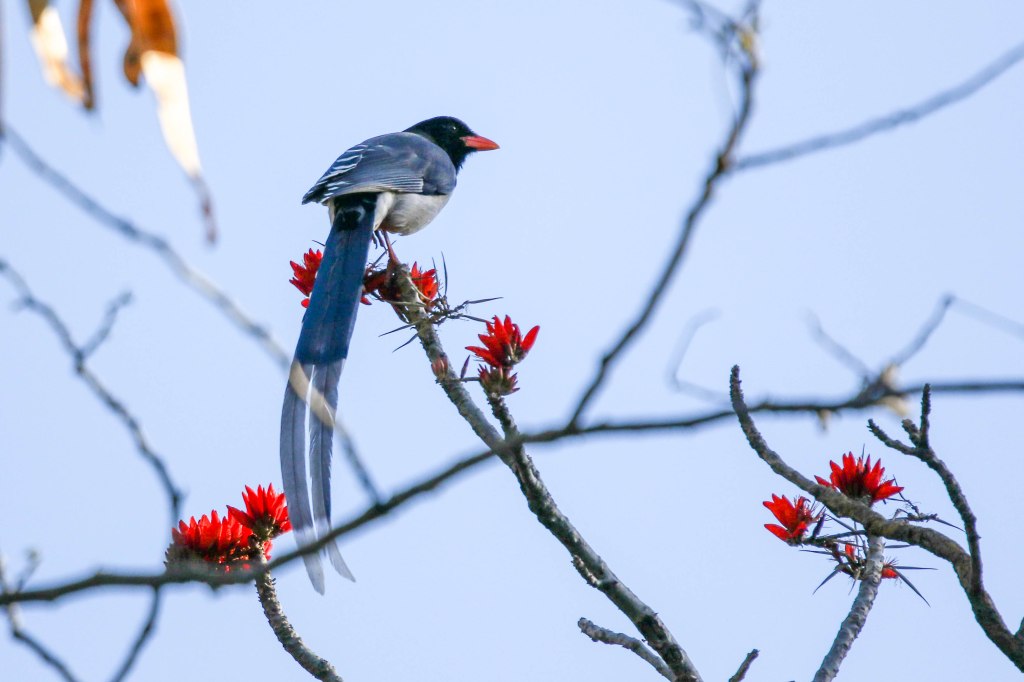
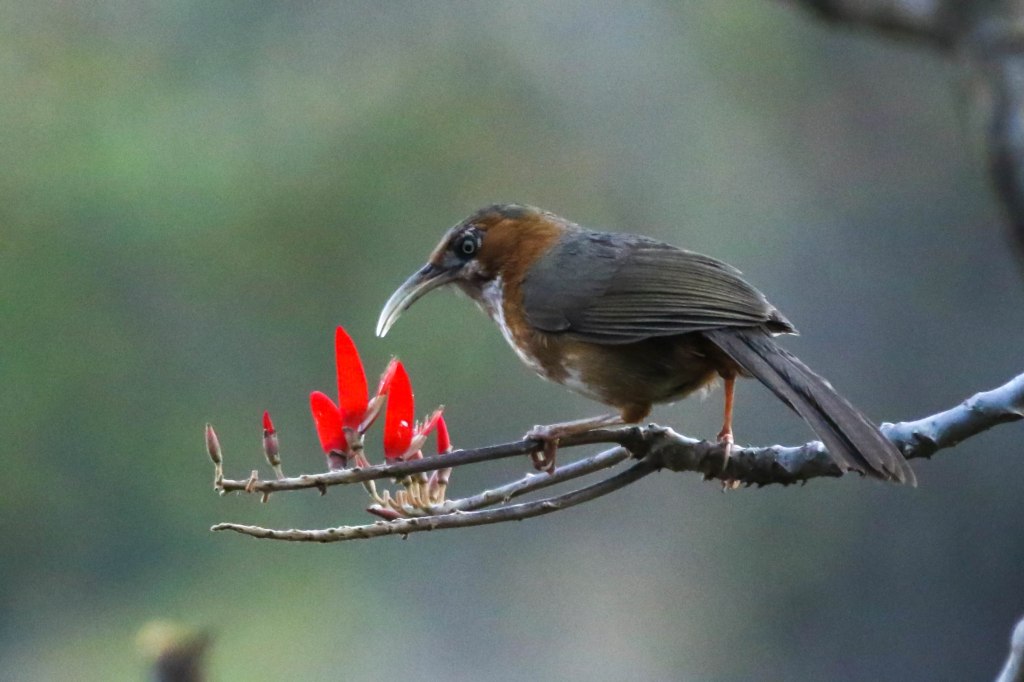
Red billed Blue Magpie and Rusty Cheeked Scimitar Babbler – April 2023
The Crows, Mynas, Sunbirds, Babblers, Parakeets, Barbets, as well as a lot of bees and wasps, complete the list of its most dedicated admirers. Numerous species, congregate to feast on these blossoms. Indian White Eye is one of the frequent guests; it eats on the blooms while hanging upside down, and its yellow feathers look stunning against the vivid crimson of the blossoming tree.
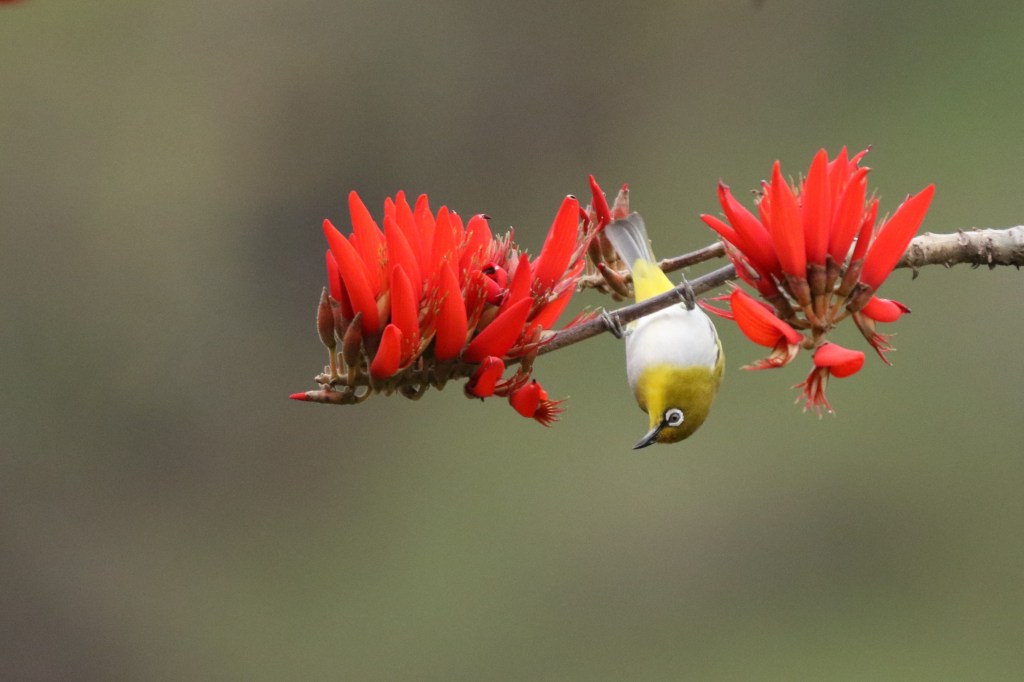
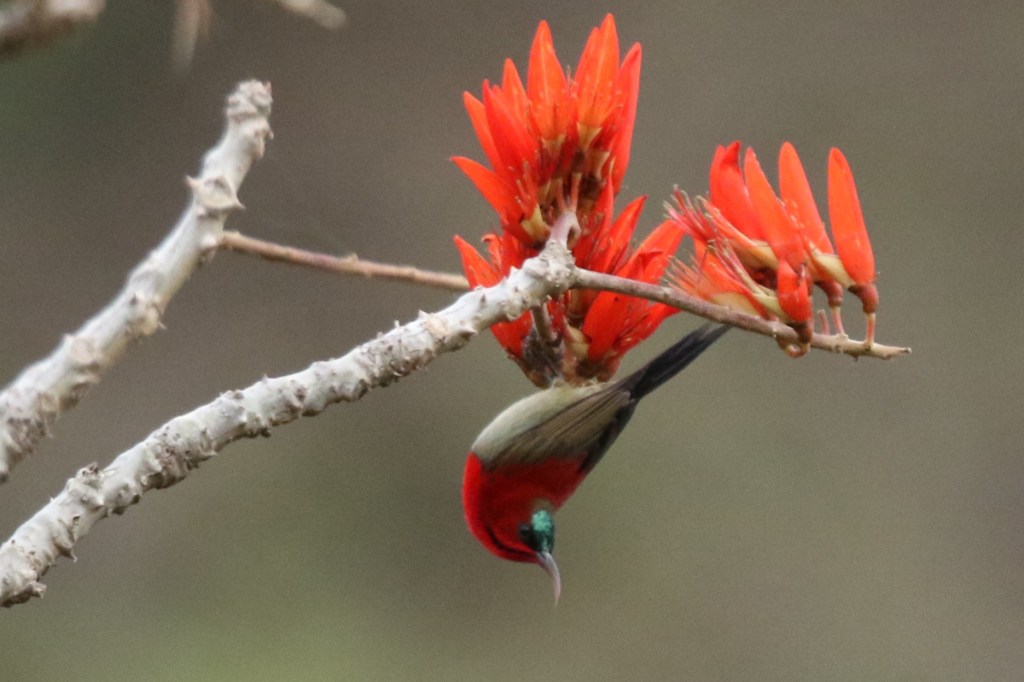
Indian White Eye and Crimson Sunbird hanging upside down with Coral Flowers – April 2023
Dr. Salim Ali also known as ‘The Birdman of India’ in his book ‘ in his book ‘The Book of Indian Birds, chapter ‘Bird Watching’ has mentioned the Coral Flower in bloom as one of the most charming and enjoyable venues for bird watching. The book further mentions “Their particular attractiveness lies in the fact that the trees, or the branches bearing the gorgeous flowers, are bare and leafless at this season, allowing a clear and unobstructed view of the visitors. Almost every small bird of the surrounding countryside flocks to the blossoms for the sake of the sugary nectar which they produce in such abundance. Riot and revelry prevail throughout the day, but especially in the mornings, and there is constant bullying, hustling, and mock fighting amongst the roisters. A pair of good binoculars multiply the pleasures of bird watching many-fold, and is indeed an indispensable item of the watcher’s equipment.”
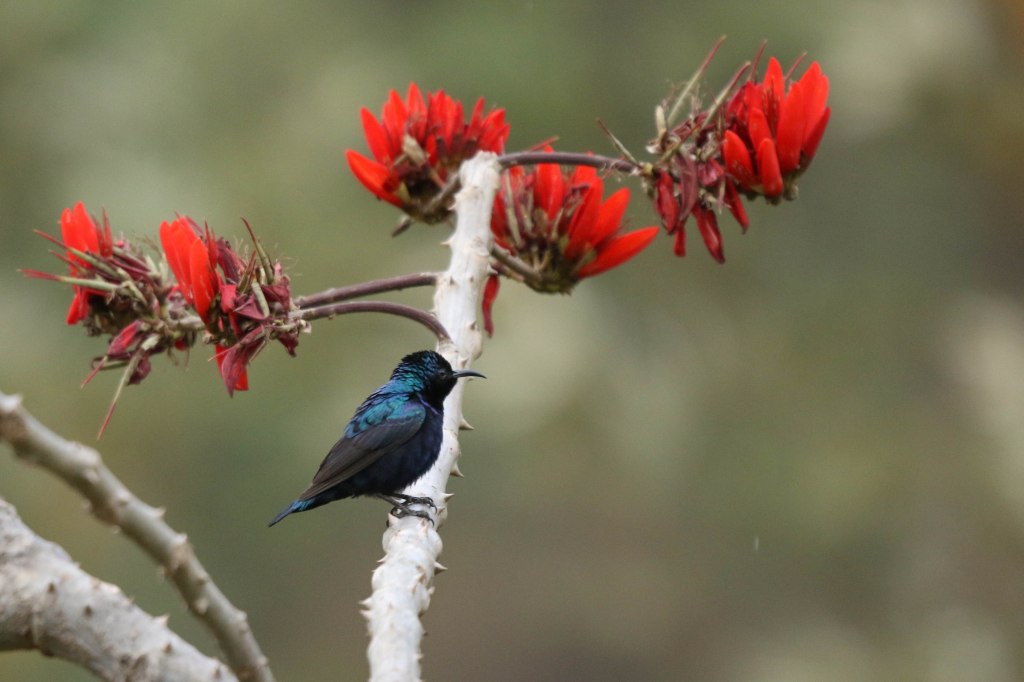
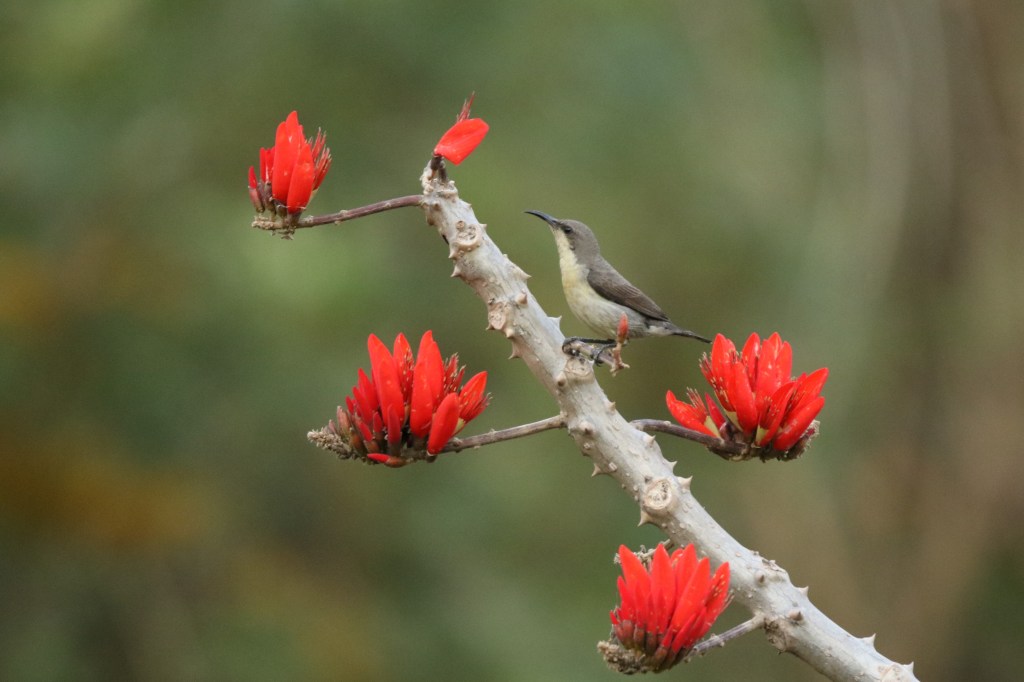
Purple Sunbird Male and Female with Coral Flowers – April 2023

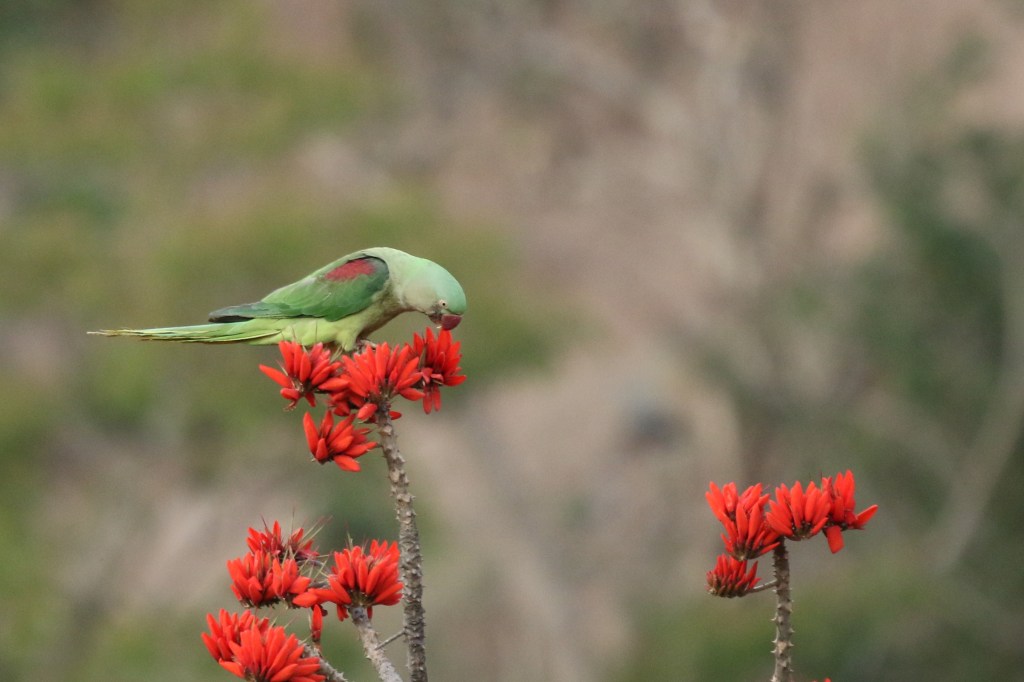
Plum headed Parakeets and Alexandrine Parakeet with Coral Flowers – April 2023
Various studies suggest that Coral Trees have perfect bird-flowers adapted for pollination by passerine birds. These species flower during dry season when resources such as fleshy fruits are scarce, these trees provide essential nourishment for the birds. They provide water, instant energy through sugars, and also amino acids and proteins in their floral nectar. Further, these flowers also provide larvae and small insects to the visiting birds. Therefore, these trees provide both liquid and solid diet to the bird species, enabling the latter to survive during the dry season.
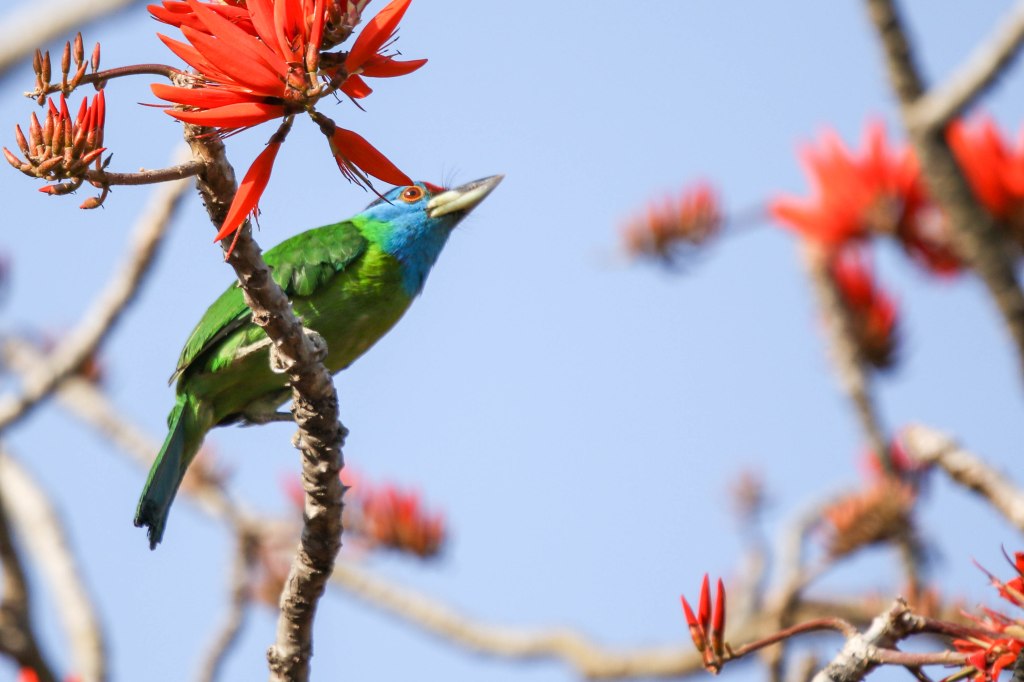
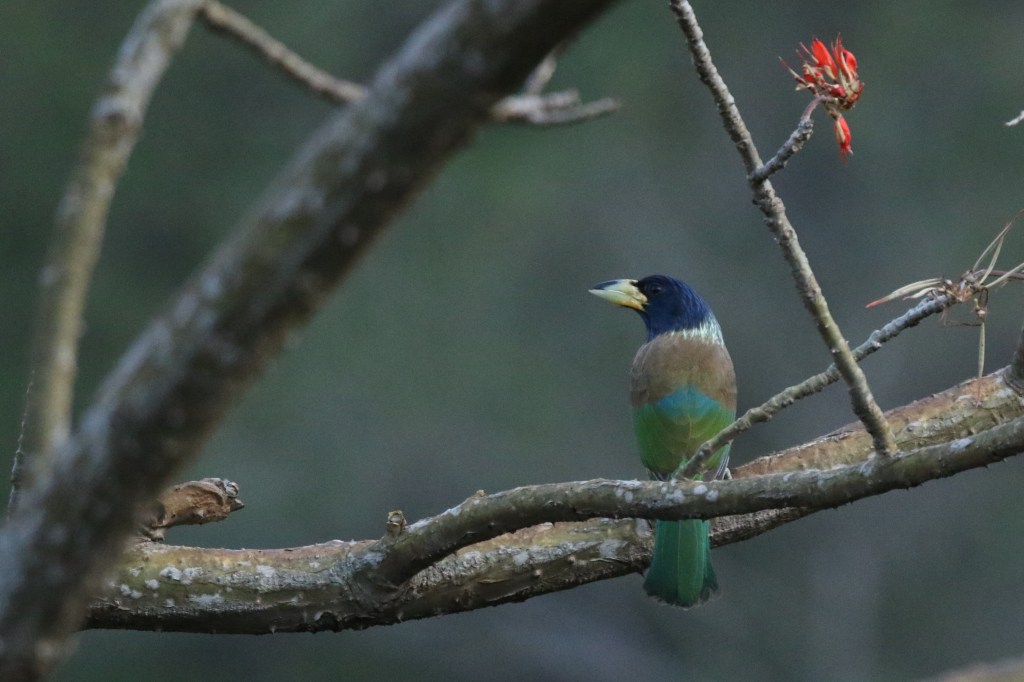
Blue throated Barbet and Great Barbet – April 2023
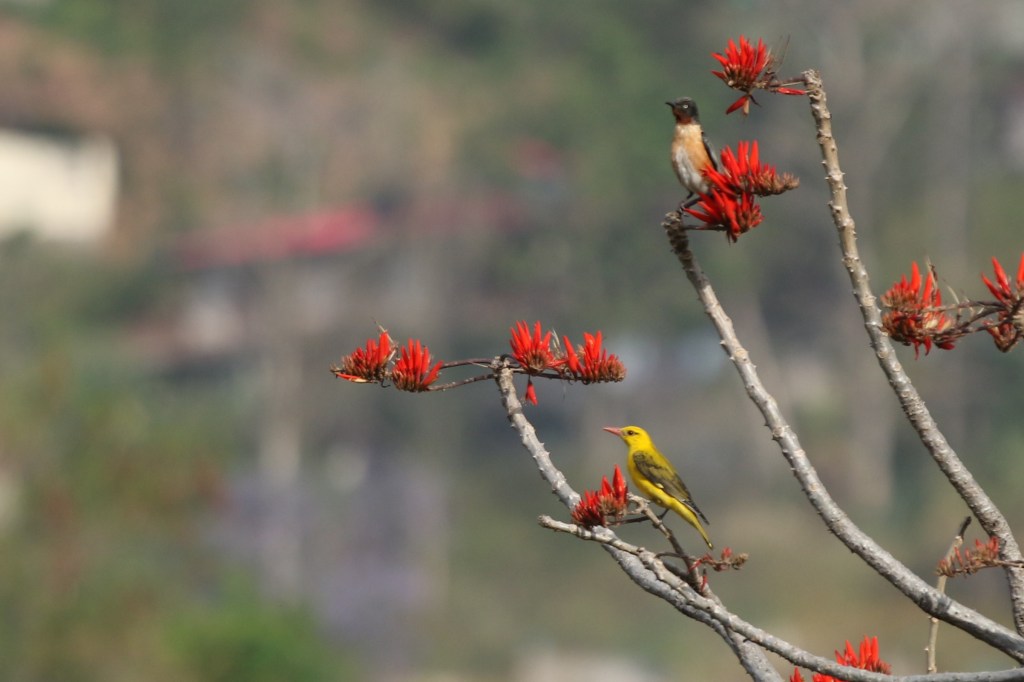
Indian Golden Oriole and Spot winged Starling – April 2023
Its scientific name is ‘Erythrina Indica’. Erythrina comes from the Greek word erythrose, which means ‘red’, in allusion to the color of the bloom, and indica refers to its native, India. Leafless in Winter, the tree develops crimson buds in the early summer that are needle-like. When these crimson buds blossom the tree puts on a spectacular show with bright crimson flowers which grow either alone or in bunches of five from January to March. The short-lived flowers are quickly followed by the new broad leaves in the latter, hotter portion of summer offer protection and shade in the rains. In winter, when shade and shelter are no longer needed, these leaves are eventually shed. Without leaves in the winter, the tree takes on a ghostly look with its pale grey and almost white bark. The leafless tree in winter again develops buds for the spectacular show of flowers.

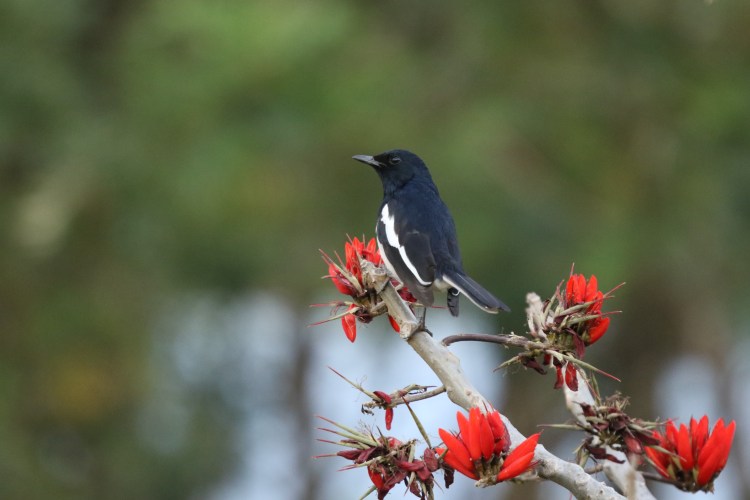
Asian Koel ( Female ) and Oriental Magpie Robin – April 2023
In Hinduism it’s the ‘Mandra tree’ of Indra’s Garden in ‘swarga’, the paradise. The Indian coral tree finds a mention in the “Mahabharata”. It is strongly believed that the Hindu God, Lord Krishna stole the flowers of the ‘Coral Tree’ from Lord Indra’s Garden.
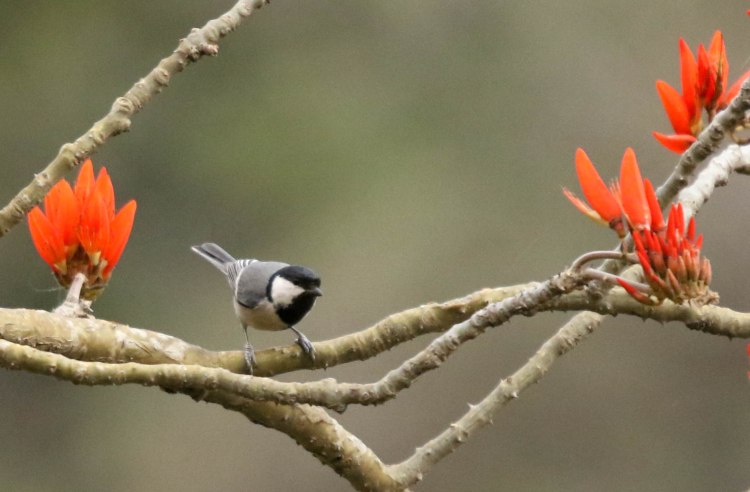

Cinereous Tit and Himalayan Black lored Tit – April 2023
This tree is also known for its medicinal properties. The bark, leaves, and flowers contain alkaloids and other bioactive compounds with antioxidant, anti-inflammatory, analgesic, and antimicrobial properties. Traditional medicine uses various parts of the tree to treat ailments like inflammation, pain, fever, and skin diseases. Leaves are edible and cooked to make curries and petals are used to derive a red dye.
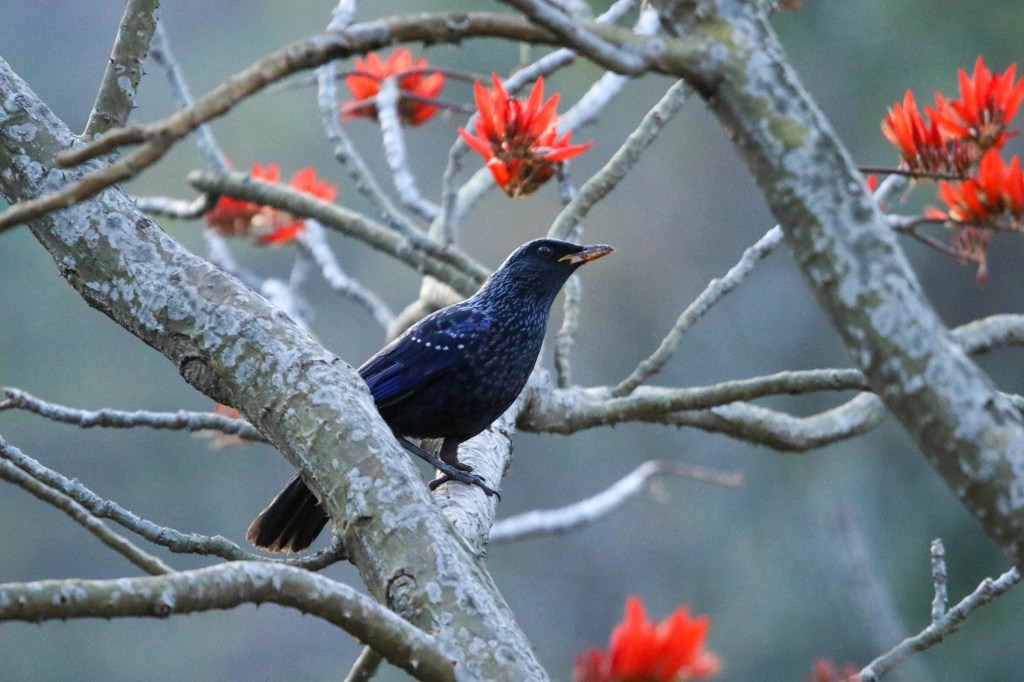
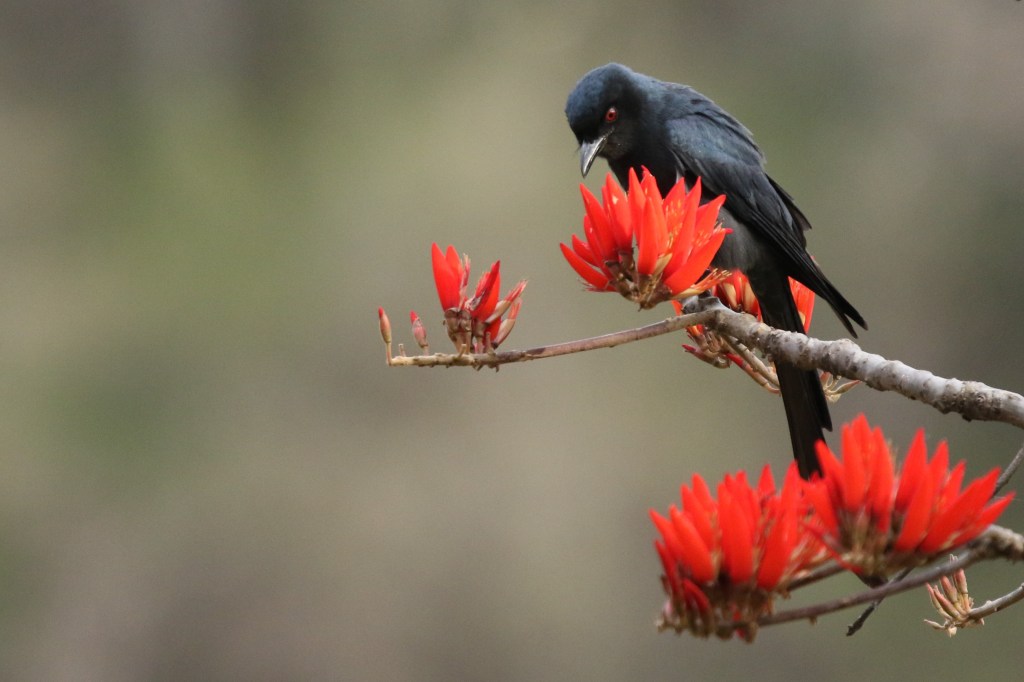
Blue Whistling Thrush and Drongo – April 2023
Commercially it is used as a shading tree for coffee plants and provides nitrogen to the plants naturally without the use of any Chemical fertilizers. The tree and a group of bacteria called Rhizobia develop a symbiotic connection. These bacteria are responsible for fixing nitrogen, and the tree gives the bacteria nutrients like sugars and other substances in exchange for housing in the form of root nodules. The process of nitrogen fixation makes atmospheric nitrogen available for utilization by living things. In Winter, when the leaves are eventually shed, acting as a mulch to keep the earth from drying up during the dry months. Additionally, when leaves decay, they provide the soil with essential nutrients.
 naturetrail
Well written. Subhash Sapru
LikeLike