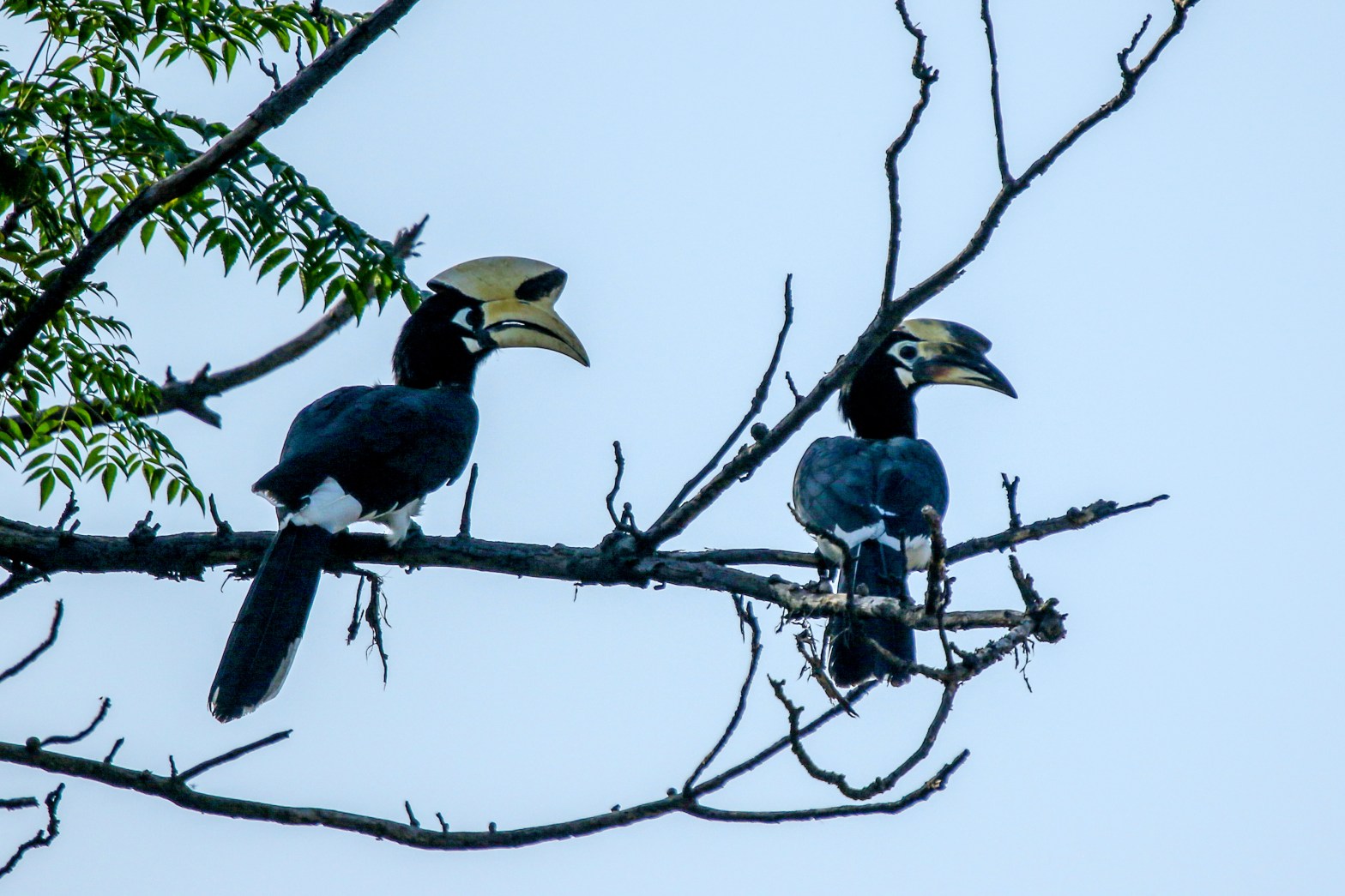
Charismatic, enigmatic, rare; call them what you may, hornbills are truly some of the most captivating avians on the planet. Their distinct calls, disproportionately large beaks, long eyelashes, prominent casques, unique courtship rituals and the striking colours that some hornbill species exhibit make them a birdwatcher’s delight. Luckily, the Oriental Pied Hornbill which is one of those species can be seen at Chandigarh. Sharing the information along with pics clicked by me.
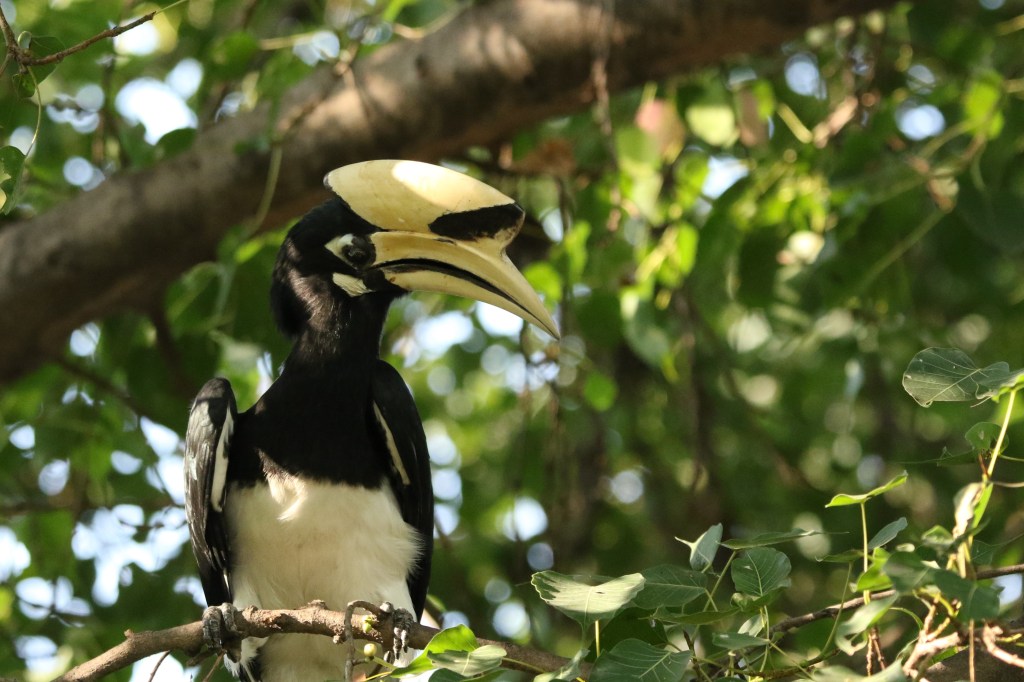
There are about 62 hornbill species world-over of which nine reside in India. Out of these nine, only two, one Indian Grey Hornbill and the other Oriental Pied Hornbill are found at Chandigarh. While Indian Grey Hornbill is the State bird of Chandigarh, the Oriental Pied Hornbill though resident, but not commonly seen. Hornbills play a vital role in forest regeneration and are therefore called ‘farmers of the forest’. They are omnivores, but they have a preference for fruits, particularly figs. Their unique casques and colourful appearance make them hard to miss. But, there is more to these birds than meets the eye.
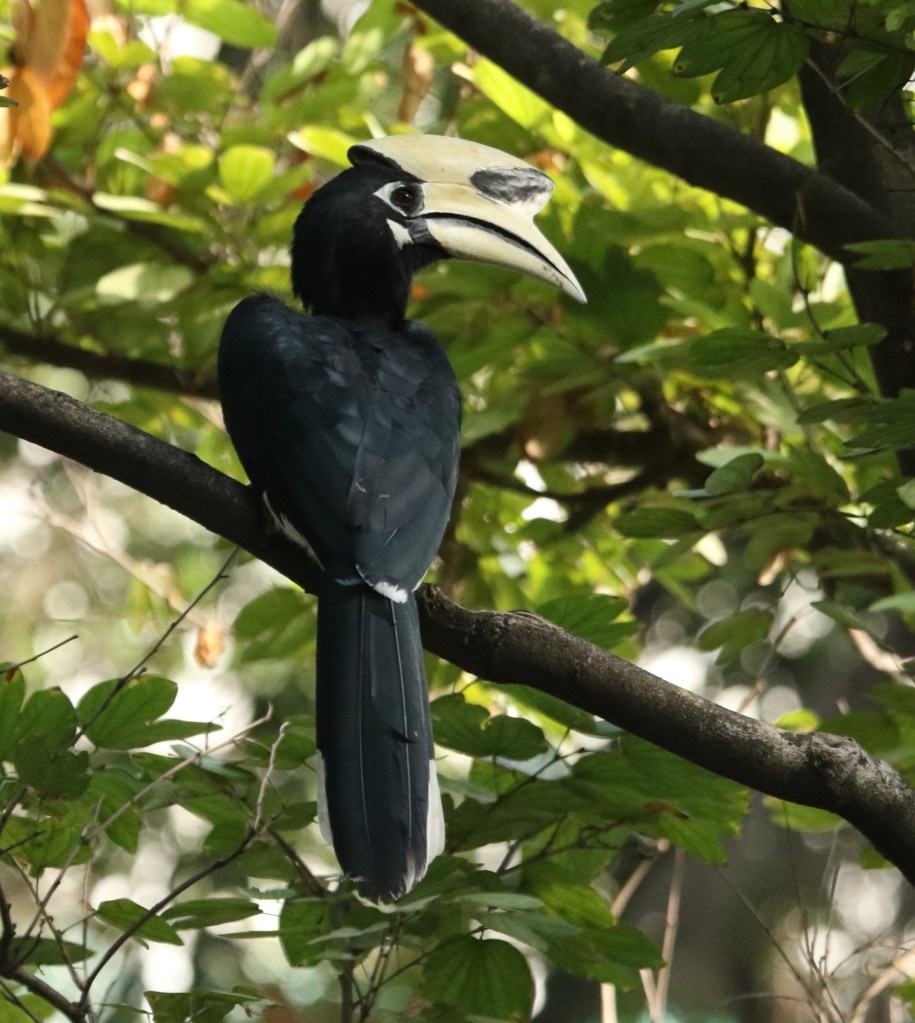
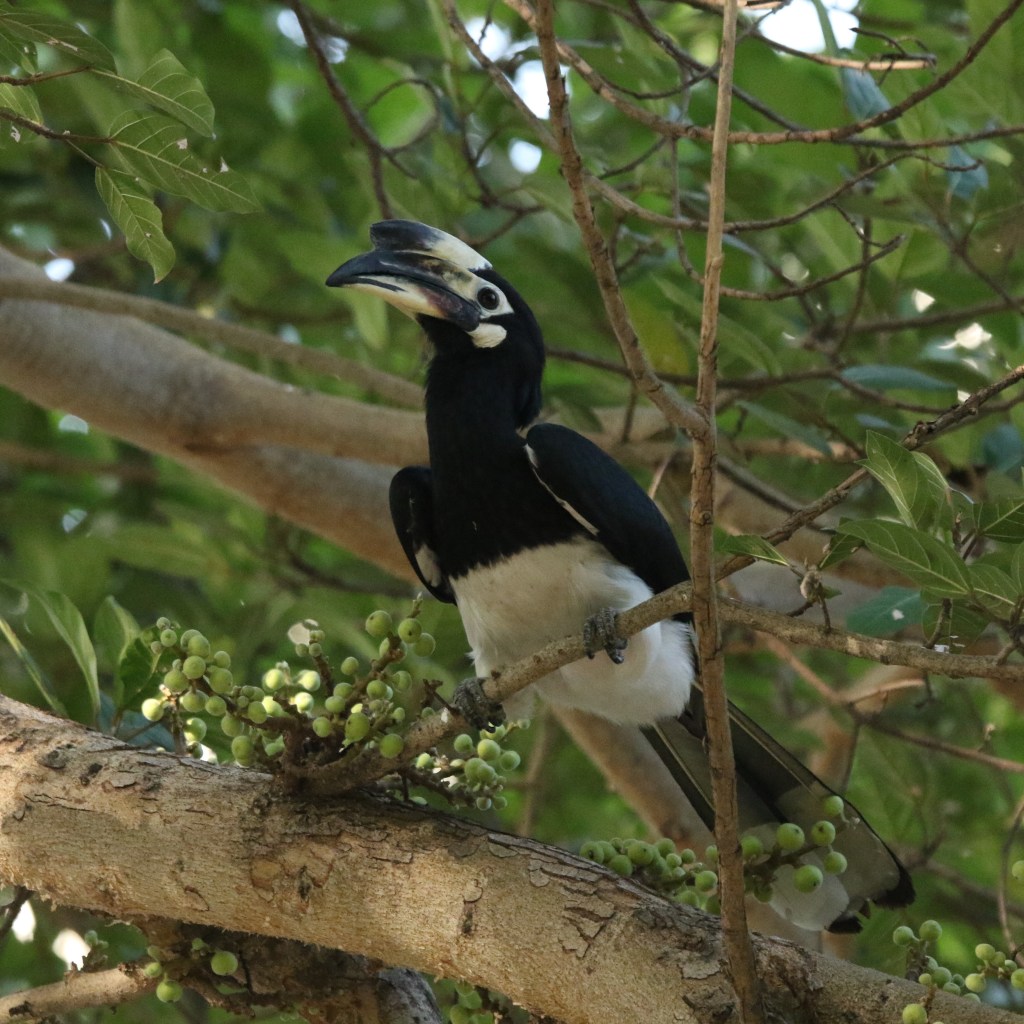
Male and Female Oriental Pied Hornbill
Predominantly black and white in colour, Oriental Pied Hornbills measure about 60-70cm in length and male hornbills are larger than females. Apart from the difference in size, male and female hornbills can be distinguished by their bills and casque. Males have yellow bills with a large casque that has a black line-like colouration towards the end. In females, the casque is smaller with black markings at the end of the casque and the upper bill. Due to their ability to survive in a range of habitats, their population trend is stable.
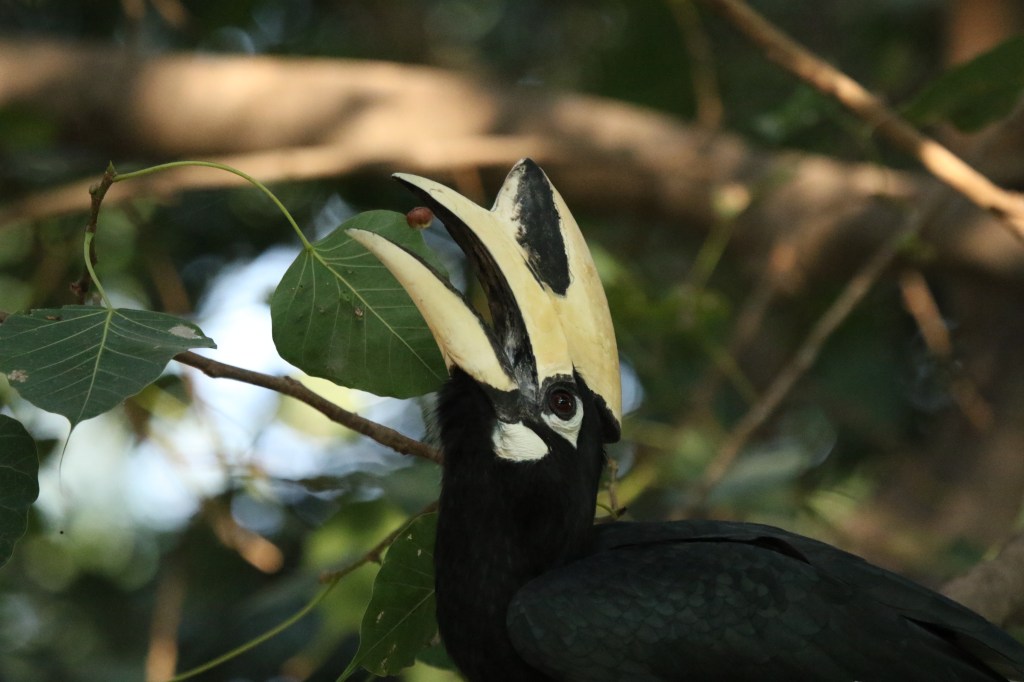
Male Oriental Pied Hornbill tossing the fig
They cannot swallow food caught at the tip of the beak as their tongues are too short to manipulate it, so they toss it with a jerk of the head and gulp it down back to the throat like one would toss a peanut into the mouth.
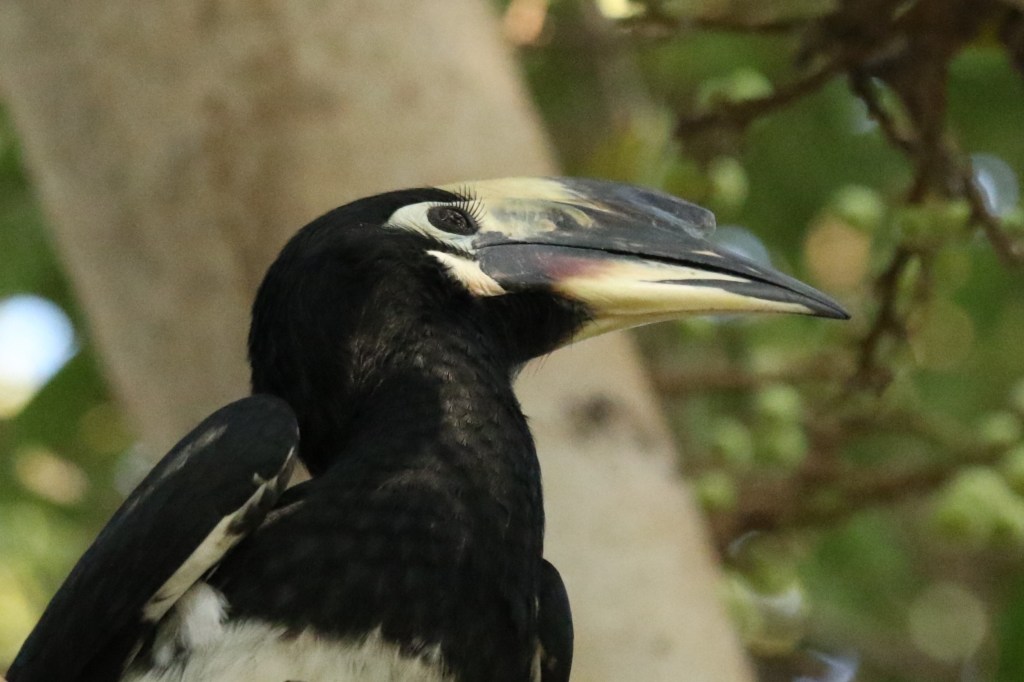
Female Hornbill with beautiful Eye Lashes
Birds are known for their unique physical features, such as their feathers, beaks, and talons. However, when it comes to eyelashes, it is not a feature that immediately comes to mind. Oriental Pied Hornbill is one of these rare species, which has exceptionally long “eyelashes”. The purpose of bird eyelashes is not entirely clear, but researchers suspect that they serve a protective function. They are also often located on the upper and lower eyelids rather than just the upper eyelid as is the case in humans. Also, unlike in the case of Humans and mammals, these eyelashes are modified feathers instead of hairs.
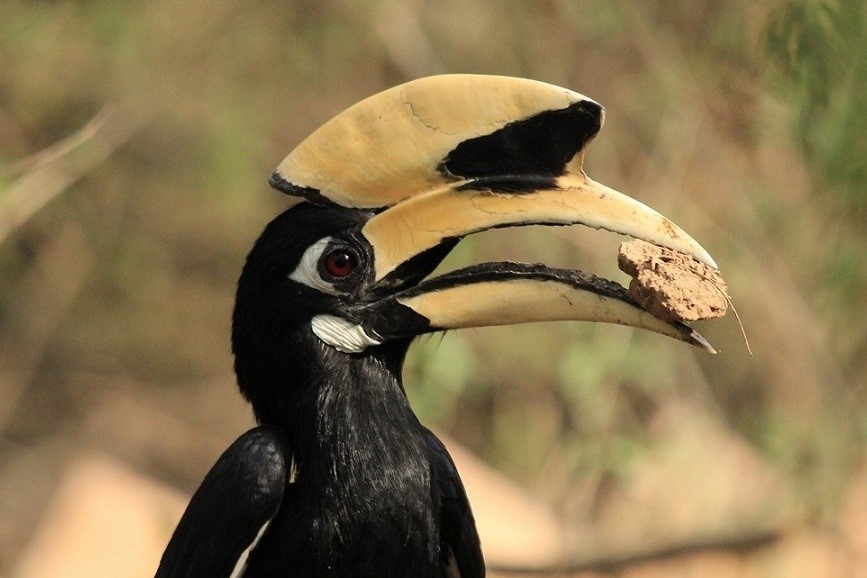
Male Hornbill with mud pallet
Hornbills generally breed between January and June; oriental pied hornbills typically commence breeding in February. This coincides with the onset of rain depending on geographic location, and peak abundance of fruit. The hornbill couple move together, and when expecting babies, they go nest hunting. To nest, these birds use natural cavities or coaters (naturally formed holes) in tall trees such as Gulmohar, Neem, Peepal, Banyan or Jamun. The female hornbill enters the coater of the tree and after she has made herself comfortable, the male brings lumps of soil moistened with his saliva. Together they build a wall of mud and seal the entry: he from the outside and she from the inside. The soil is applied with the side of the mouth.
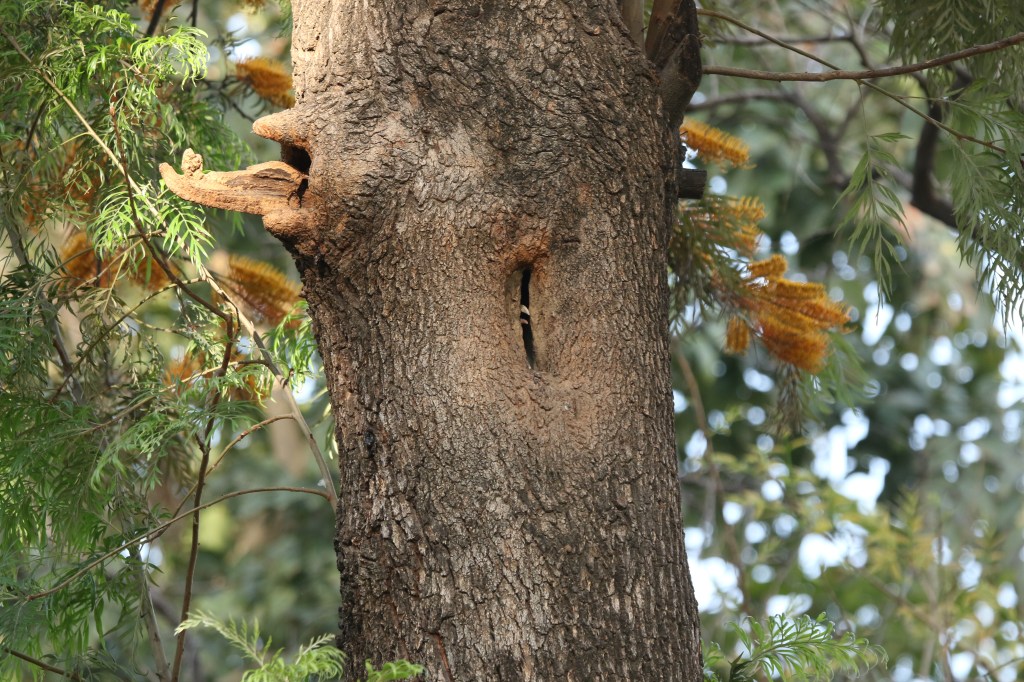
Nest of Indian Grey Hornbill with female inside
During the breeding season period of three to four months, female and the young ones stays inside and are completely dependent on the male for their survival till the juveniles reach a mature state. To give an idea of the nest, I have attached the picture clicked by me of nest of Indian Grey Hornbill.
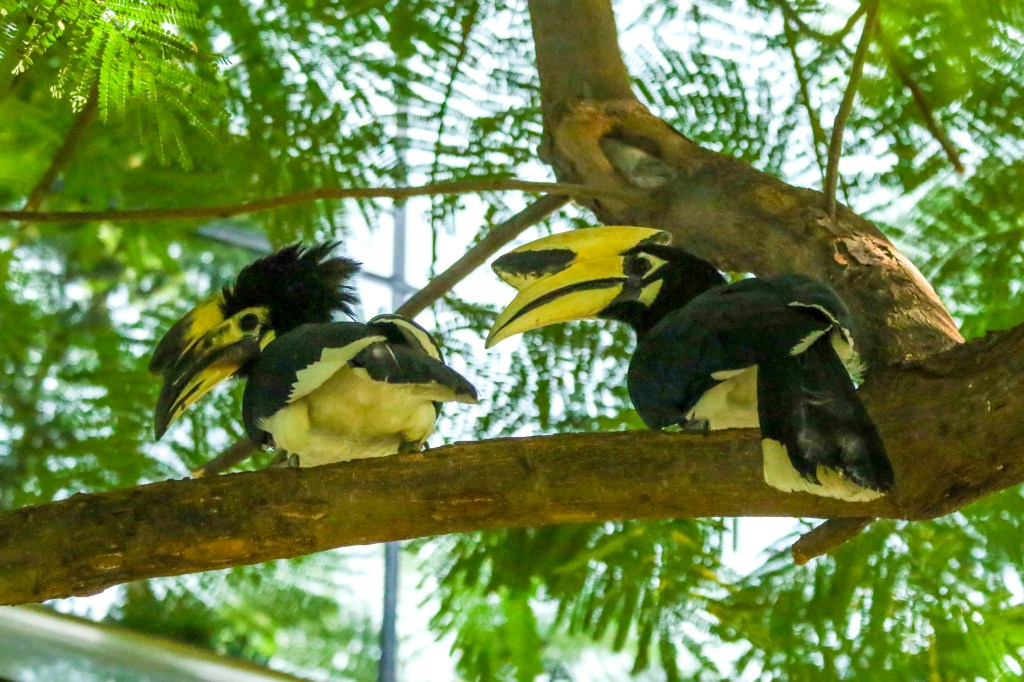
They also form monogamous pairs, and mate for life.
It is surprising that people find it difficult to grasp the idea of few birds and animals’ species are monogamous. Many species live with their single partner till their death. Hornbills are one of such species with a distinct love story.
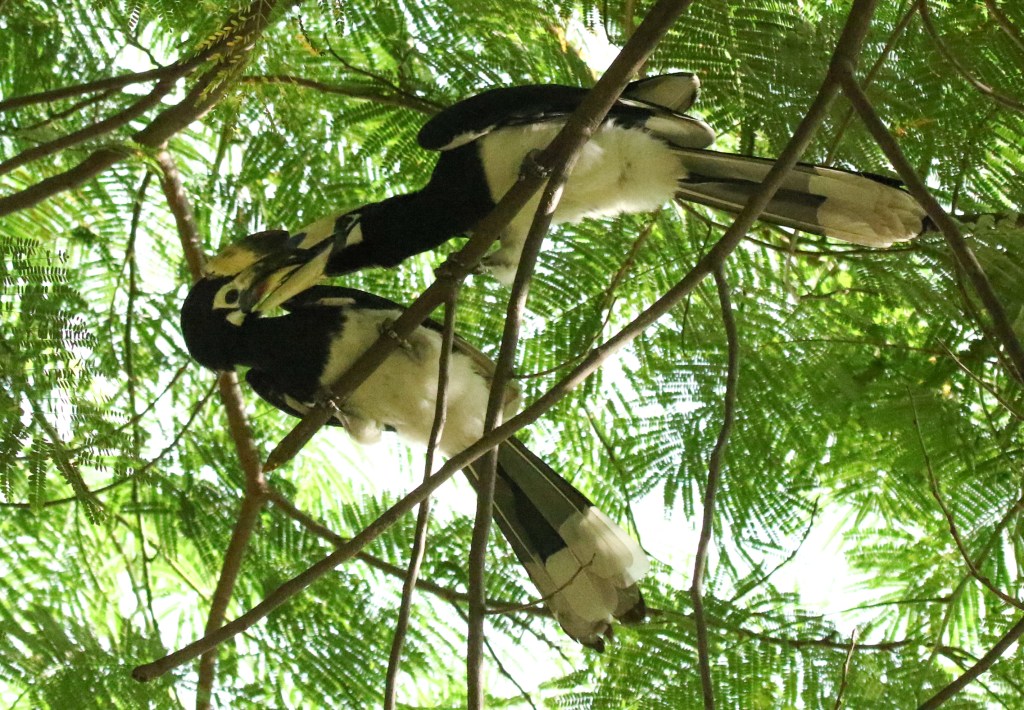
Casque Butting
One of the many behaviors observed among hornbills is the casque butting. This behaviour has been observed only among males in mid-air, and also among courting couples while they are perched. And often while they are perched. Appears more like an expression of love & assurance from both sides, whereas the same can be more of a territorial display for the males. Both are true, as it’s about the dominance & establishing oneself.
 naturetrail
Thanks for sharing. Well done.
Subhash Sapru
LikeLike