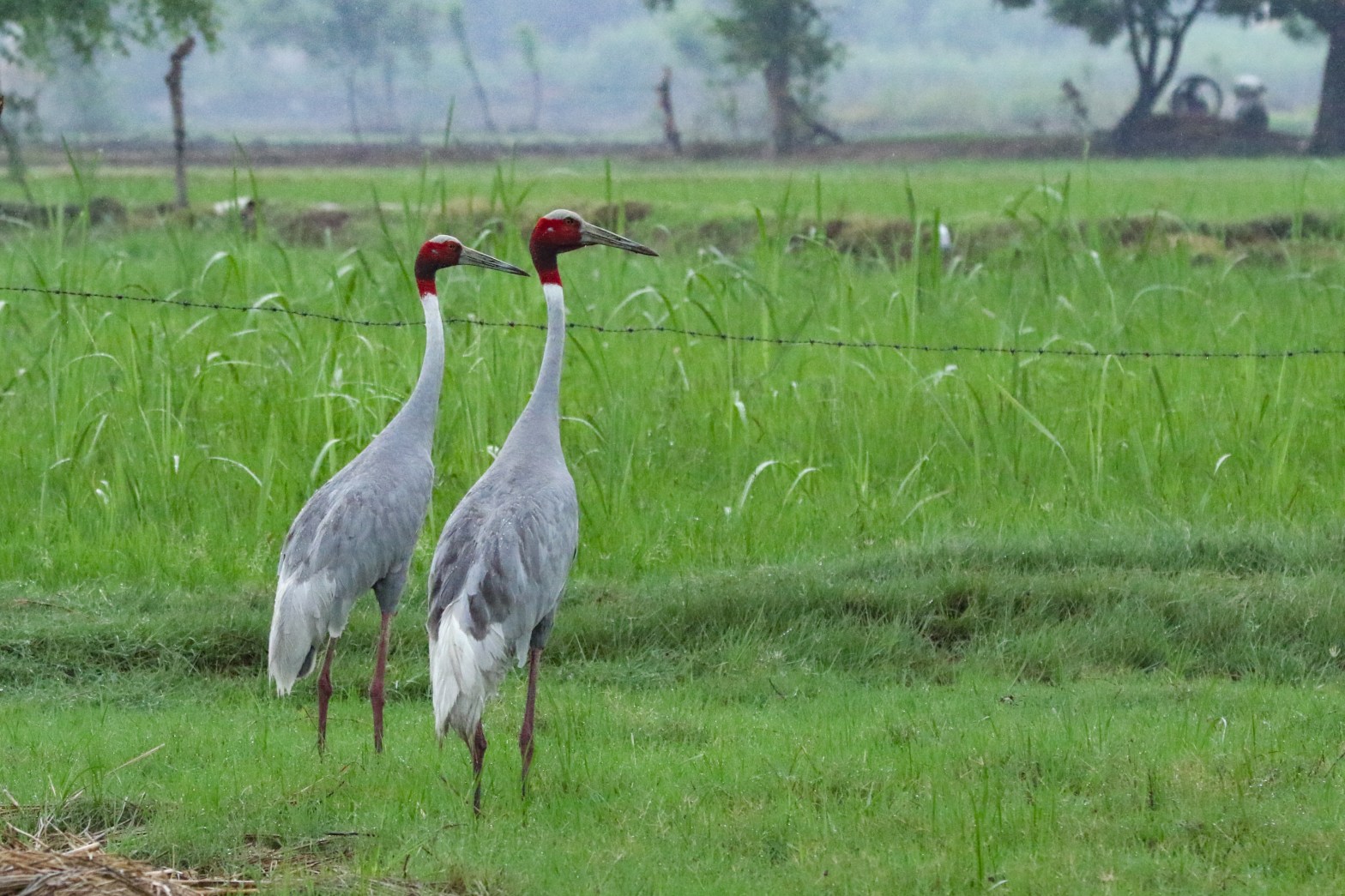
The caption of the blog is strange, but surprisingly true at least for bird watchers. This phrase embodies the belief that strong determination and perseverance can lead to remarkable and fulfilling rewarding experiences,
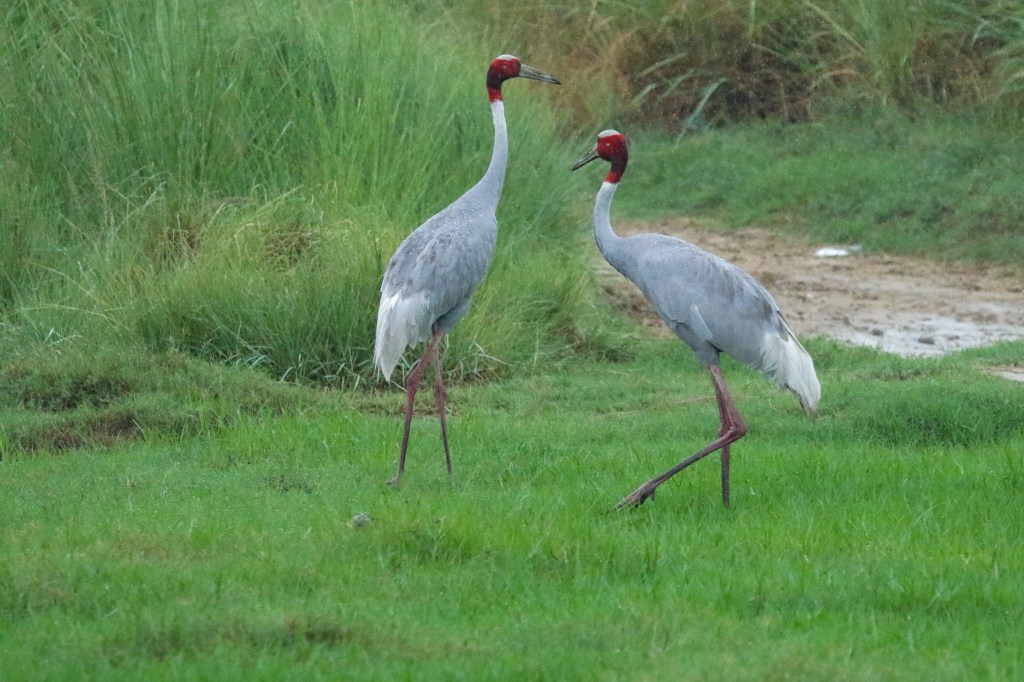
The Dhanauri Wetlands and birdwatching area, nestled in Dhanauri village, Uttar Pradesh, about 15 km north of Noida Airport, covers 98 hectares of wetland currently under threat and awaiting its designation as a Ramsar Site. This crucial habitat is home to over 120 Sarus Cranes, the state bird of Uttar Pradesh. Revered as the world’s tallest flying bird, with some individuals reaching up to 1.80 meters in height, the Sarus Crane is a majestic and striking creature. Listed as “Vulnerable” on the IUCN Red List, the species enjoys the highest degree of protection under Schedule I of India’s Wildlife Protection Act.
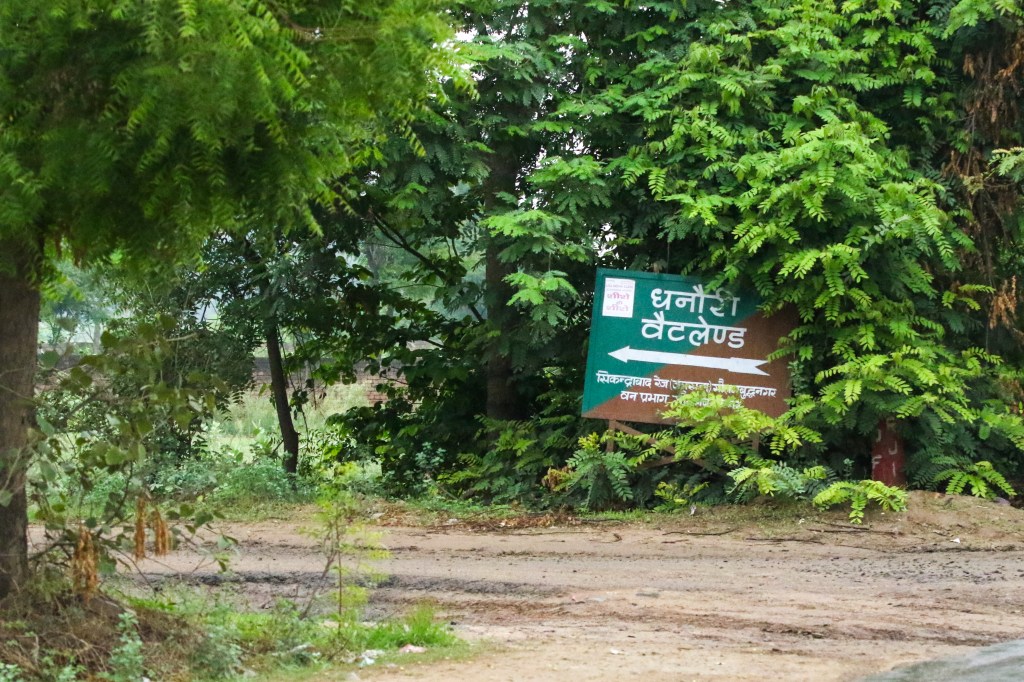
My interest in Dhanauri was sparked by a birding friend from Gurgaon. In the month of July 2024, while in Noida for official work, I decided to take a chance and explore the wetlands, even though I knew little beyond its reputation. The weather was cloudy, but I was determined to make the most of my time, so I left Noida early in the morning by taxi. After more than an hour of navigating with the help of local residents, I finally arrived at the wetlands. Unfortunately, it began to rain just as I reached, dampening my spirits. The surroundings were lush and green, but there were no birds in sight.
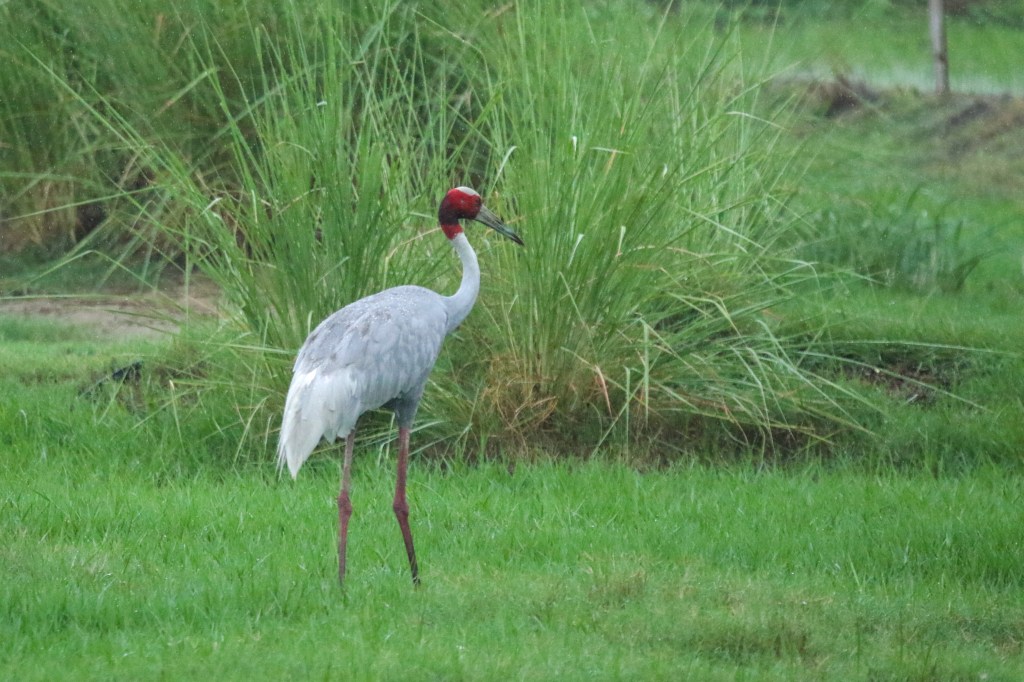
However, I refused to give up. I approached two schoolchildren and asked about the Sarus Crane. When they mentioned seeing two Sarus birds flying earlier, I felt a surge of hope. I instructed my driver to continue further, and soon enough, I spotted a Black-necked Stork on my left. Despite the rain, I captured some photos from inside the car. I also noticed ibises and Grey-headed Swamphens, but my heart was set on finding the Sarus Crane.
And then, as if my persistence had paid off, a pair of Sarus Cranes appeared on our left. It was a sight to behold—the majestic pair, renowned for their brilliant grey plumage, contrasting red heads, and long, flowing tails, stood right in front of me. Without wasting any time, I began taking pictures.
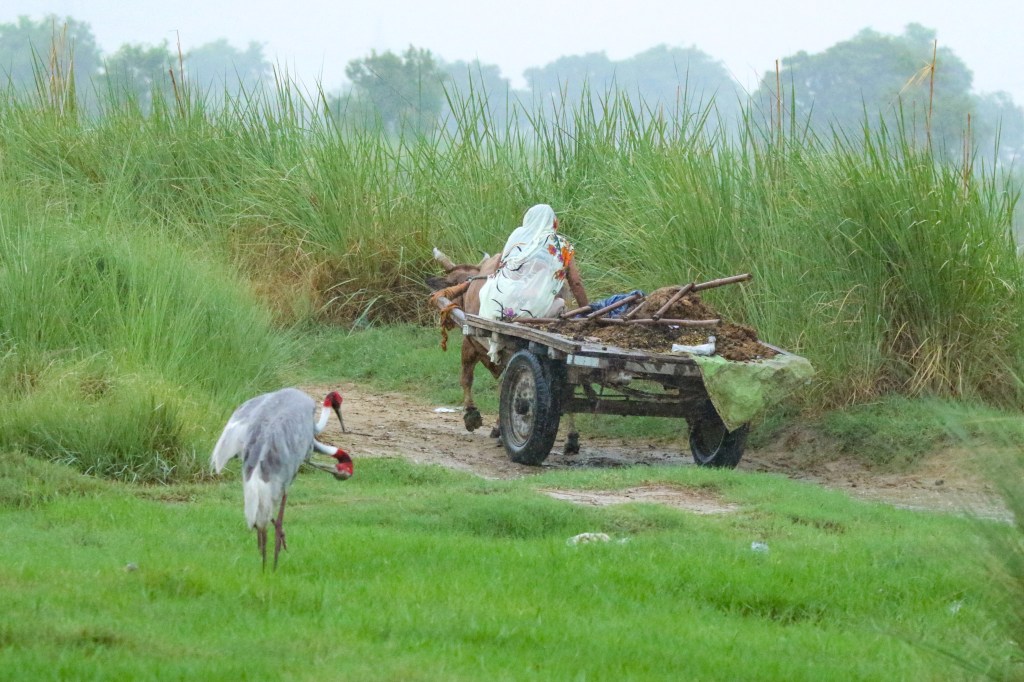
Just then, an old lady with a bullock cart entered the frame. I feared the cranes might take flight, but to my surprise, they remained calm, simply moving a short distance away from the cart, as if familiar with her presence. It became clear that the villagers and farmers here not only tolerate the cranes but welcome them. The people of Dhanauri have evolved alongside these birds, respecting and coexisting with them. I took the opportunity to step out of the car and capture more shots, even recording a video with my mobile phone. After a few minutes, the pair flew away.
In India, the Sarus Crane has long been loved and revered. The bird’s name, “Sarus,” is derived from the Sanskrit word “Sarasa,” meaning “bird of the lake.” Known for their lifelong monogamous bonds, Sarus Crane pairs are inseparable, engaging in every aspect of life together eating, sleeping, flying, walking, and raising their offspring. Their close-knit behavior has inspired countless legends and folklore, and it is even said that the sight of a Sarus Crane pair inspired sage Valmiki to write the great Indian epic, the Ramayana.
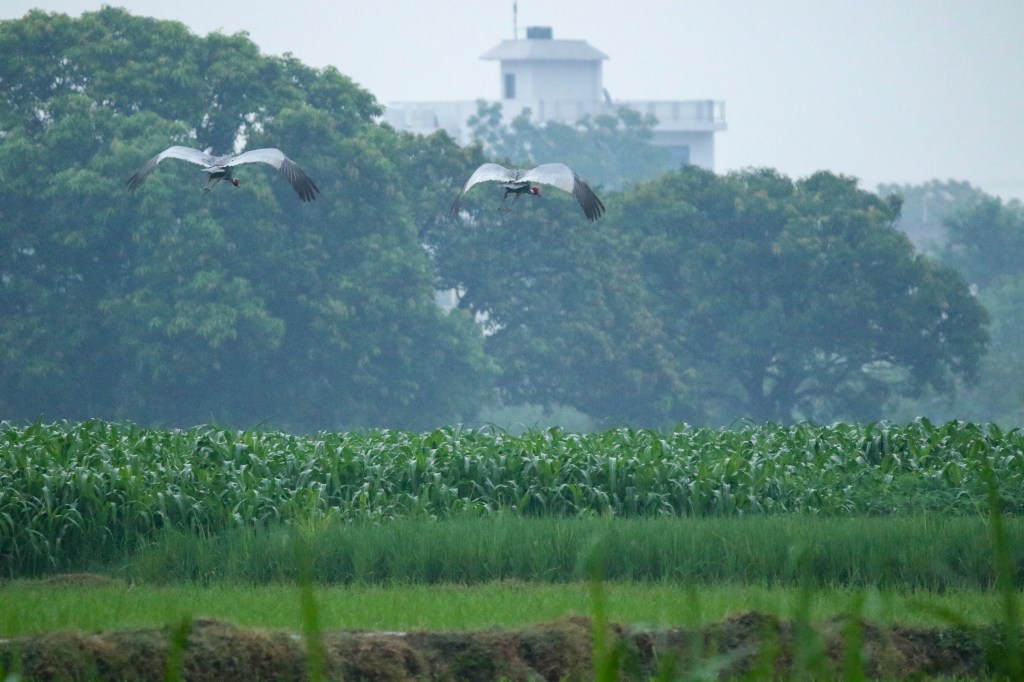
With time running short, I began my journey back to Noida. On the way, I spotted a White-throated Kingfisher enjoying the rain. I couldn’t resist stopping to capture that moment as well. I arrived back in Noida around 7:45 am. Though the birding session lasted only about 30 minutes, I left feeling deeply fulfilled, having discovered a new wetland and added two lifers to my list, including my favorite, the Sarus Crane.
This experience reinforced my belief that where there’s a will, there’s a bird. The Dhanauri Wetlands, with its rich biodiversity, is a treasure that must be protected at all costs. I’ve learned that many social activists have already done everything they can to secure this area’s designation as a Ramsar site.
 naturetrail
Thanks for sharing S.Sapru
LikeLike