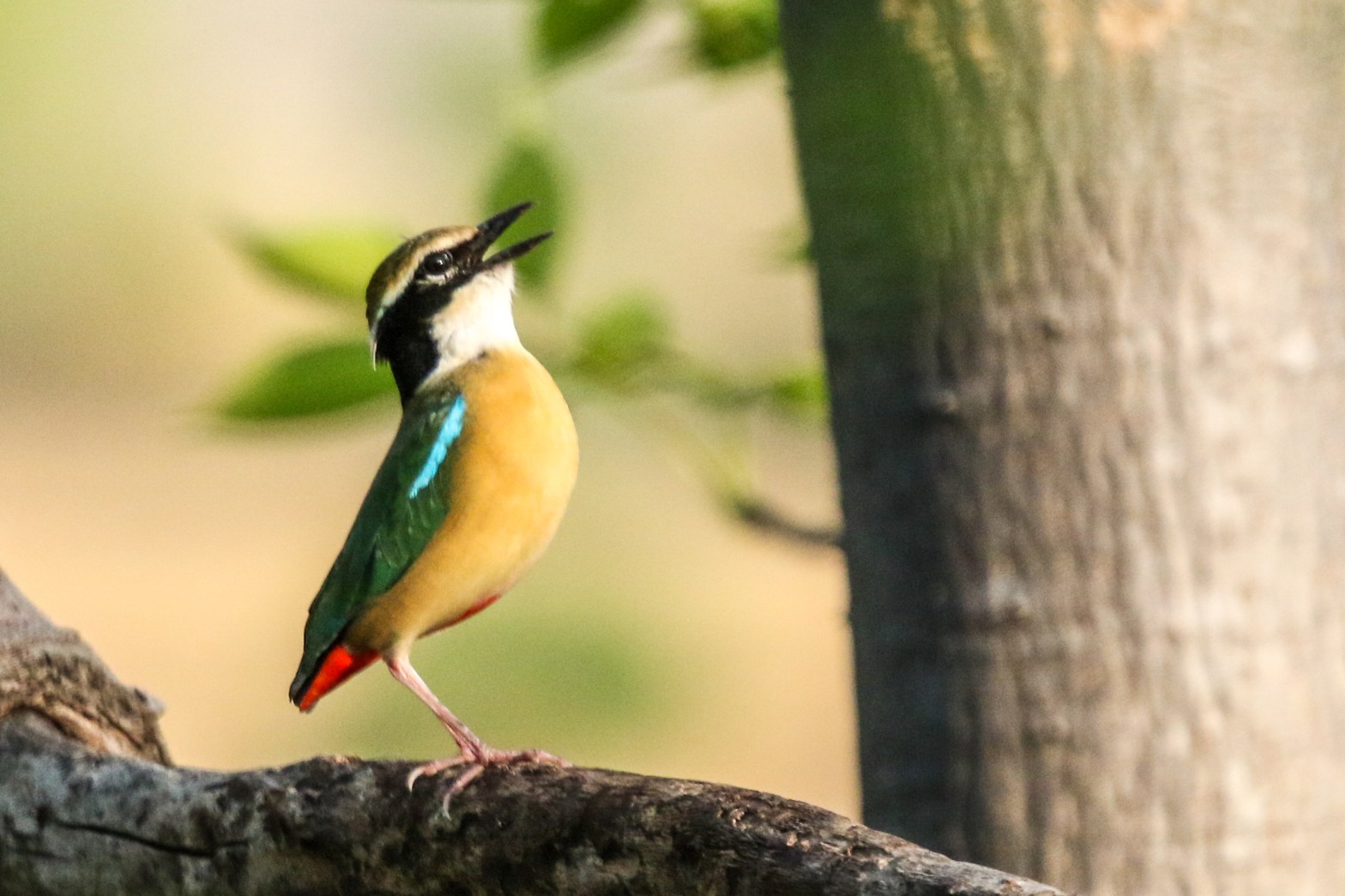
Every year, as the winter migrants begin their long journey back to their native habitats and the summer heat dulls the activity of our resident birds, birders across the Tri-city find themselves looking forward to the arrival of one dazzling visitor—the Indian Pitta. For birders like me, there’s no better place than Thapli to welcome this vibrant summer migrant. And like every year, the Indian Pitta didn’t disappoint.
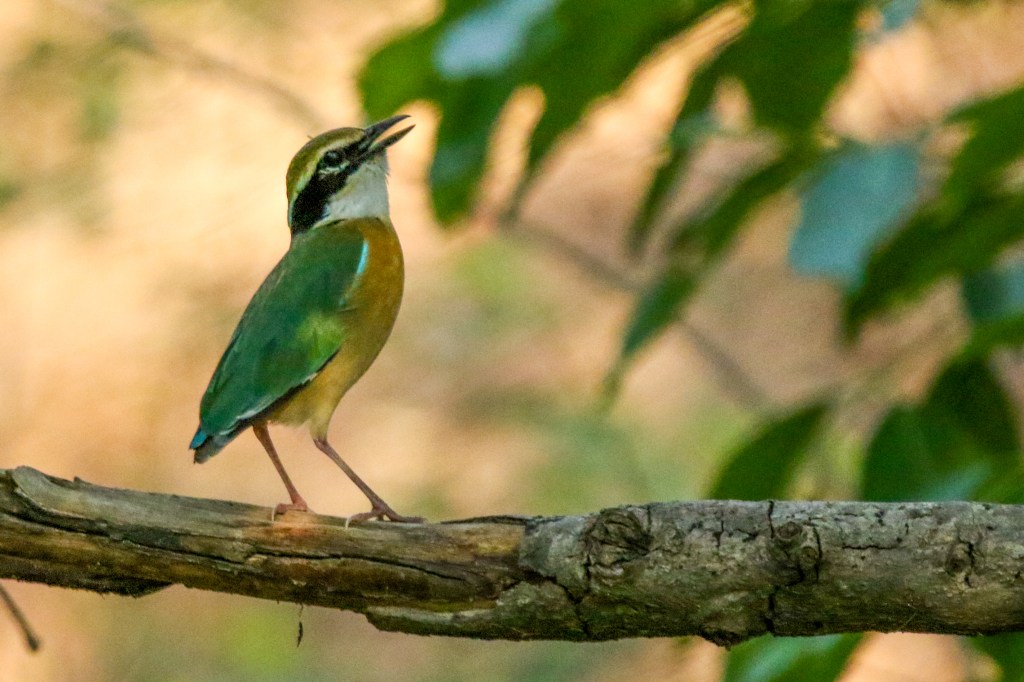
On the morning of 11th May 2025, I set off for Thapli with a heart full of hope, anticipating that the Indian Pitta might have arrived for its breeding season. And as they say, where there is a will, there is a way. No sooner had I stepped out of my car, camera in hand, than the melodic whistles of the Pitta echoed through the valley. My excitement knew no bounds.
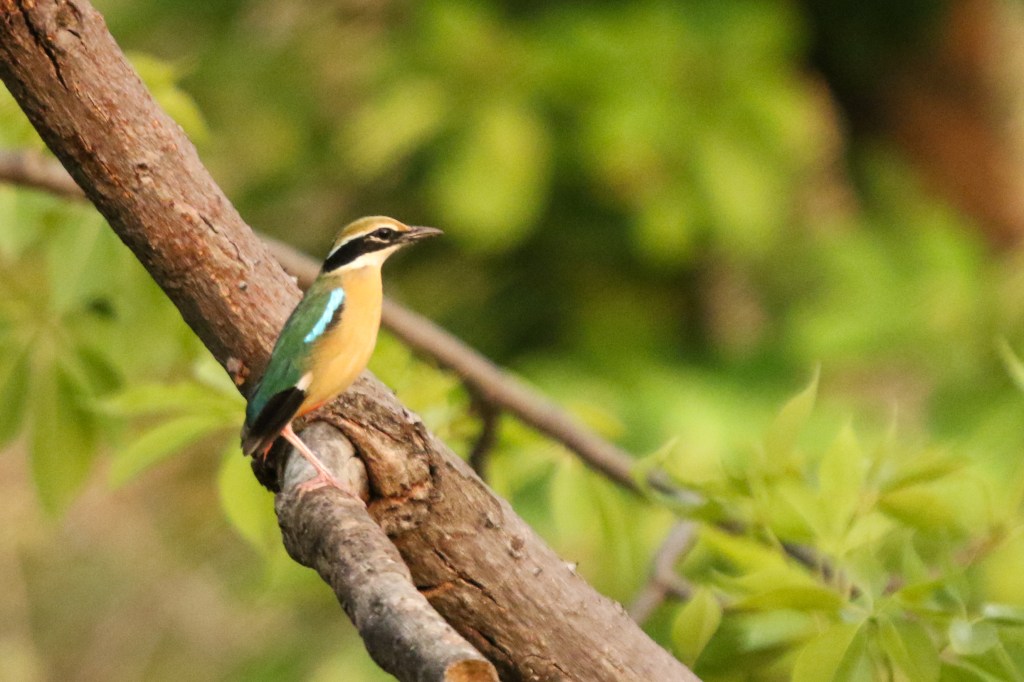
I quickly followed the call and climbed a small hill. And there it was—the Indian Pitta—perched gracefully on a branch, calling out in its full glory. The sight was so mesmerizing that I stood still, torn between three choices: to simply admire its striking colours, to photograph it quickly before it flew off, or to record its beautiful call. To my delight, the Pitta seemed to be in a generous mood, offering me ample time to do all three. Perhaps it had noticed me and decided to put on a full show for its lone spectator. I managed to take several photographs, admired it through my binoculars, and even recorded its call on my mobile.
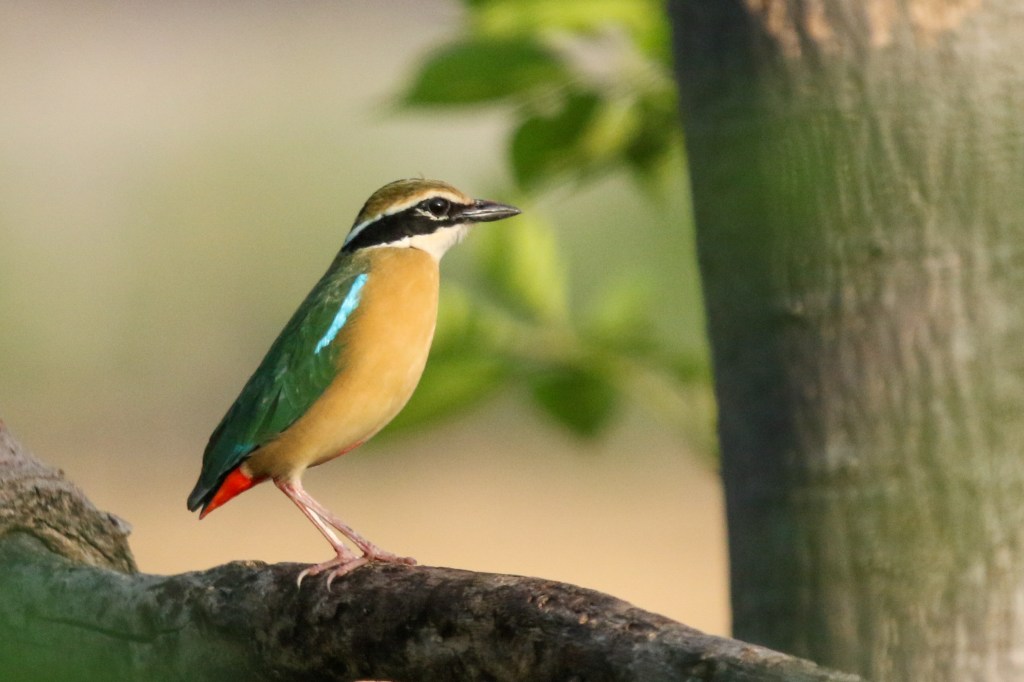
The bird moved gracefully from branch to branch, showing off different angles and poses, almost as if it knew how to pose for a portrait. I felt immensely grateful for the rare opportunity it gave me—a perfect combination of visual beauty, melodic song, and patient performance.
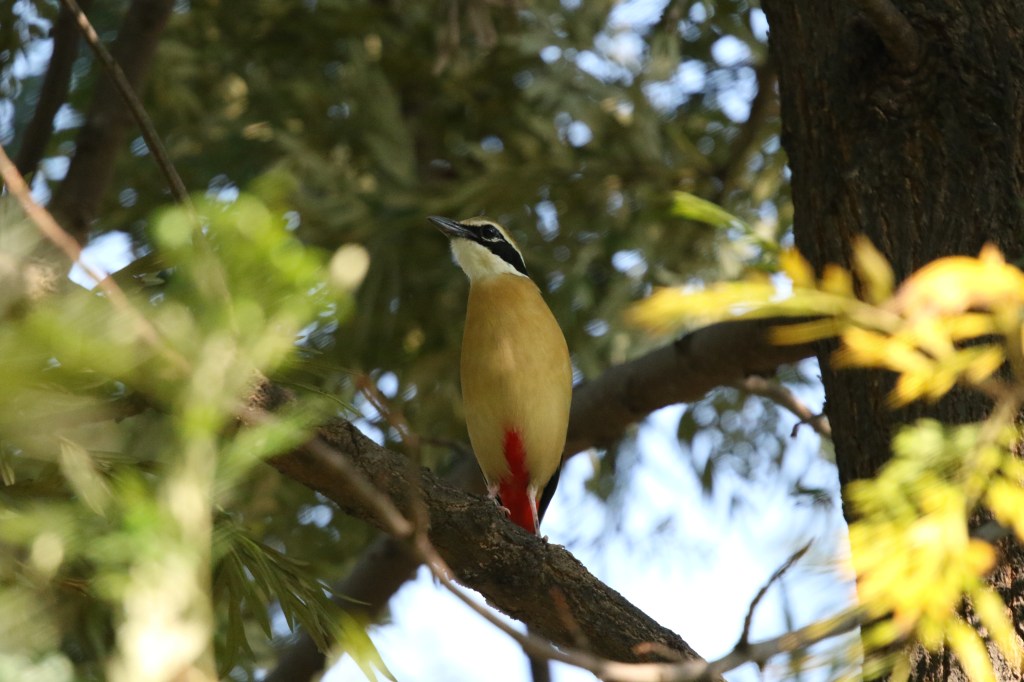
As the magic moment ended and I filled my dream bucket, I realized that my ascent route was too narrow and steep to descend safely. I quickly rang up my friend Gaurav, a local resident of Thapli, who arrived promptly.
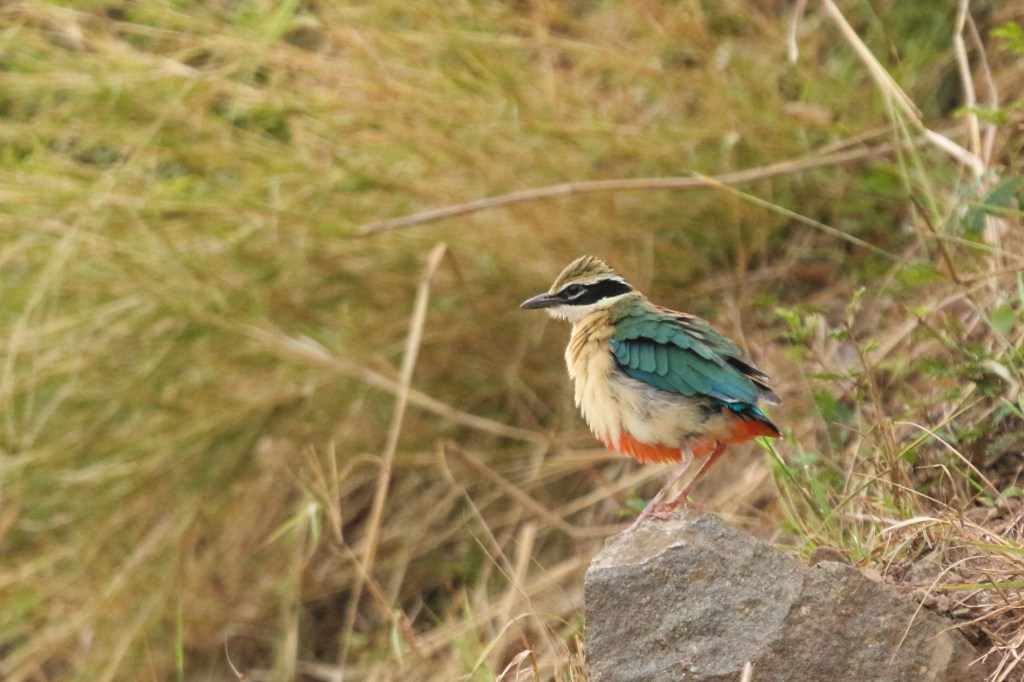
Together, we admired the Pitta again and reminisced about last year—how the Pitta had found a mate, built a nest, and shared responsibilities. We hoped that this season would unfold a similar story of love and life.
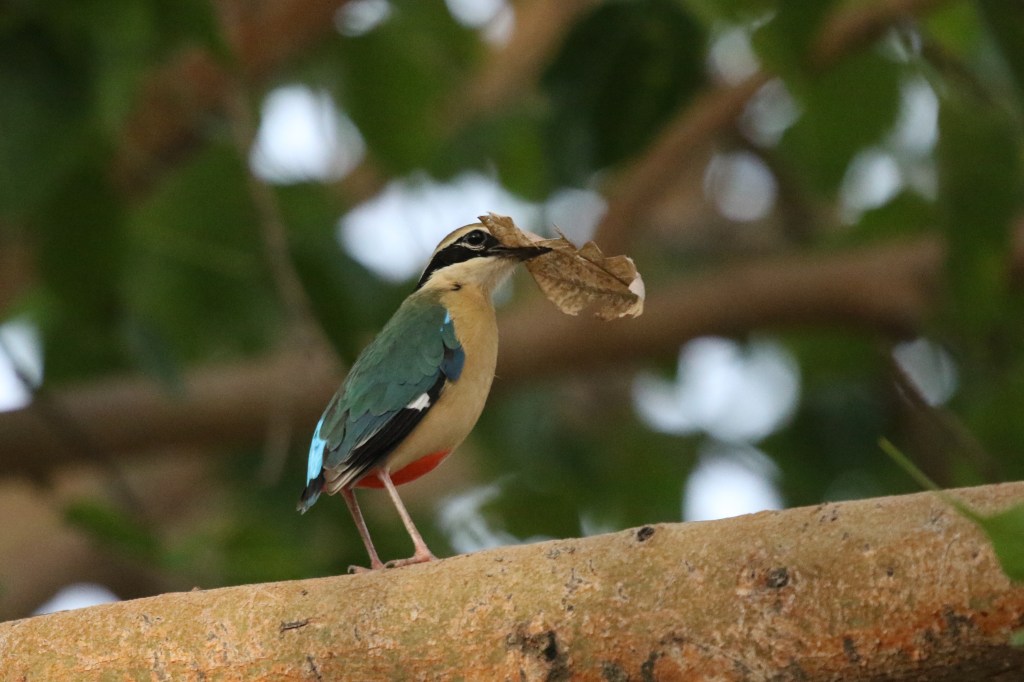
The Indian Pitta is a truly remarkable bird. Often called the “Navrang” or “nine -coloured bird,” its plumage is a kaleidoscope of brown, black, white, green, blue, orange, pink, red, buff. A buff-coloured crown stripe, black coronal stripes, a thick black eye stripe and white throat and neck. The upperparts are green, with a blue tail, the underparts buff, with bright red on the lower belly and vent. . A bird with vivid colours, a glimpse at the Indian Pitta’s flamboyant plumage might just take your breath away!
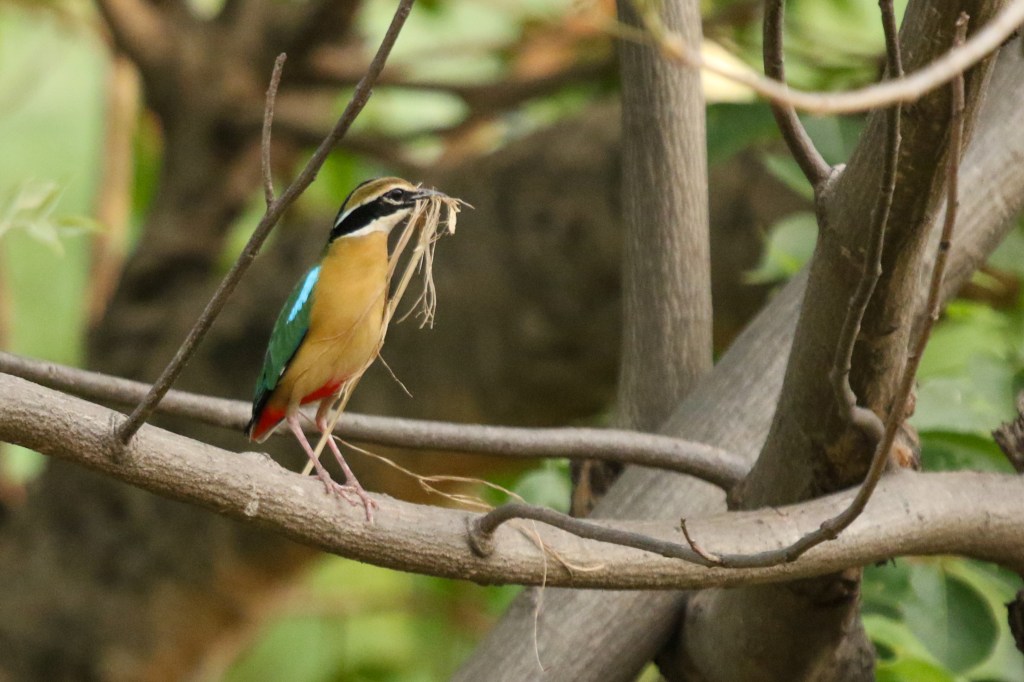
To spot this bird, first wait for its melodious call “wheet-teuu” and then follow the source of that distinct two-note whistle. Its two-note whistle that is repeated after a noticeable gap is hard to miss. This is the commencement of the breeding season and the birds become increasingly vocal right up till the end of June. The Pitta is not sighted easily in urban clusters. The Pitta’s typical behaviour is to walk on ground, upturning leaf litter to gobble insects.
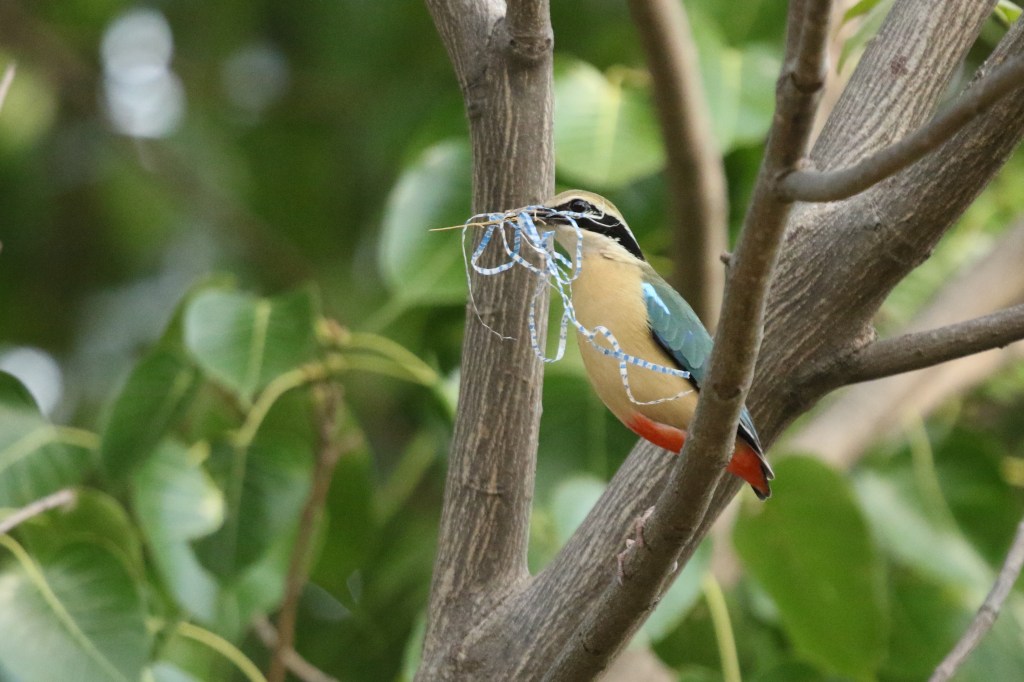
The Indian Pitta calls with its head up towards the sky, often together or in pairs, charming the woods with sweet music. This bird is vocal, giving its characteristic two-noted whistle call at dusk and dawn, hence the name. Experts say, “they call in the morning and evening to mark their presence and territory. They want to announce to the other Pittas that they do not want them to unnecessarily come and poke around in their territory. It is to send out the signal that this place is occupied.”
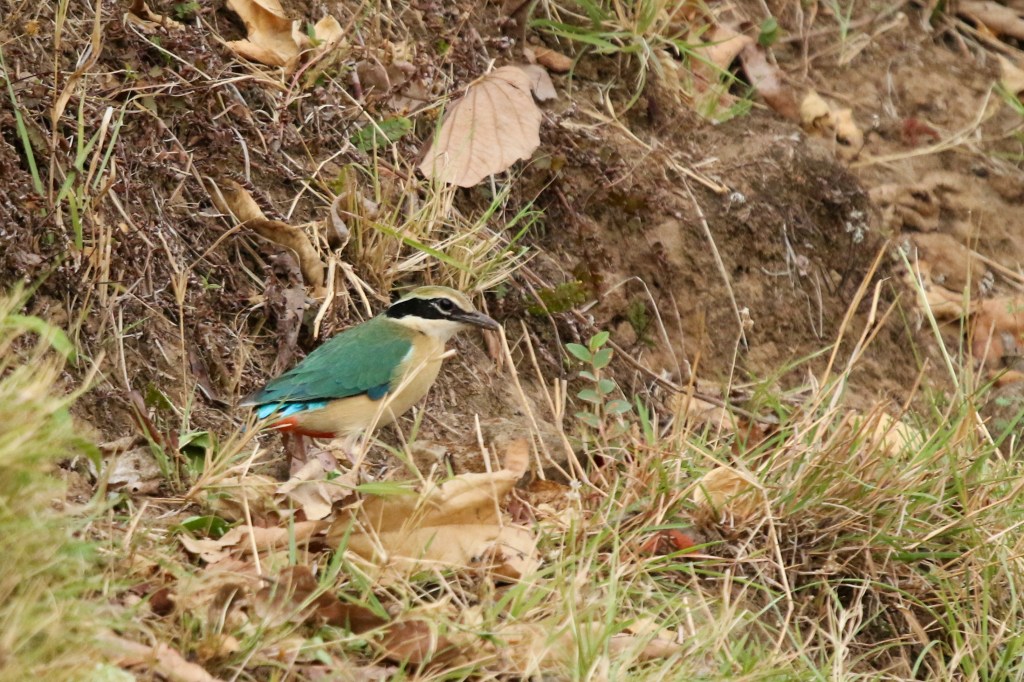
This sighting was not just about ticking off another species—it was an experience of deep joy and connection with nature. I felt privileged to have witnessed such beauty, and even more so to have had the chance to document it with my camera and ears.
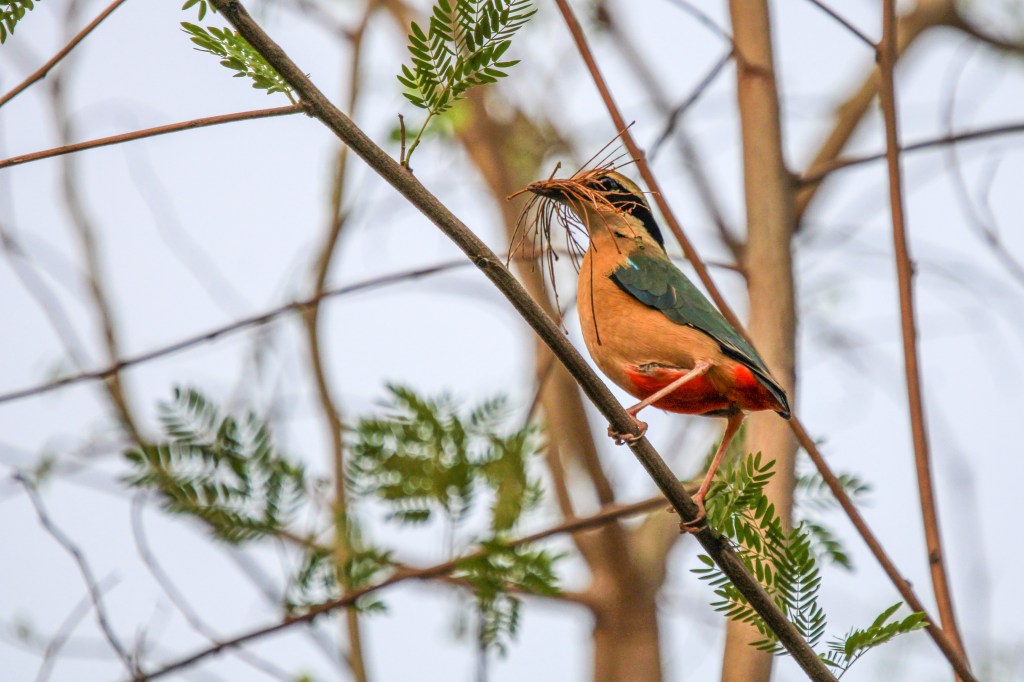
For those living in or around the Tricity, I would urge you to make a quiet morning visit to Thapli during May or June. Keep your senses sharp, walk slowly, and listen. With a bit of luck and a lot of patience, you might just be rewarded with a sighting of this enchanting bird—the Indian Pitta in all its summer glory.
 naturetrail