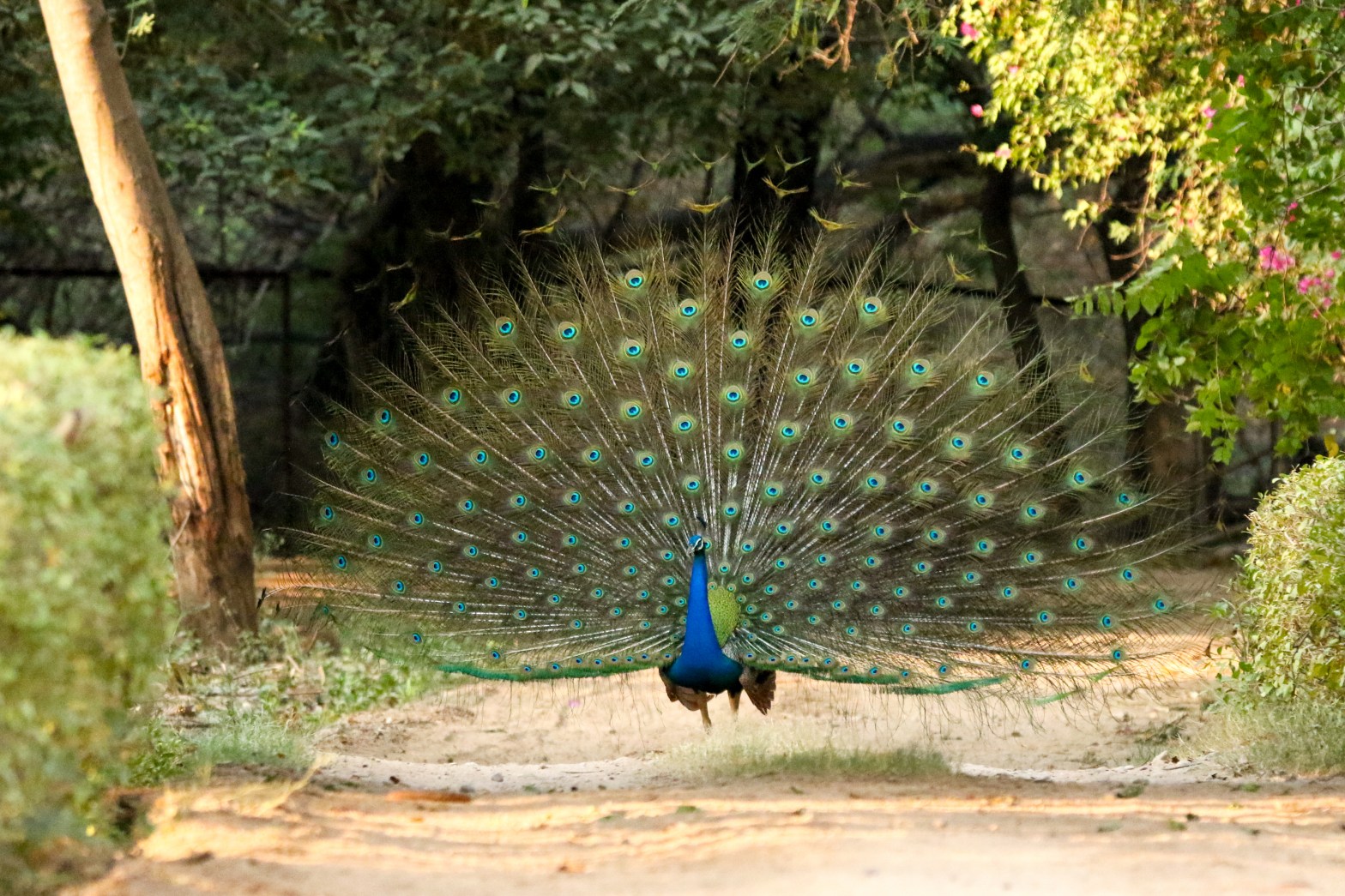
The Joy of Photographing Large Birds
Over the past few years, bird photography has become more than just a hobby for me—it has become a passion. In these more than three years, I’ve had the opportunity to photograph a wide range of bird species, from the tiny and agile Common Tailorbird and Common Kingfisher to the majestic and imposing Sarus Crane, Painted Stork, Himalayan Griffon, and Purple Heron. Each bird offers its photographic challenge, but one thing I’ve noticed is this: larger birds are generally easier to spot, track, and photograph compared to their smaller counterparts.
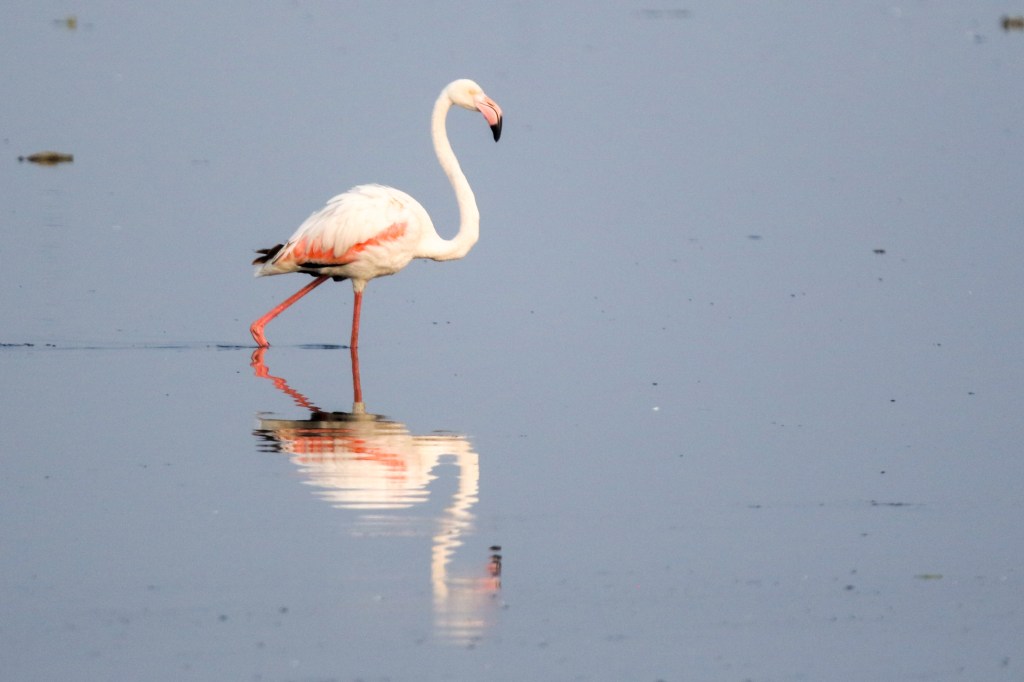
Flamingo at Chandu Wetlands near Gurgaon
Over the years, I’ve been fortunate to photograph several stunning large bird species in their natural habitats. Each of these encounters left a lasting impression, not just visually but emotionally. Photographing them wasn’t just about getting the perfect shot—it was about the experience, the moment, and the connection with nature.
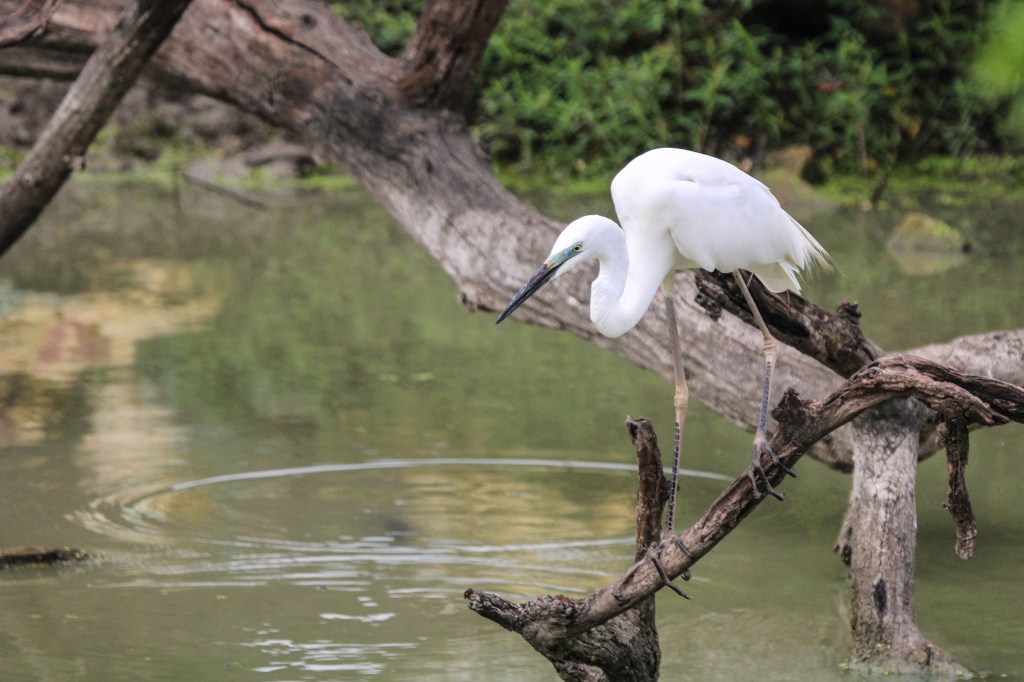
Great Egret at Keoladeo National Park, Bharatpur
In this blog, I’d like to share my experiences and insights into photographing large birds and why they often make better subjects—especially for bird photographers who are still learning the craft.
The Appeal of Large Birds in Photography
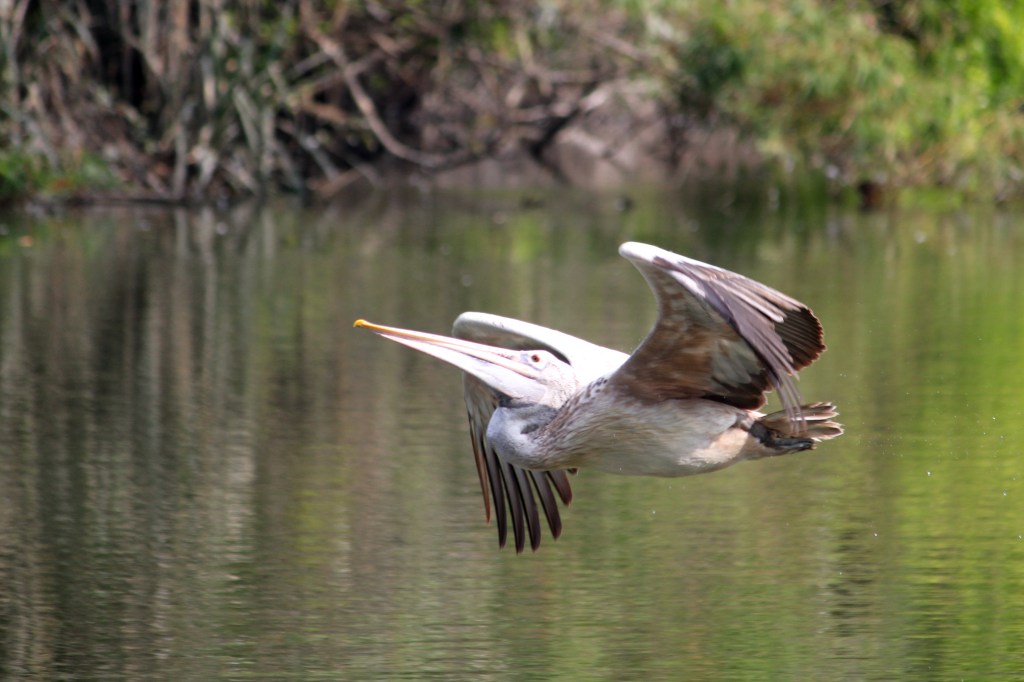
Spot – billed Pelican at Ranganathittu Bird Sanctuary, Karnataka
Something is awe-inspiring about seeing a large bird in the wild. The sight of a Great Egret gliding silently over a wetland or a Himalayan Griffon soaring against a mountain backdrop never fails to stir the soul. These birds command attention, not just in real life but also in photographs. Their sheer size, dramatic wingspans, and distinctive postures make them excellent subjects for impactful compositions. Large birds often evoke a sense of grace, power, and freedom, all of which are qualities photographers strive to capture.
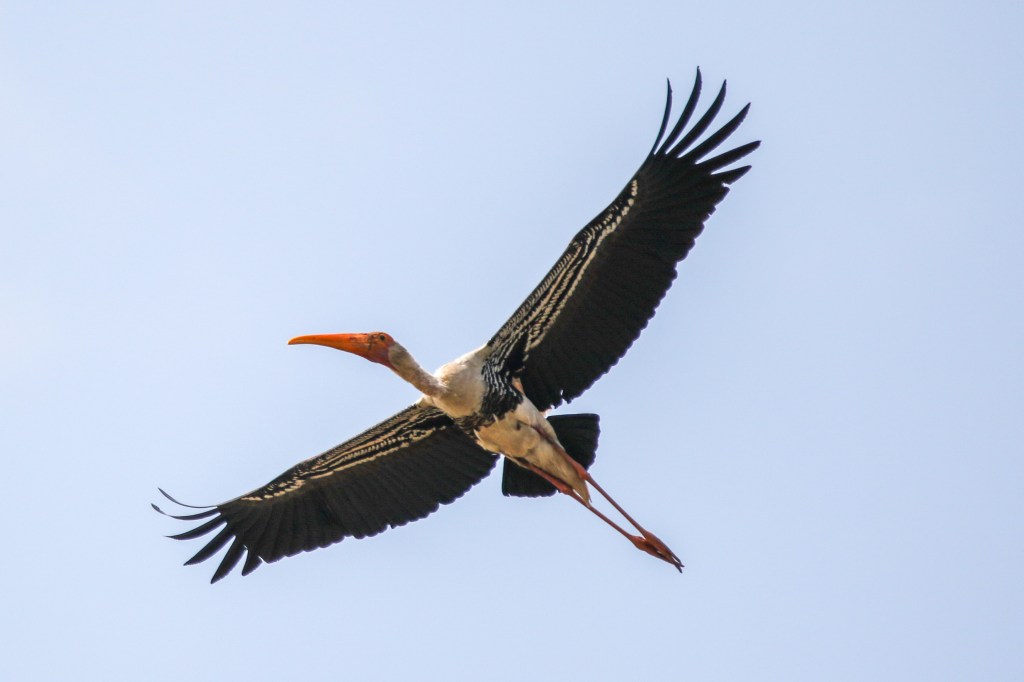
Painted Stork at Mote Mazra Pond, Mohali
Easier to Spot and Frame
One of the first things I noticed when photographing large birds is how much easier they are to spot. Unlike small birds that blend into dense foliage or flit about rapidly, large birds often stand or move in open landscapes—wetlands, grasslands, lakesides—where they are visible even from a distance. This makes them easier to track and frame in your viewfinder, especially in natural light.
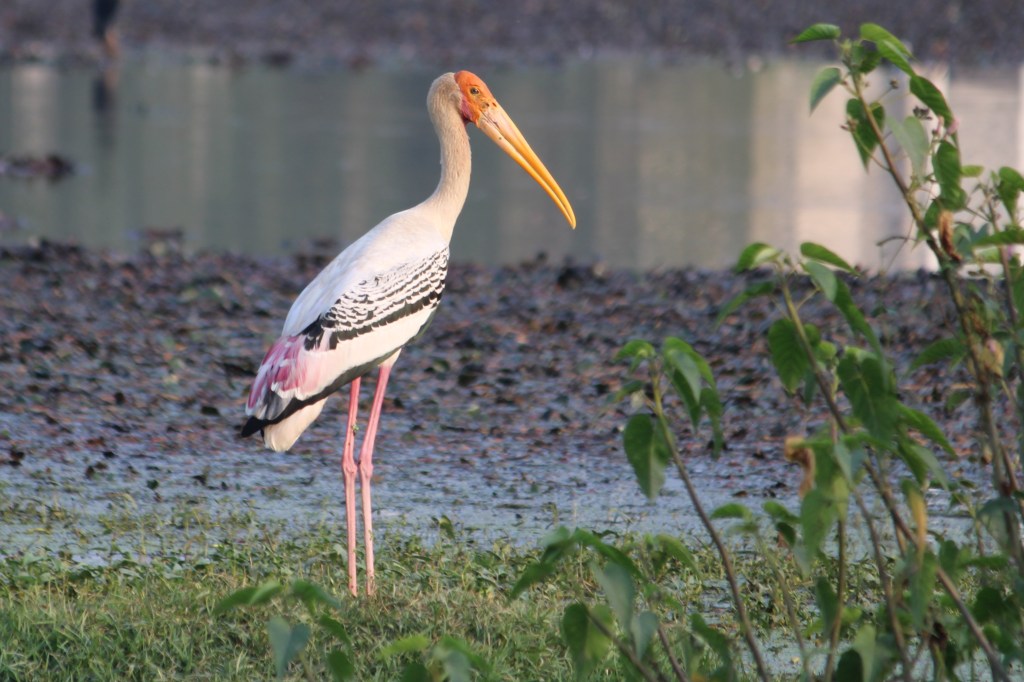
For instance, I remember spotting a group of Painted Storks at a wetland during sunrise. Their long necks and distinct pink-edged wings were impossible to miss, even from 200 meters away. With a bit of patience and a slow approach, I managed to capture some stunning shots without needing to move too close.
Slower Movements, More Predictable Behavior
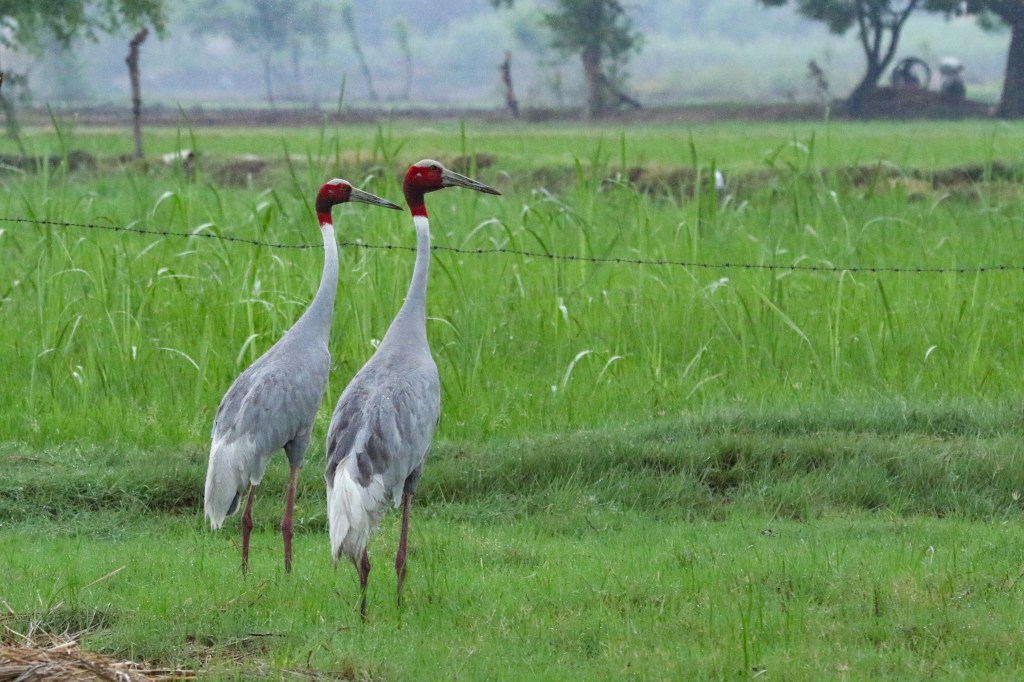
Another key advantage is their relatively slow and deliberate movement. While smaller birds are quick to hop, flutter, or dive into cover, large birds tend to move with calmness. Whether it’s a Grey Heron stalking fish or a Sarus Crane walking through a paddy field, their pace gives you more time to observe and compose your shot thoughtfully.
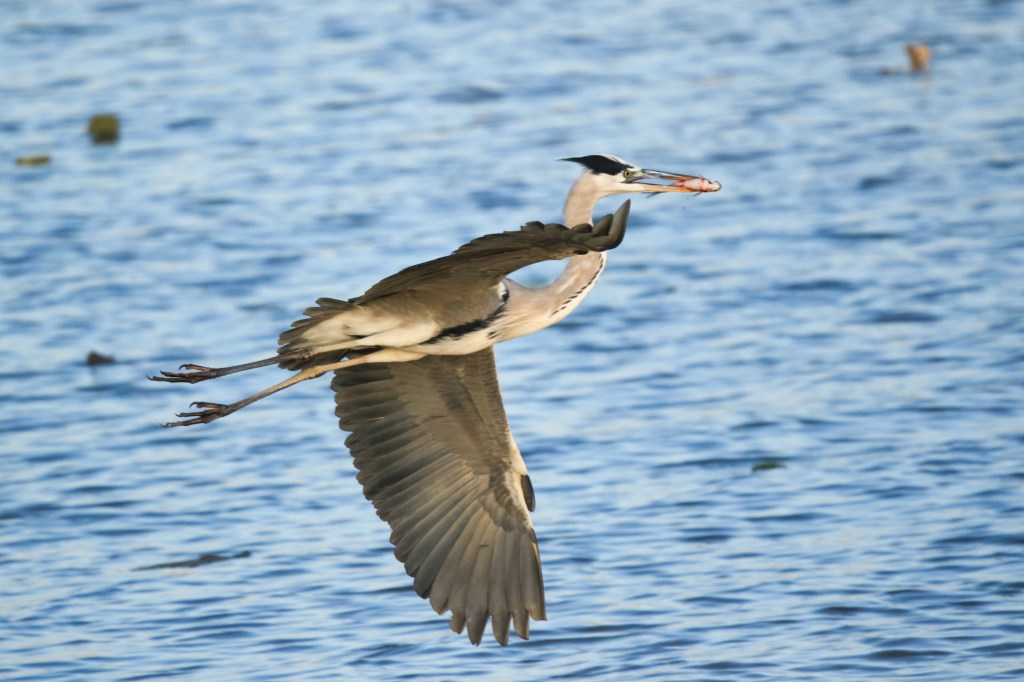
Grey Heron in flight at Sukhna Lake, Chandigarh – catching this in mid-air required patience and a quick shutter.

Black necked Stork at Dhanauri Wet lands
This slower movement also allows you to anticipate action. If you notice a Great Egret preparing to take flight, you’ll likely have a few seconds to set your camera settings and position yourself to capture that beautiful lift-off moment.
Gear Considerations: Less Need for Extreme Focal Lengths
Another practical benefit of photographing large birds is that you don’t always need the longest lens in your bag. Because of their size, large birds can fill your frame even with moderate focal lengths—say 300mm to 400mm. This is especially helpful for beginner photographers or those who may not have access to high-end super-telephoto lenses.
I’ve used a 100–400mm lens extensively for photographing large birds, and it has served me well in capturing everything from the broad wings of the Himalayan Griffon to the elegant stretch of a Purple Heron’s neck.
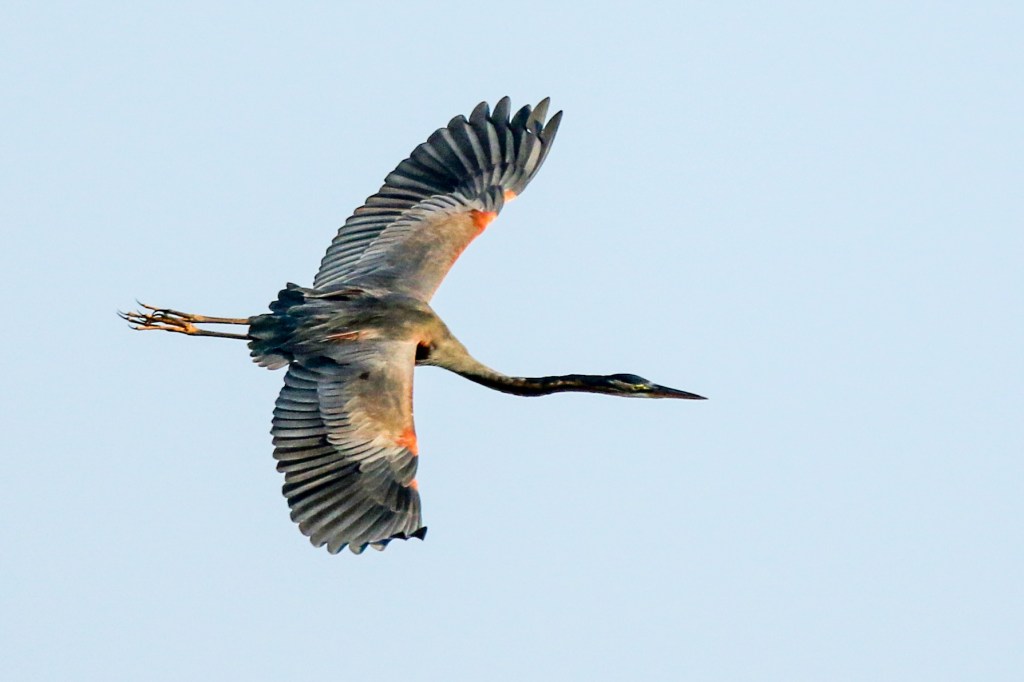
Purple Heron at Sukhna Lake, Chandigarh
Photographic Challenges of Large Birds
Of course, large birds come with their own set of challenges. They often inhabit areas that may be difficult to access—like remote wetlands or marshy fields. And though they move slowly, some can be shy and alert, requiring you to maintain a respectful distance. Moreover, photographing them in harsh sunlight can lead to overexposed patches on their broad wings or bodies, so timing becomes crucial.
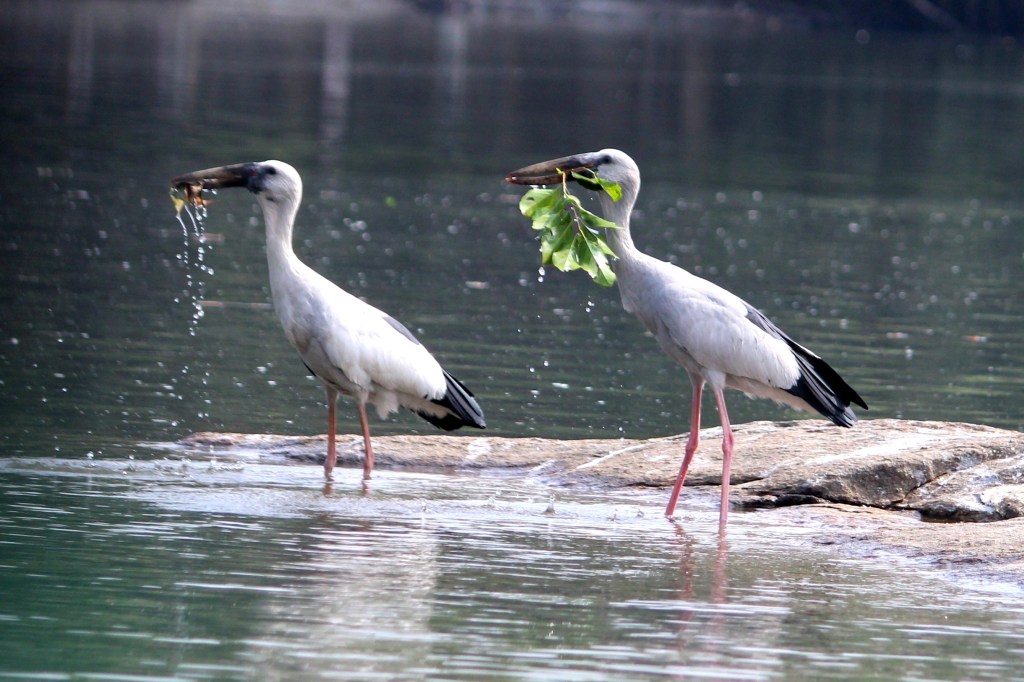
Asian Openbill at Ranganathittu Bird Sanctuary, Karnataka
Sometimes, the challenge is compositional—how to make a still bird interesting. When a stork or heron stands motionless for minutes, it forces you to think creatively: use reflections, foreground framing, or wait for subtle actions like stretching or wing-flapping.
Favorite Encounters and Photo Stories
Some of my most memorable photography moments have been with large birds. I recall one winter morning at a wetland near Gurgaon, where I finally fulfilled a long-standing dream of photographing a Sarus Crane in the wild. The mist was slowly lifting, and the crane stood in perfect light, its red crown glowing gently. That image is still one of my favorites.
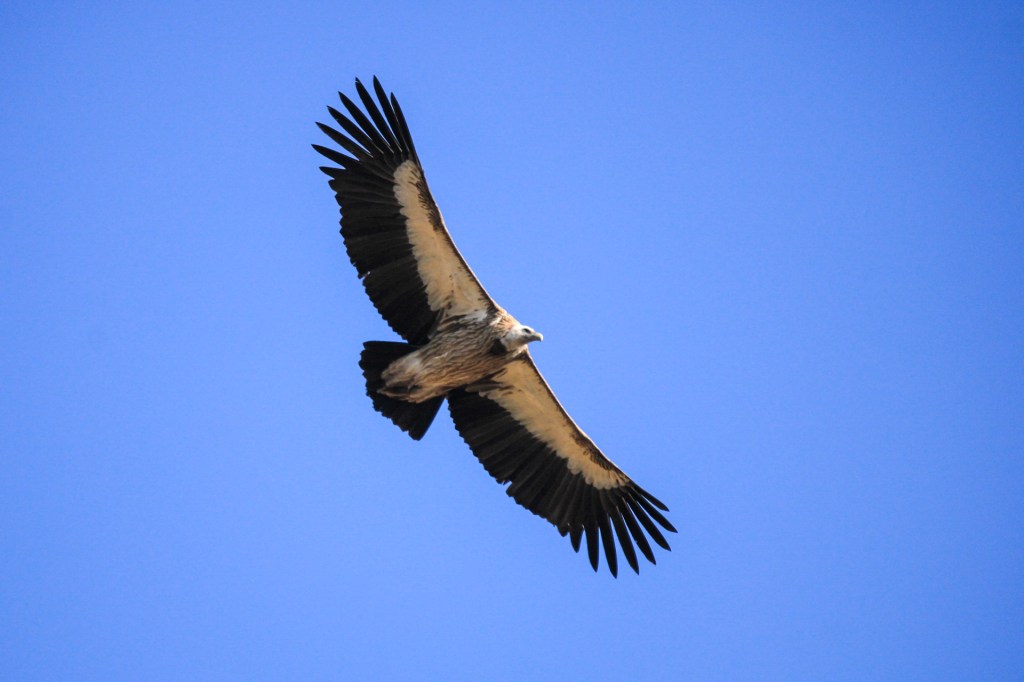
On another occasion, I had the rare fortune of watching a Himalayan Griffon circling overhead at a vantage point in Himachal Pradesh. Its massive wingspan and effortless glide were a sight to behold—and capturing it mid-flight against the blue sky was a thrilling experience.
Photographing large birds has not only improved my skills but also deepened my appreciation for these majestic creatures. Their beauty, elegance, and presence in the frame make them ideal subjects, especially for bird photographers at any level. If you’re just starting or looking to refine your bird photography, I highly recommend spending time with larger birds—you’ll be rewarded with images that are both striking and soulful.
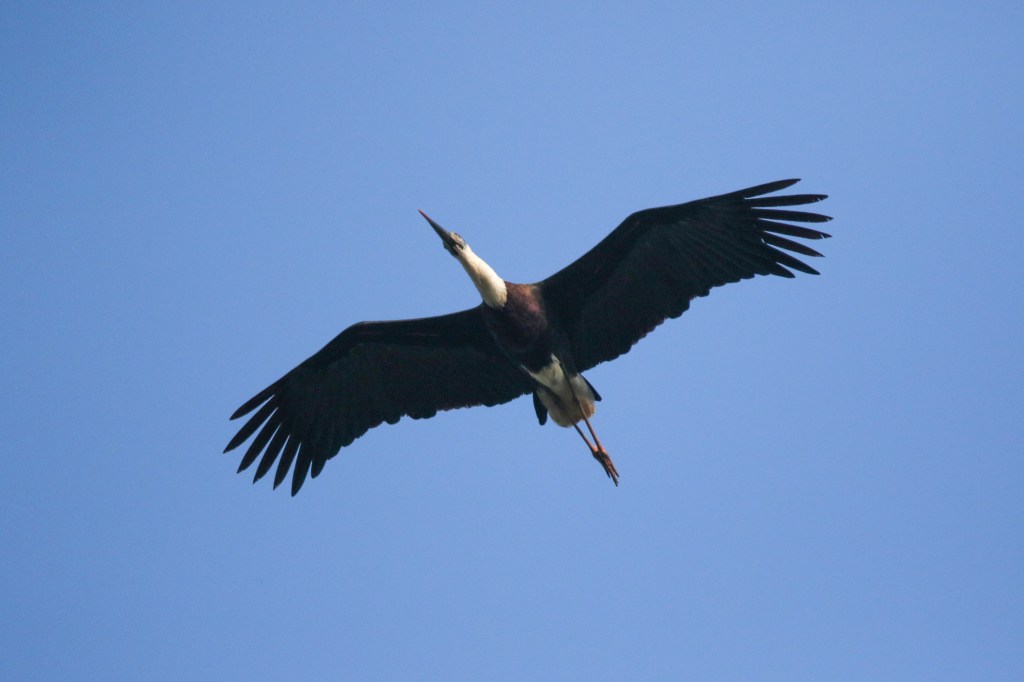
Wooly necked Stork at Mote Mazra Wetland, Mohali
So next time you’re out in the field, keep an eye out for that heron by the water or that stork flying overhead. You might just come home with your next favorite shot.
 naturetrail