
The Grey Heron is an easily recognized bird with tall legs, a long bill, black, white and grey plumage, a long, white neck, bright yellow bill. A stripe of black elongated feathers begins from the base of the bill, runs above its eye, and extends up to the distinctive black crest on the head. With these distinctive features, these birds can be easily spotted in their natural habitat that mainly comprises wetlands. The bills of grey herons are yellow throughout the year but become an orangish hue in the breeding season.
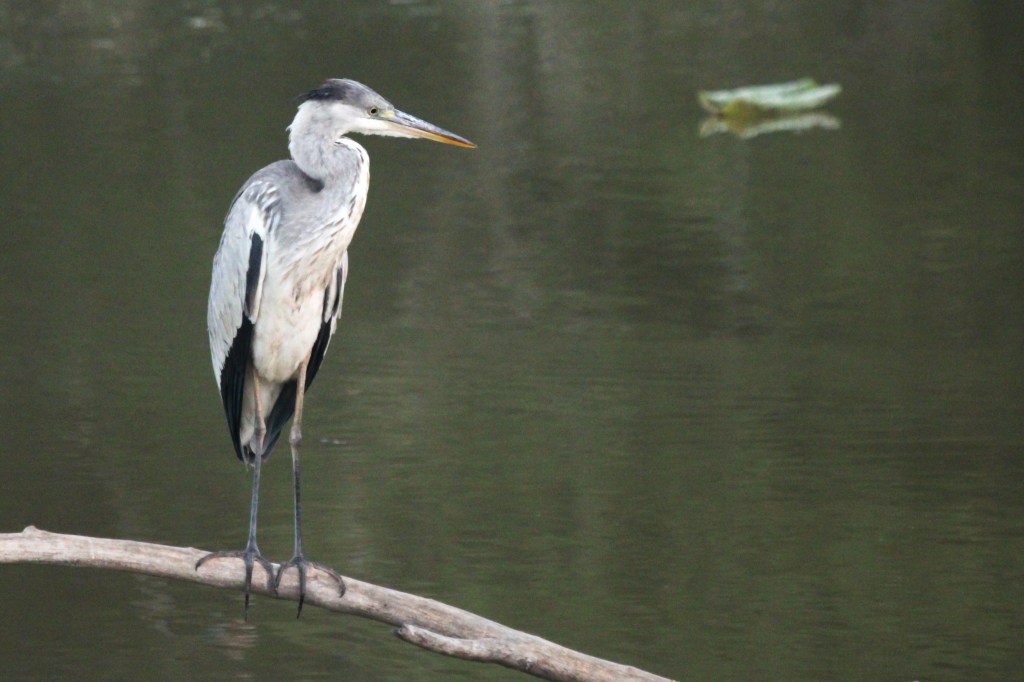
They are often seen standing as still as a statue on their long thin legs in shallow waters of ponds and lakes patiently waiting for their next meal to swim by. The heron’s endless patience reminds us of the importance of waiting for opportunities to appear. Timing is a difficult thing to master, but everyone could learn a thing or two from watching the heron at work! The stillness of a patient heron sits in sharp contrast to the lightning-quick movements that these birds execute when the time is finally right to act.

Grey herons are the largest and most powerful of all heron species, reaching up to 100 cm (40 in) tall and measuring 84–102 cm (33–40 in) long with a 155–195 cm (61–77 in) wingspan. The grey heron has a slow flight, with its long neck retracted (S-shaped) and distinguishes them from storks, cranes and spoonbills, which extend their necks.

The quiet nature of the heron may also act as a reminder of the value of silence. In this technologically advanced age, we rarely spend much time separated from sources of stimulation. Our lives are filled with constant or nearly constant noise. The heron reminds us that silence is vital. In periods of quiet we can converse with our thoughts and often conquer our biggest problems. Silence helps us to grow.
 naturetrail