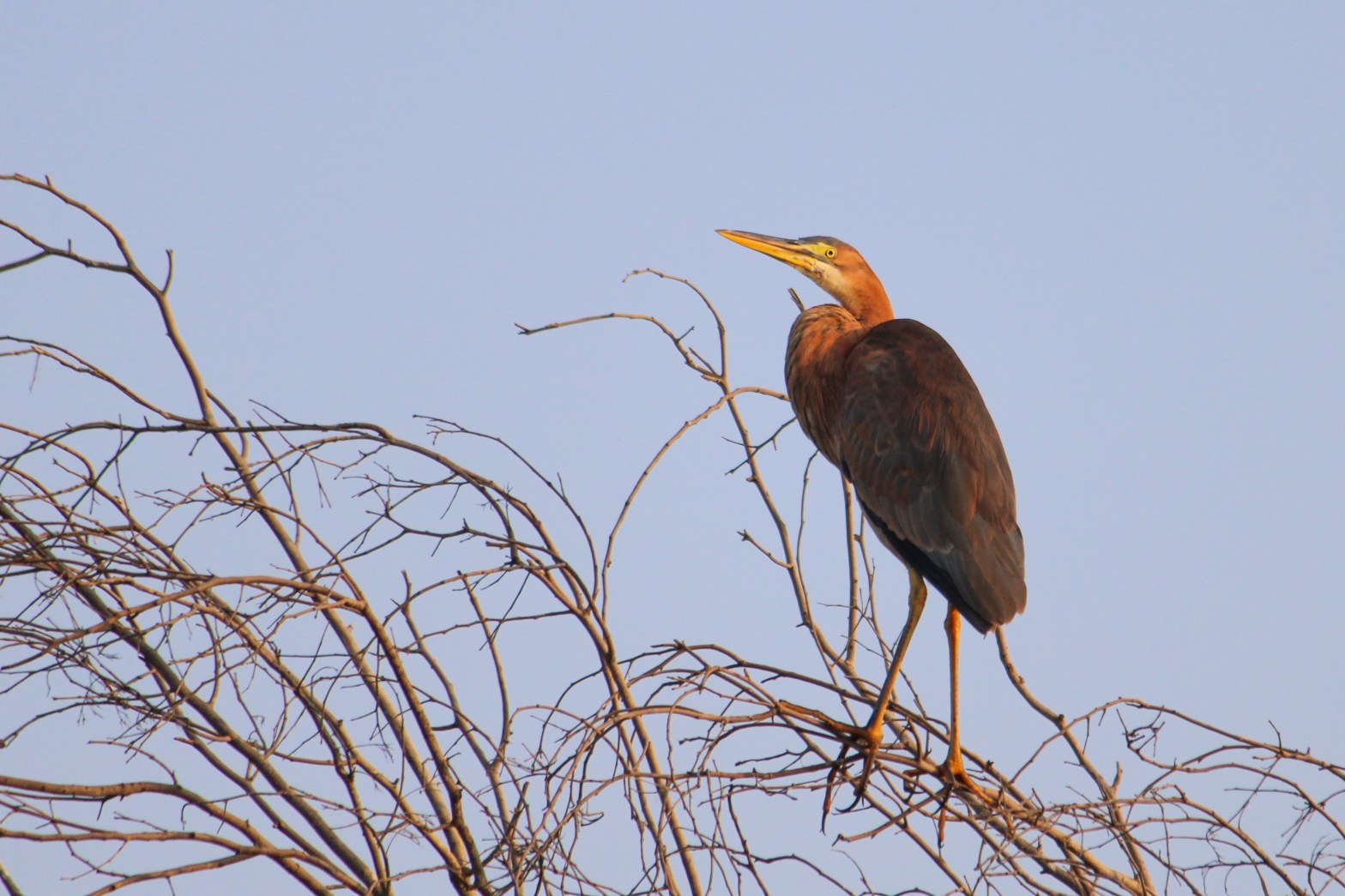
The twelfth in the series of Winter Visitor to the city is Purple Heron. Similar in appearance to the grey heron but slightly smaller, more slender and has darker reddish brown plumage. It has a narrower yellow bill, which is brighter in breeding adults. It is also a more evasive bird, favoring densely vegetated habitats near water, particularly reed beds. It hunts for a range of prey including fish, rodents, frogs and insects, either stalking them or standing waiting in ambush.
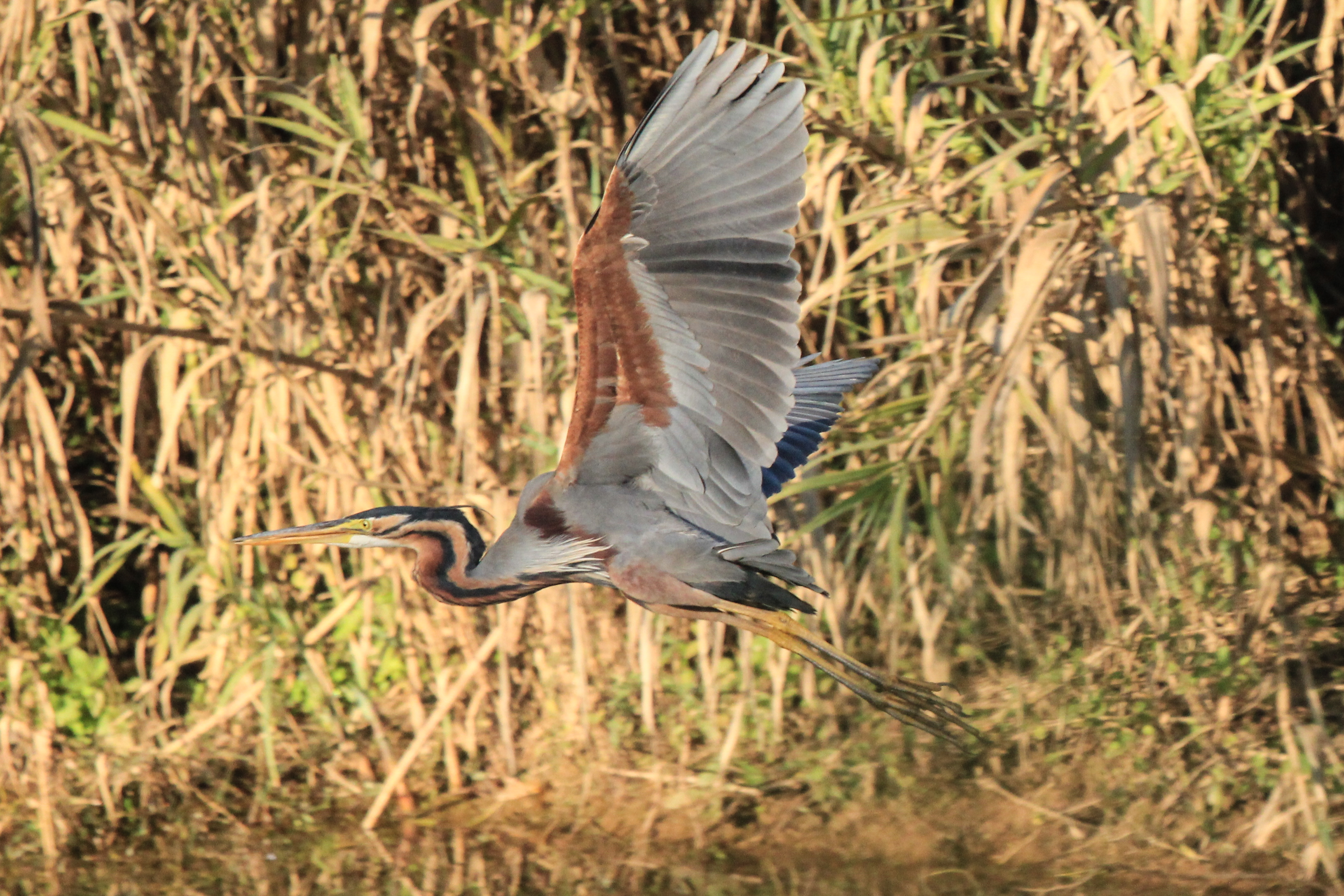
Flight is slow, with the neck retracted and the legs extending a long way behind the tail. This is characteristic of herons and bitterns, and distinguishes them from storks, cranes and spoonbills, which extend their necks in flight.
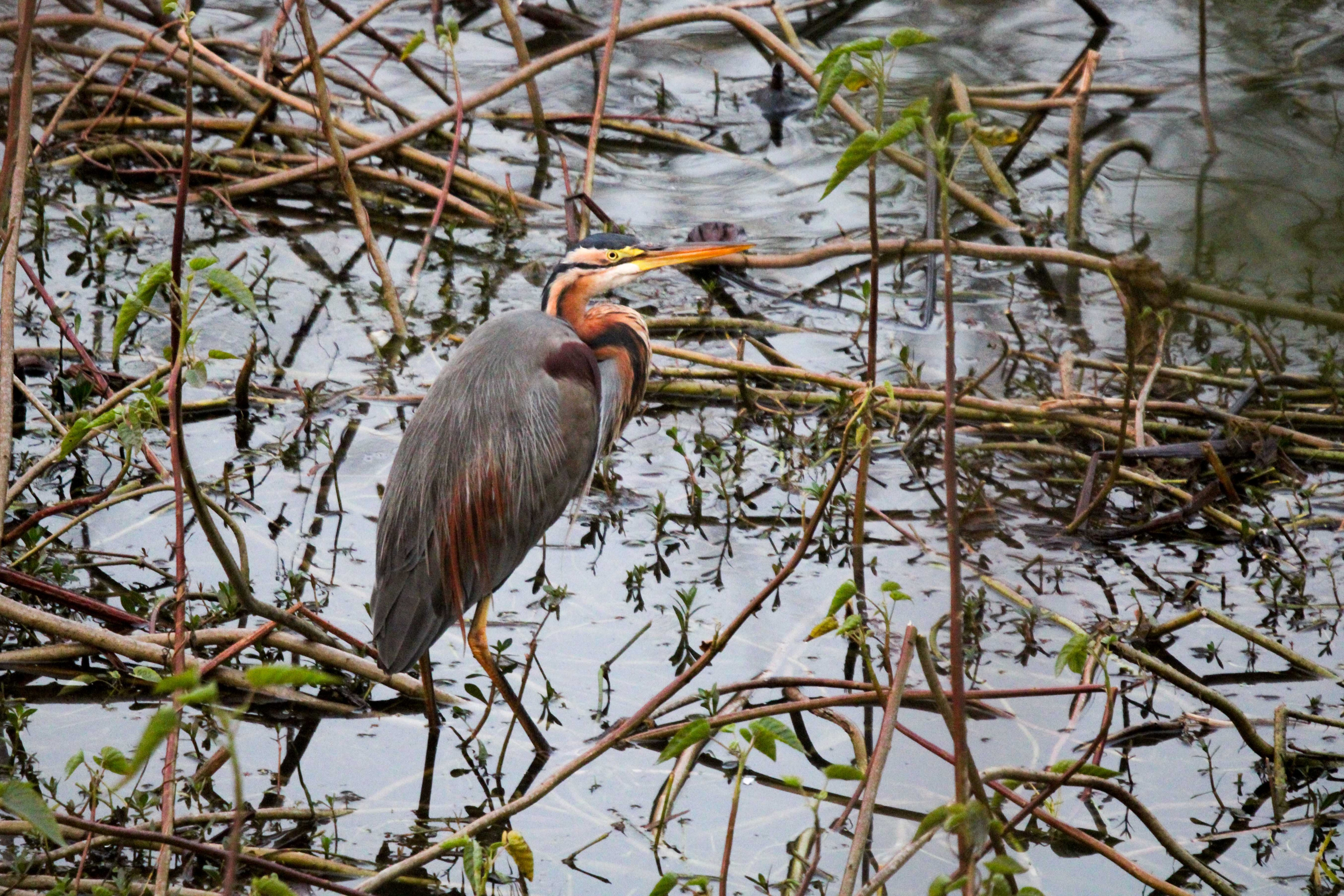
Purple herons are colonial breeders and build a bulky nest out of dead reeds or sticks close to the water’s edge among reeds or in dense vegetation. It is a secretive bird, spending less time out in the open than the grey heron and tending to skulk in reed beds. Its long toes mean it can walk on floating vegetation, and it sometimes walks over bushes in the same way, not making any attempt to grip the branches. It seldom perches in trees, preferring more terrestrial sites to rest.
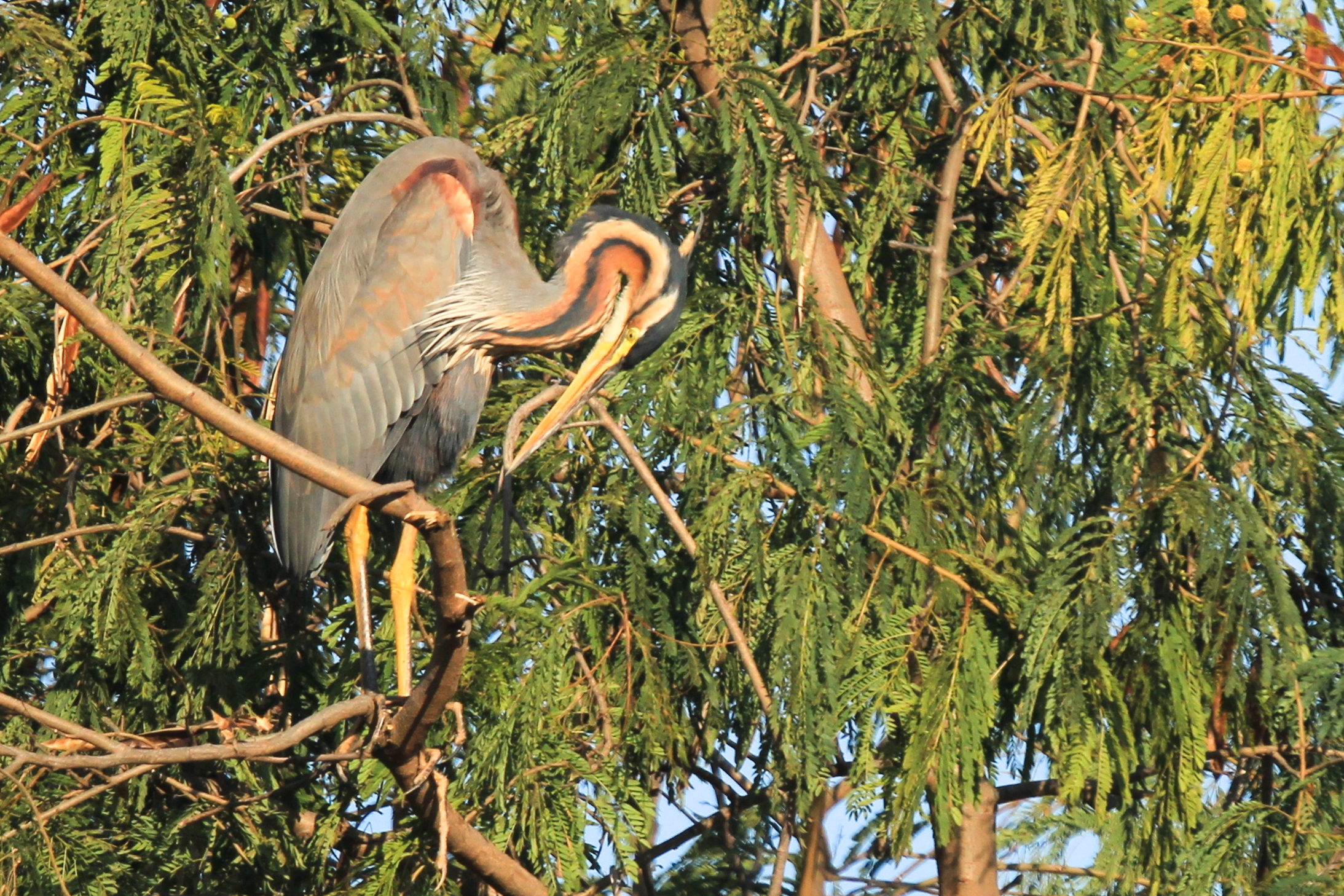
It is most active at dawn and dusk, roosting with other birds in the middle of the day and at night, but increasing its diurnal activity while rearing young. It feeds in shallow water, grabbing its prey with its powerful beak. It will often wait motionless for prey, or slowly stalk its victim. The diet consists mainly of fish, small mammals and amphibians, but nestling birds, snakes, lizards, crustaceans, water snails, insects and spiders are also eaten.


Well done. Keep it up. Subhash Sapru
LikeLike
Thanks, it is your constant appreciation that charge me to write new blogs
LikeLike