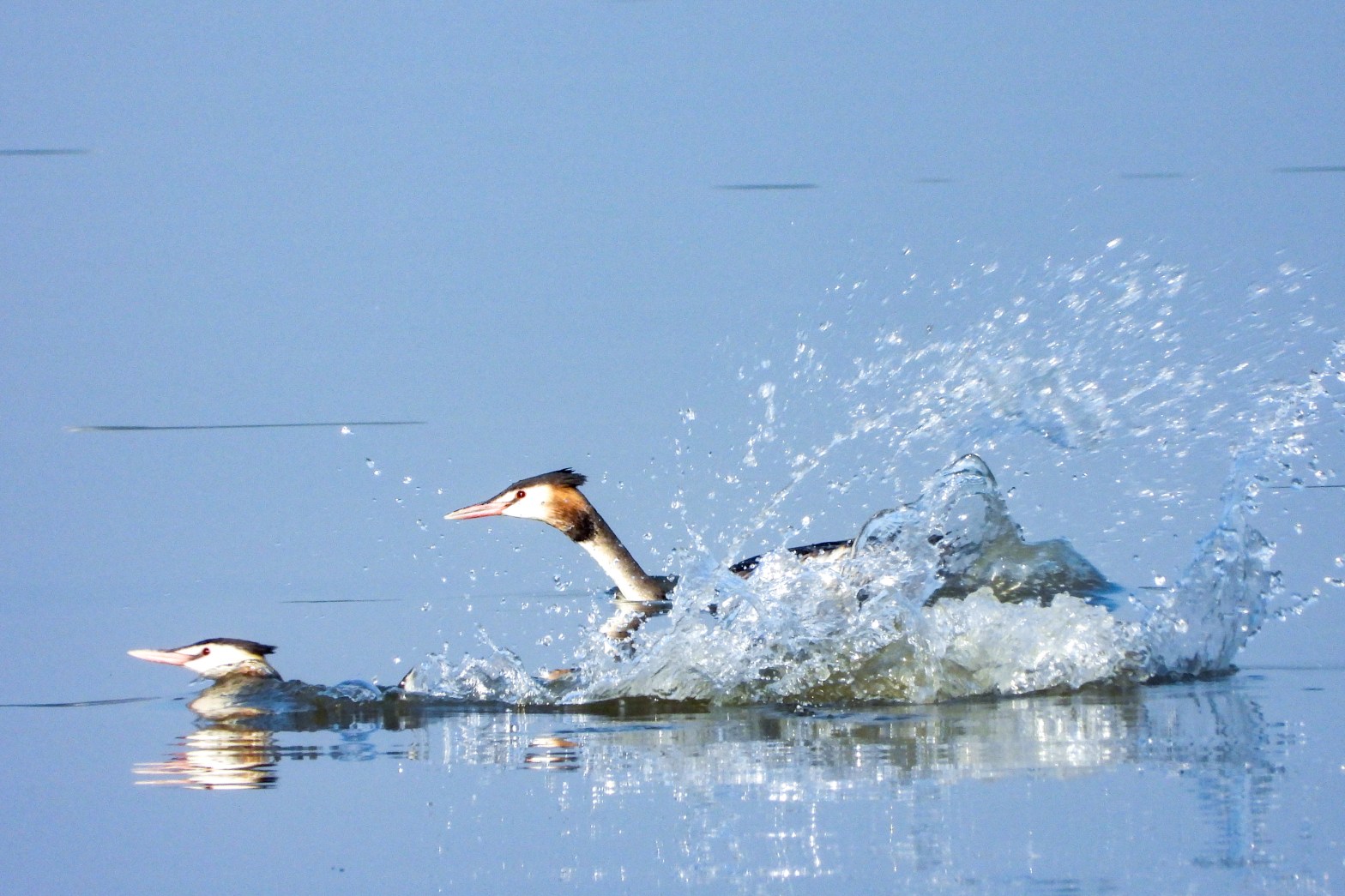
An uncommon visitor returns to the waters of Sukhna Lake, adding another beautiful chapter to the wetland’s rich birdlife.
There are some bird sightings that remain etched in the memory of a birdwatcher, not necessarily because the species is rare, but because of the sheer joy of seeing it again after a long gap. The recent sighting of a pair of Great Crested Grebes (Podiceps cristatus) at Sukhna Lake, Chandigarh, was one such delightful moment.
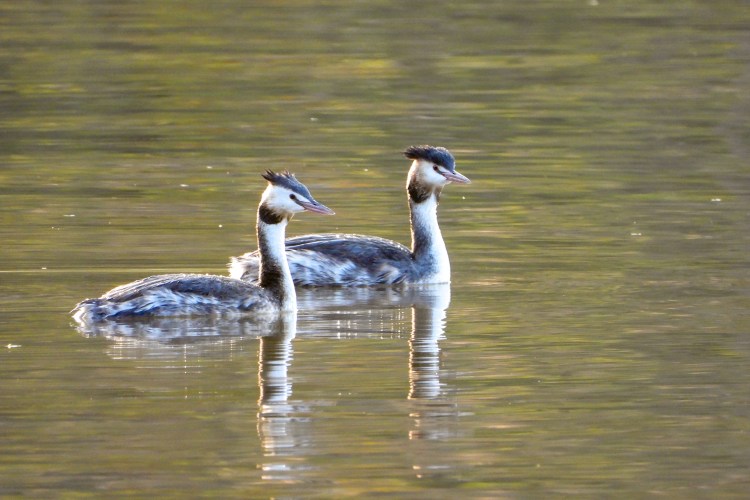
After an interval of nearly three to four years, these elegant waterbirds have once again graced the tranquil waters of Sukhna Lake this winter. Their arrival has added a special charm to the lake’s already vibrant winter landscape. For regular birdwatchers at Sukhna, the sighting was particularly gratifying, as the Great Crested Grebe is an uncommon winter visitor to this region and is not encountered every season.
The timing of their return makes the sighting even more special. Sukhna Lake has recently been designated a Ramsar Site, earning international recognition as a Wetland of International Importance. This prestigious status acknowledges the ecological significance of the wetland and its role in supporting resident as well as migratory bird populations along the Central Asian Flyway. The arrival of these magnificent visitors is yet another reminder of the biodiversity that this urban wetland continues to sustain.
A bird of exceptional elegance
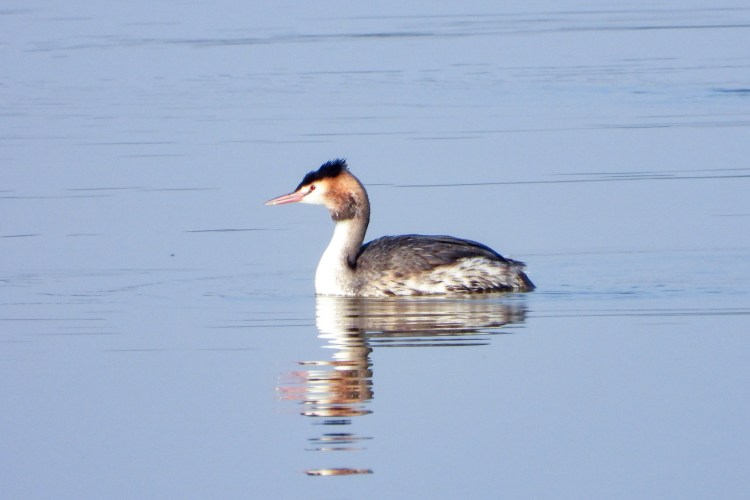
The Great Crested Grebe is undoubtedly one of the most graceful waterbirds one can encounter on a lake. Its slender neck, elongated body, pointed bill and distinctive profile make it easily distinguishable from other waterbirds. During the breeding season, the species develops spectacular chestnut-coloured ruffs and prominent black crests on either side of its head, giving it an unmistakably ornamental appearance.
During winter, however, the bird assumes a comparatively subdued appearance. Its head is predominantly white, with a dark crown and a characteristic dark line running through the eye. The neck and upper body are greyish brown, contrasting beautifully with its silvery-white underparts. Its striking reddish eyes add another distinctive feature to its appearance.
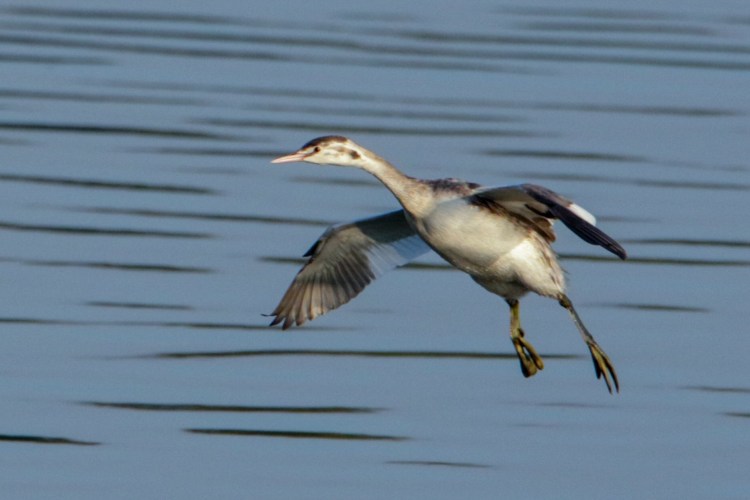
Unlike ducks, grebes have their legs positioned far back on their bodies. This anatomical adaptation makes them exceptionally efficient swimmers and divers, although rather ungainly when moving on land. Their lobed toes provide excellent propulsion underwater, enabling them to pursue fish with remarkable agility.
A master of the underwater world
One of the most fascinating aspects of observing a Great Crested Grebe is its diving behaviour. The bird often disappears beneath the water with barely a ripple, only to resurface at a considerable distance from where it submerged. Its ability to remain underwater for extended periods makes it an efficient hunter.
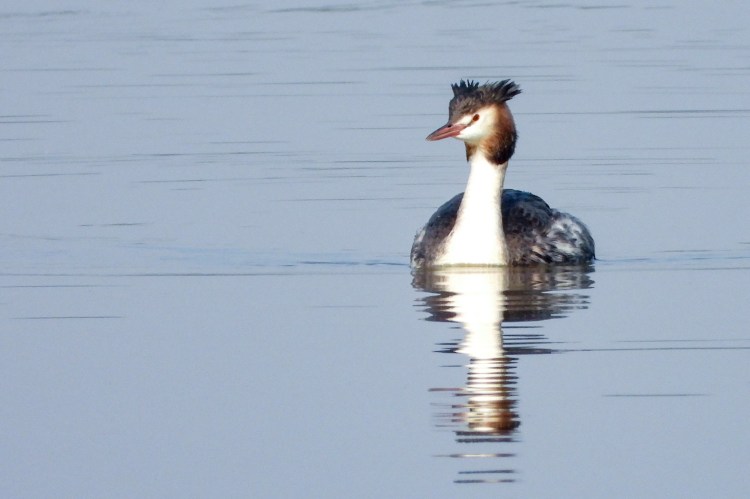
Fish constitute the major part of its diet, although aquatic invertebrates also form a part of its food. Its hunting technique is particularly interesting to watch, as it repeatedly dives beneath the surface in search of prey. For a bird photographer, capturing the precise moment when it emerges from the water with a fish can be quite a rewarding challenge.
A remarkable chapter in conservation history
The appearance of the pair at Sukhna Lake has also attracted attention beyond the local birding community. Hindustan Times, in its Wildbuzz feature titled “A Many-Splendored Bird”, covered the sighting and highlighted the fascinating natural history, behaviour and conservation significance of this species. Beyond its beauty and fascinating behaviour, the Great Crested Grebe has an extraordinary conservation story.
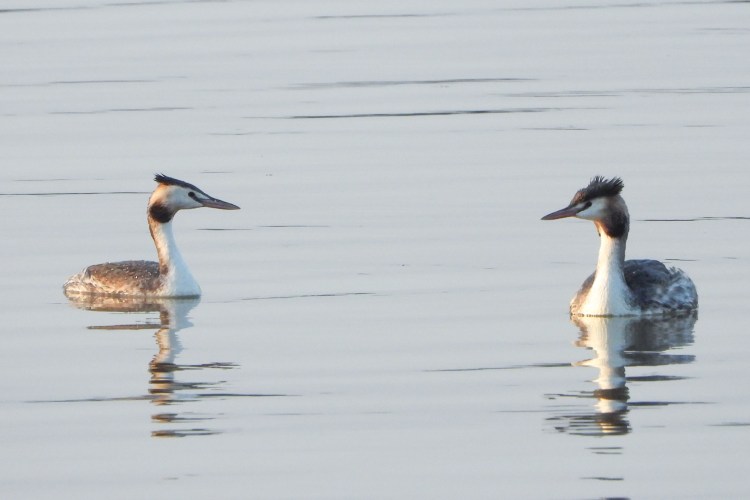
During the late nineteenth century, the species was hunted extensively in Britain for its beautiful ornamental head feathers, which were used in the fashion industry to decorate ladies’ hats. The demand for these feathers resulted in a severe decline in its population.
The plight of the Great Crested Grebe became an important catalyst for organized bird conservation efforts in Britain. In 1891, two groups of women concerned about the indiscriminate killing of birds joined hands, eventually leading to the formation of the Royal Society for the Protection of Birds (RSPB), today one of the world’s leading bird conservation organizations.
Thus, this elegant waterbird occupies a special place in the history of modern bird conservation. Its recovery is a reminder of what collective concern and sustained conservation efforts can achieve.
A welcome addition to Sukhna’s winter visitors
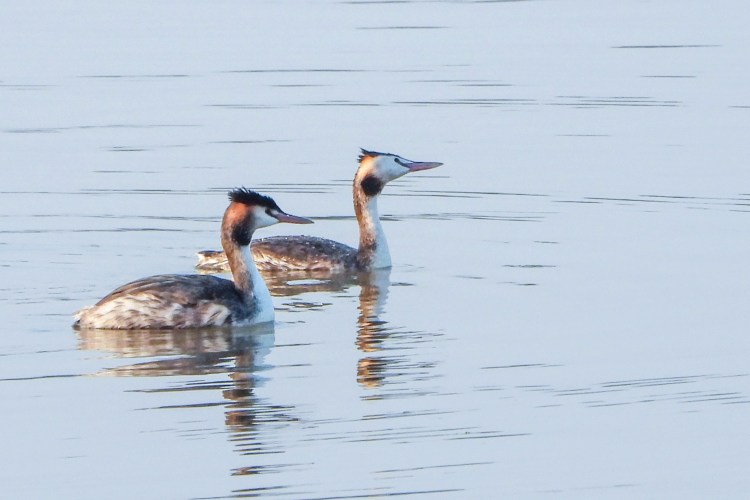
For those who regularly visit Sukhna Lake, the presence of these two birds is more than just another addition to the winter bird checklist. It is a reminder of the lake’s ecological richness and the importance of preserving its natural character.
With the lake now carrying the prestigious Ramsar designation, sightings such as these acquire even greater significance. International recognition is certainly an achievement, but the real measure of a wetland’s health lies in its ability to continue providing safe feeding, resting and wintering habitats for birds.
As the winter season progresses, one can only hope that the pair continues to grace the waters of Sukhna Lake and that more such wonderful avian visitors find their way here.
For a birdwatcher, there is a special satisfaction in welcoming back an old visitor. And at Sukhna Lake this winter, the graceful Great Crested Grebes have certainly made that welcome memorable.

